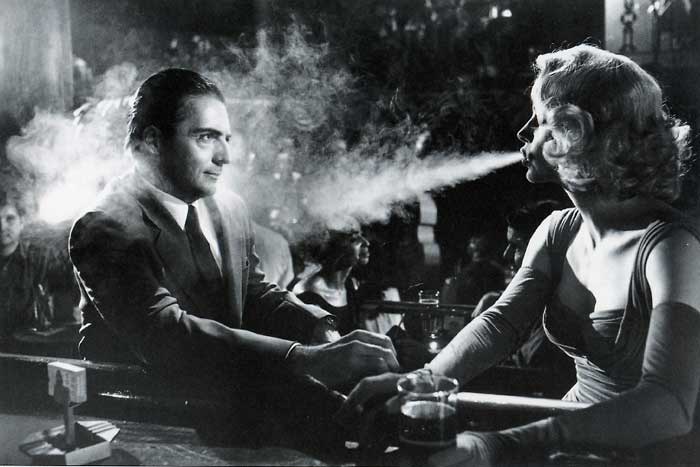
Another project that I’ve had hanging around for a while is a half-finished detective novel set in the city of Newcastle, NSW. I sometimes work on it after Sophie’s in bed, so I call it my Novel Night Job. I had written quite a few chapters when it became clear that I needed to know much more about policing, and Customs procedures in Newcastle, to get the details right.
I also stuffed around with the gender of my main character, instinctively wanting to write in a male voice, then getting distracted by the idea that a female character could embody a kind of surrogate ego: the attraction of sending one’s literary doppelganger on adventures that one is unlikely to embark upon in real life (mainly on the grounds of public health, morality and financial considerations). Then realism kicked in, and I decided that such a female character was not plausible, and that she would continually trigger reader disbelief, not suspend it. A pity really.
I eventually settled on a very good looking male anti-hero. The desire is to have a main character who teeters on the edge of reader empathy. I want him to be bad in a very ordinary, everyday kind of way, making the usual crap decisions people make (sleeping around on his pregnant girlfriend) but still managing to enforce some kind of moral code when pushed. I want his every action, his every decision, to hint at a polarised childhood, spoiled and brutalised: adoring mother, disciplinarian father. And for the thematic arch of the novel to be more about him growing up than it is about solving a crime, per se.
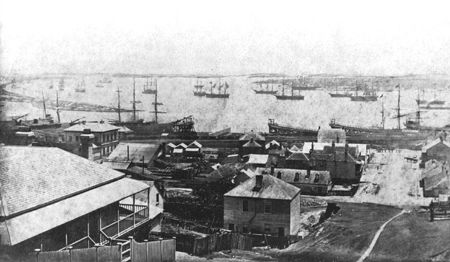
Newcastle Harbour in the 1870s
Much thought, conversation and cups of tea went into refining the logical premise that underlies the plot. Crimes novels are basically the narrative equivalent of problem solving, it’s one of the reasons people like them so much: they like to hunt, find solutions, discover the missing piece of a puzzle. Initially I wrote one of my main witnesses as a psychic, but then decided that it was a crap, easy way out of logical dilemma. It cut the guts out of the story.
Now I’ve got the harder, starker problems of pure logic and probability. I’m going to interview a couple of people who work, or have worked, in fields related to my novel’s plot (it revolves around Newcastle Harbour and police station) so I can get the kind of detail I need to invent something plausible. A bit like a well rounded scam, or propaganda: little bits of truth to make the whole construction convincing. (A nice story about Steven King springs to mind: apparently he once wore a t-shirt with the slogan I MADE IT UP to a literary festival). For many years, my hero was James Ellroy, a writer with an amazing ability to use history as the train track for his private obsessions. Here’s a clip of Ellroy answering 10 questions for Time magazine:
I’m umming and ahhing about whether to try and get a grant to help me complete this novel. In some ways I agree with friend RF’s stark analysis: if a book is any good, why would it need a grant? (I’m not convinced by this argument in the visual arts). On the other hand, whether I’m in the studio or writing, I regard any time spent away from my kid as requiring some kind of justification, whether it’s financial or to do with health and wellbeing, etc. Therefore I’m hesitant to plough an awful lot of time into a novel without knowing if I’ll ever get it published. (A lot of shrieking from the purists at this point, ‘art for art’s sake!’, but I’ve reached the point in my life where I won’t work for free). The deciding factor will be this: if, after talking to my interview subjects, I can come up with a plot scenario that is compelling, interesting and authentic, I’ll go ahead. On the other hand, if it looks like it will be one of those ‘I’ll do it for the practice/experience’ projects, I won’t bother. We’ll see.
The first chapter is too badly written to post now, I’m still at the stage where I’m trying to get things down quickly, not nicely, but when it’s looking a bit better I’ll do so.
 Helen Hopcroft: an artist's life