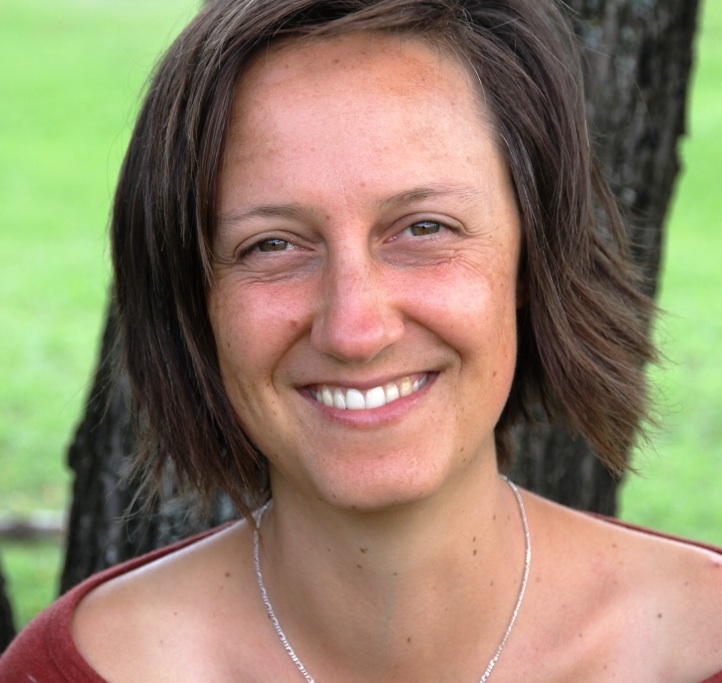
I’m currently working on a book for Hunter Valley Grammar School. The School started in 1990, so I’ve been commissioned to write their 25 year history, in time for the celebrations next year. Part of this project has involved chasing down former students and asking them about their education, and how what they learned at school helped them in their future careers. I’m particularly interested in what people take with them from school into their adult lives.
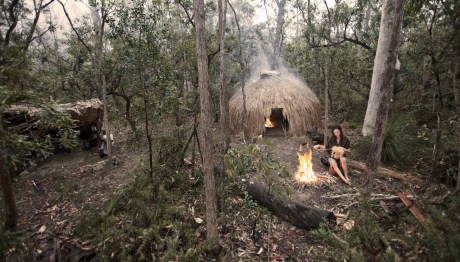
Recently I interviewed Claire Dunn, who graduated from HVGS in 1995, and has just published her first book: My Year Without Matches. It’s an autobiographical account of Dunn’s year long immersion in a bushland camp, living in the shelter she built herself, largely in isolation, and without the benefit of electricity, running water or any heat source other than fire. Learning to start a fire became part of her daily ritual, hence the book’s title.
By all accounts, My Year Without Matches is a fascinating account of one woman’s exploration of nature and her own place in the world. Dunn speaks passionately about the human need for ‘re-wilding’, particularly when we live lives largely disconnected from nature and other animals. The following is an edited interview about her journey into writing and her new book. As part of the HVGS project, it has a strong focus on the School and its educational legacy, but hopefully what she has to say about writing and lifestyle choices is of interest to anyone with an interest in writing memoir, teaching writing and/or critical thinking, and environmental activism.

How did you get interested in writing?
I always felt like I was a writer; it was partly just because I discovered I was good at it. One teacher at the School, Mrs (Elaine) Barker, was very encouraging of my writing. I felt like I had a skill for it, and a natural kind of talent for it, so that drew me into journalism.
What did your teacher do to encourage your writing?
She really pushed me to develop my own ideas, actually. I remember it quite clearly. I was much more of the ‘let’s do everything by the book, and check the notes’ type, and she started giving us these essays where you just had to think for yourself. That was really helpful. We were doing texts there weren’t any crib notes for…
One of the texts had absolutely no, it was a play, it had no critical reviews by authority figures. We had to develop all our own ideas about what the themes were and what the character development was, and all that sort of thing, and literally having no other choice, but to rely on your own ideas.
Did you debate ideas as well as just write about them?
I think so. It was a small class and it had a bit of healthy competition, so we really egged each other on. It was just new to me to go, ‘wow, they’re my ideas and that’s enough’. The only time I got 100% for an English essay was when I didn’t refer to any printed material, no reference material at all. It was kind of a seminal moment: wow, my ideas were good enough. And it also allowed me to craft the essay in a really simple way, rather than trying to stuff it full of quotes, but that was really the thing: you have your own ideas and they’re valued.
What did you do after year 12?
I went straight to Macquarie Uni and lived on campus and studied Communications, majoring in print journalism, thinking I’d become a journalist. The course was ok, but I was discovering life, so I really wasn’t that interested in studying. Year 11 and 12 had been incredibly full on and really, really channeled towards getting the best TER that I could. And quite a lot of pressure from external sources as well, that I really didn’t have much interest in academic study when I went to uni. I really wanted to discover life so moving to Sydney was more about that for me.
I got involved in the Green Society on campus, and then started running it for a couple of years with a friend. That really was such an amazing education: it was like coming out of a bubble, realising the extent of the environmental crisis that we were in. Climate change was still a fairly new kind of idea, and I worked on forest issues and nuclear issues. I went up to Kakadu as part of the campaign against the Jabaluka Uranium Mine. I just dived headlong into this world of environmentalism, and absolutely loved it.

It became a case of ‘do I still go down this path of journalism, and if so, what do I do with this new found passion for the environment?’ So I followed that thread and volunteered for grassroots organisations and then worked for the Wilderness Society in Newcastle as the campaign coordinator for quite a number of years. In many ways I used my media training, but on the other side. I was the one creating the media, writing media releases, being the spokesperson and on the t.v. and in the frontlines. I walked away from the creative writing side of things because I was following that passion.
Then it started to get to a point where I’d been working as a campaigner for many, many years, and I started to see that the limitations to our success was the fact that people were so profoundly disconnected from the living support systems that we rely. People just don’t have a connection with the water we drink, where our food comes from, with the forests being the lungs of the earth. So I decided to get much more interested in eco-psychology and in the root causes of the ecological crisis that we find ourselves in.
I started to explore my relationship to the earth, because I was a campaigner, which was very much a fast paced city lifestyle, often behind a computer, and sometimes not even going to the places that I was campaigning for. I just started to feel profoundly disconnected. I was starting to lose inspiration and well, I was exhausted. It was really high-energy work. The group I was working with did have an amazing win in 2003. We were campaigning really hard leading up to the election and we secured 65,000 hectares of old growth forest between Sydney and Queensland. That was a huge win. And after that I needed to stop and take a rest, but I didn’t. That’s when I really started to burn out.

Yeah. Fatigue and that sort of thing. I started working in the Marine campaign for Port Stephens, and that was like working on forests but thirty years ago. It’s such a new concept, to put national parks in the ocean, so it was really like starting an enormous campaign. I felt like we were down the bottom of a huge hill that I couldn’t think about climbing.
I guess that’s when I started studying with Joanna Mason, an American eco-philosopher and Buddhist activist. Her whole work is about bridging personal change and social change, and reconnecting people, by addressing that human nature separation. It was a field of eco-psychology I was moving towards, and at the same time I started doing courses in wilderness survival skills and nature awareness.
Where did you do those courses?
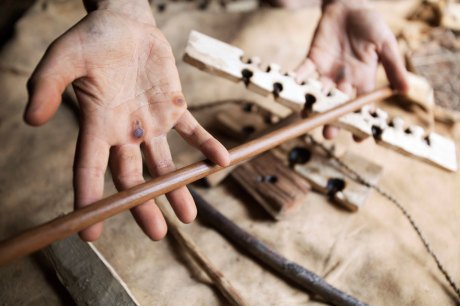
A range of places. Up near Dorrigo and also in the Hunter Valley. One of the facilitators was living out near Dungog and we’d gather on land out there. Something in me just woke up when I started doing these courses. I realised that most of my life had been very much a head based, intellectual framework and I was missing a real physical engagement with the world. It was stripping everything back and getting back to the absolute bare basics: an elemental connection with earth, air, fire, water. Getting to know the plants and the animals and the birds, directly addressed that separation in myself first. It just felt incredibly right.
I’ve always been into meditation and done silent retreats, but this kind of filled that gap. It was a very dynamic, open eyed awareness of being in the natural world and expanding my senses and learning the skills of bush food, fire, water, shelter and bird language. I’m a very determined person, and once I find something that really switches me on, I just follow it. And that really excited me. All the time I knew that I was starting to walk a path quite different from most of the people that I’d grown up with. It was like another step further away from that mainstream path. That’s always an edge for me, I keep getting drawn more and more towards the path less travelled. I feel like I’m an explorer, and think I always will be; I’m just so curious about different paths and different ways of looking at things.
How does this pathway affect your work with the Wilderness Society?
It started to be like a shift, one interest really started to take over the other, as one waned the other one grew….that whole one door closing, another one opening thing. I started getting drawn, inextricably, towards this other path.
Were you worried about stepping away from your activism work?
There was a lot of fear and trepidation about leaving the Wilderness Society, because it had been my passion, and I had this paid role in a national environment organization. There’s very few paid roles, especially in Newcastle, and there was a lot of fear that if I left it, I’d never be able to come back to that kind of job. I really liked living in Newcastle and had a great network of friends, all based around that kind of environmental justice/social justice scene, which is really lively in Newcastle. So I hung on, longer than I should have or needed to, because I thought ‘well, this is a dream job, and I’m walking away from it’.
Dunn established a pattern of working in her family’s plant nursery for half a year and then travelling for the other half.
I went to America and studied at a tracking, nature observation and wilderness survival school in New Jersey. It was wild, totally wild. It was with one of the world’s best trackers: Tom Brown, Junior. He’s a bizarre character but it was just such an adventure. I learned incredible amounts, and I was hanging out with everyone from U.S. marines to prairie hippies, and they were all lumped together in these intense courses where we were learning advanced tracking and awareness, everything from basketry to spear throwing, meditations to blindfold walking out at night.
The experience led Dunn to take part in a year long wilderness immersion program.
And then the idea of the year long program came up, and I knew I wanted to do it. I just knew that it was something that I had to do. I really felt like I was yearning for a retreat and a life changing experience… I wanted to know what my potential would be if I wasn’t answerable to key performance indicators, or the to-do list, or anything like that, but was just immersed in wild nature.
Can you tell me a little bit more about the course?
It was called the independent wilderness studies program, based on the model of the one that’s offered in New Jersey. It’s a four season immersion in nature. This one was in Australia, at Halfway Creek, between Coffs Harbour and Grafton. It was the first time it had ever been run, and a young couple facilitated it. The idea is to practice earth skills, so instructors would come in the first half of the year and teach us all the different survival skills, and then we were to build our own shelters out of just natural materials.
Then it was really up to us how deeply we went into it. It was like the door was open for us to dive as deep as we wanted to, and I wanted to dive really deep, so I made commitment to only light fires with sticks for the entire year. I was craving solitude. I’m a bit of a spiritual seeker and I really wanted to dive deeply into my own experience, and see what happens when I’m just in a place that’s not dominated by the human world. I really wanted to sink into the skills and sink into myself and kind of go on a journey of self-discovery. It turned out to be quite a journey, quite an experience.
Did you write while you were up there?
I wrote a lot in journals, which was the raw material for the book.
Did you get lonely?
I did get lonely in winter. We started in summer. My book is structured on the fours seasons, starting in summer, and also around the sacred order of survival: shelter then water then fire then food. Each season has quite a different flavour. In winter, the others all went away to an aboriginal community to learn weaving and hunting and gathering. I decided not to go because I wanted to be alone.
I discovered some truth about solitude. It’s an incredibly rich world that really uncovers some of the shadows that we don’t see when we’re so busy and so distracted. And I was chronically busy before… I’m so deeply passionate about life that I’m often overloaded with things I want to do, and people around me. Peeling all that back, what I started to uncover was that deep conditioning to achieve and to strive. Even though I’d taken myself out there with no expectations, actually what I’d found is there’s deeply ingrained expectations that I have to have things to show for my day, and that just being myself is not enough. It was a really painful process of shifting that conditioning and teaching myself and allowing myself to just be. A
Living out there was shifting my compass bearing 180 degrees in the other direction. It was moving from the head to the heart. It was like a rite of passage, which indigenous societies have always had, and are guided and accepted and just part of life. We’ve lost that. Even though I was 31 when I went out there, in a way it was my rite of passage from adolescence to more of an adult place: learning to know myself as distinct from my cultural upbringing.
I didn’t want to be pushing myself anymore, and I realised how much I’d been pushing myself all my life. Our culture is so obsessed with competition, and who’s above who in the hierarchy, and we just take it for granted because that’s how we’re brought up. But when you take yourself outside your cultural norms, in the more than human world… The forest doesn’t care who you are or what you’re doing; it’s just in collaboration, it’s a whole organism constantly in flow.
When you’re steeped like a teabag in that environment, you start to move towards that way of being, so all the hard places and stuck places inside of you seek to shift as well. But it was both incredibly joyful and incredibly difficult. I relished those days on my own. Often on dusk would be a lonely time. I’d wander a lot of the day, I walked the land, just with my binoculars and an apple in my pocket. Then on dusk sometimes it would be the fear of whether I’d get a fire going or not, but also this lonely little time. But once I was snuggled inside my shelter, with my fire, I wasn’t lonely anymore.
What was it like coming back into the everyday world?
The funny thing was that I felt really ready. It was a sense that the four seasons were complete. I was starting to get restless. I was really craving culture and a couch, café, friends and family, so I almost rushed out the door. But then I realised that it was actually quite difficult to come back. I felt quite claustrophobic within four walls. I just missed, mourned, for my shelter and the birds. I’d had this spot that I would sit every single day and watch the birds and they became friends. Even though I tried to recreate that, once you’re back in the world of phones and computers it’s really hard to limit it. I’ve found it really rocky.
The old identity is gone and I haven’t really found a new one. All I know is, and I talk about this at the end of the book, I feel like my role is to be a bridge between that world and this world- the wilds and the civilized domestic world- and to kind of bring people into connection with that wolrd. It’s not in the way I used to do it. That kind of activism is really important, but it’s not what my passion is now. I use this word ‘re-wilding’, it’s like re-wilding of the human heart, and that’s what I feel my role is now. There’s this campaign in Europe and America to re-wild the physical landscape by brining back the top order predators; amazing things are being done in Yellowstone National Park, where they’ve brought wolves.
My campaign is like a re-wilding of the internal environment as well. If we free up this domestic, civilized self we’re open to what our passions are. I want to really encourage people to find what makes them come alive and follow that. So it’s not about going bush, necessarily… That’s what I feel the world needs more than anything: people who are feeling alive, alive-o. We’re not listening to that.
What was the hardest part of writing your book?
The enormity of the project and when I realised that I didn’t know how to write a book. I thought I knew how to write, until I started writing, and then I realised I didn’t know anything. So it’s just been a steep, steep learning curve to learn how to write, and to write memoir, which is deeply exposing. I put everything out there, I didn’t hold anything back, I had to use all the tools of fiction but for memoir.
It could have been twice as long, I had so much material, knowing what to put in, what to take out, how much of the others to reveal, how much of my own to reveal. And just the absolute slog of it. It was a very solitary journey, writing a book, alone hours a day on a computer. I questioned it, so many times, and tried to stop, but something just kept urging me forward. And just when I was at the end of my tether, I’d get a really good piece of feedback, or I got offered a couple of residencies with writers’ centres, and they really boosted my confidence. I started to get some feedback that it could be published. And that’s the thing. It was so hard to throw myself into something that had no certainty, that might never see the light of day.
What’s the critical reception been like?
It’s been really amazing. I was incredibly scared about how it would be received, partly in my own community, and also in the wider world. But I’ve just had incredibly positive feedback from all walks of life. People are saying that it’s inspiring them to go on their own journeys, or just to reconnect with the birds in their backyard. People email me and say I’ve just brought a pair of binoculars, or I’ve just started meditating. A lot of women are really connecting with this archetypal character through the book, which is called the wild woman.
 Images courtesy of Australian Geographic magazine
 Helen Hopcroft: an artist's life