
Lately I have been meditating on strength. It began simply enough, thinking about physical strength and has since expanded outwards, until everything seems connected to the idea. For the last few days everything I see, think, feel and do seems connected to the process of becoming stronger. Here’s how it all started…
About a week ago, I was in the gym, lifting something heavy, and musing about other things to distract myself. I’ve found that when an exercise gets tough, letting the mind wander, and thinking about something else, anything else, usually helps. On this particular day, it occurred to me, rather depressingly, that the exercise I was doing would only get more and more difficult as I aged. Each year the same weight would feel heavier.
After this prime piece of motivation, I thought ‘well, what’s the point?’ If exercise functions simply to slow inevitable physical decline, then is it really worth the effort? I’ve always been curious about why people exercise, and like to try and unpick my own motivations: if you’re honest with yourself, it’s kind of fun. Meanwhile, pop music blared and my class moved onto another exercise. So I was thinking about life, and about doing things that make you stronger, and pondering the link between these two things.
Suddenly it hit me: bam! That was the whole point. We live to become stronger. It doesn’t matter if our efforts become less and less effective as we age, as it’s the process that counts. It’s written into our life cycle. We emerge into the world, helpless and mewling; through childhood we learn the ropes of the world, yet even as young adults, we are unsure about many things. It’s only as we get older, and face many trials, that strength begins to settle into our bones.
Tomorrow my young daughter will have eye surgery. It’s an important operation, and I’m lucky to have a good surgeon and hospital, and a short wait on the public system’s notoriously meandering list. More broadly, I know I’m privileged to live in a country where I can take healthcare for granted. But still, she’s only five, and my only child, and when I think about the mechanics of the procedure I shudder.
As a parent, I know that my strength is my daughter’s strength, and that I can transmit anxiety as easily as I can communicate optimism: the choice is mine. This, obviously, is easier said than done. But perhaps strength is best thought of as a series of choices, rather than a single battle. It’s facing something that we don’t want to face, or doing something that we don’t want to do, and doing this over and over again. Here’s my bumper sticker summary: Strength is the tension between the urge to run and hide, and the determination to stay and fight.
Interestingly, I was reading a cracking extract from Mike Tyson’s upcoming biography, and he says pretty much the same thing. His first trainer taught him that fear is a force, either destructive or positive, depending on how you use it. Tyson writes about the gladiatorial combat within, and how the process of wrestling with fear made him tough. He talks about being bullied as a child and how this drove his ferocious fighting technique. Tyson never just climbed through the ropes: he ripped them apart like a beast seeking prey.
(Photo credit: ESPN The magazine)
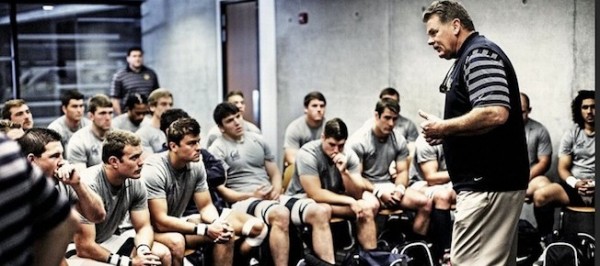
Another good read is to be found here. Fitness blogger Jen Sinkler interviews Jack Clark, a well known rugby coach, in an article titled ‘How to Win’. While rugby remains largely incomprehensible to me, I just don’t get it, I respond to Clark’s detailed knowledge of team dynamics. Essentially, his argument is that winning is a social process, and that you can build a team culture that facilitates collaboration and collective responsibility. Clark believes resilience is a key aspect of mental strength: ‘The best fortune cookie you ever opened says ‘get knocked down nine times, get up ten’’. And that while its good to spend time talking about a team’s achievements, close attention needs to be paid to targeting weaknesses.
I’m amazed by the close alignment between physical and mental strength, how the process of training our bodies trains our minds, and vice versa. And how even the simple act of picking up a heavy weight mirrors how we tackle a real problem: it’s not something that we want to do, we imagine it as much worse than it is, but once we step forward and take action, fear dissipates, and the result is usually different from what we expect. Afterwards our sense of release always surprises us.
As I’ve got older, the line between body and mind hasn’t evaporated, but it has become much less clear. I remember years ago, interviewing a prima ballerina, and her comment that ‘all movement begins in the mind’. Like all top dancers, this woman was a steel angel, with formidable mental toughness and a ridiculously high pain barrier. Her art form was all about thinking your way to physically demanding outcome.
It seems that strength, however we define it, comes from many places: experience/forgiveness, aligning mind and body, embracing fear, practising resilience, transforming weaknesses into personal strengths, family, friendships and love.
 Helen Hopcroft: an artist's life