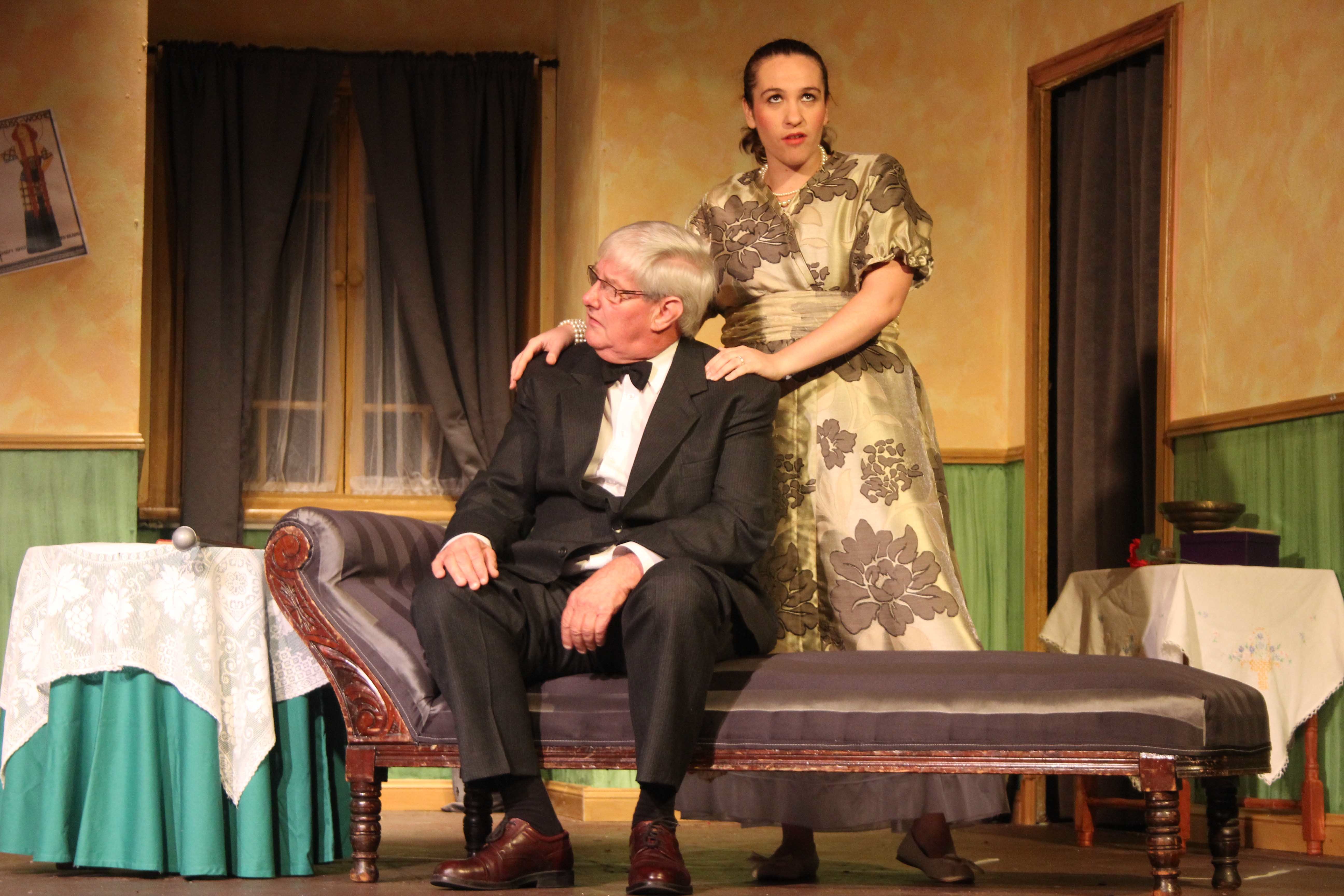
Recently I got all nostalgic about 80’s paint effects, largely as a result of working on the sets for The Guardsman, a play produced by Maitland Repertory Theatre. Described as a ‘light comedy about marriage’, The Guardsman was written by Ferenc Molnar and directed by Frank Oakes.
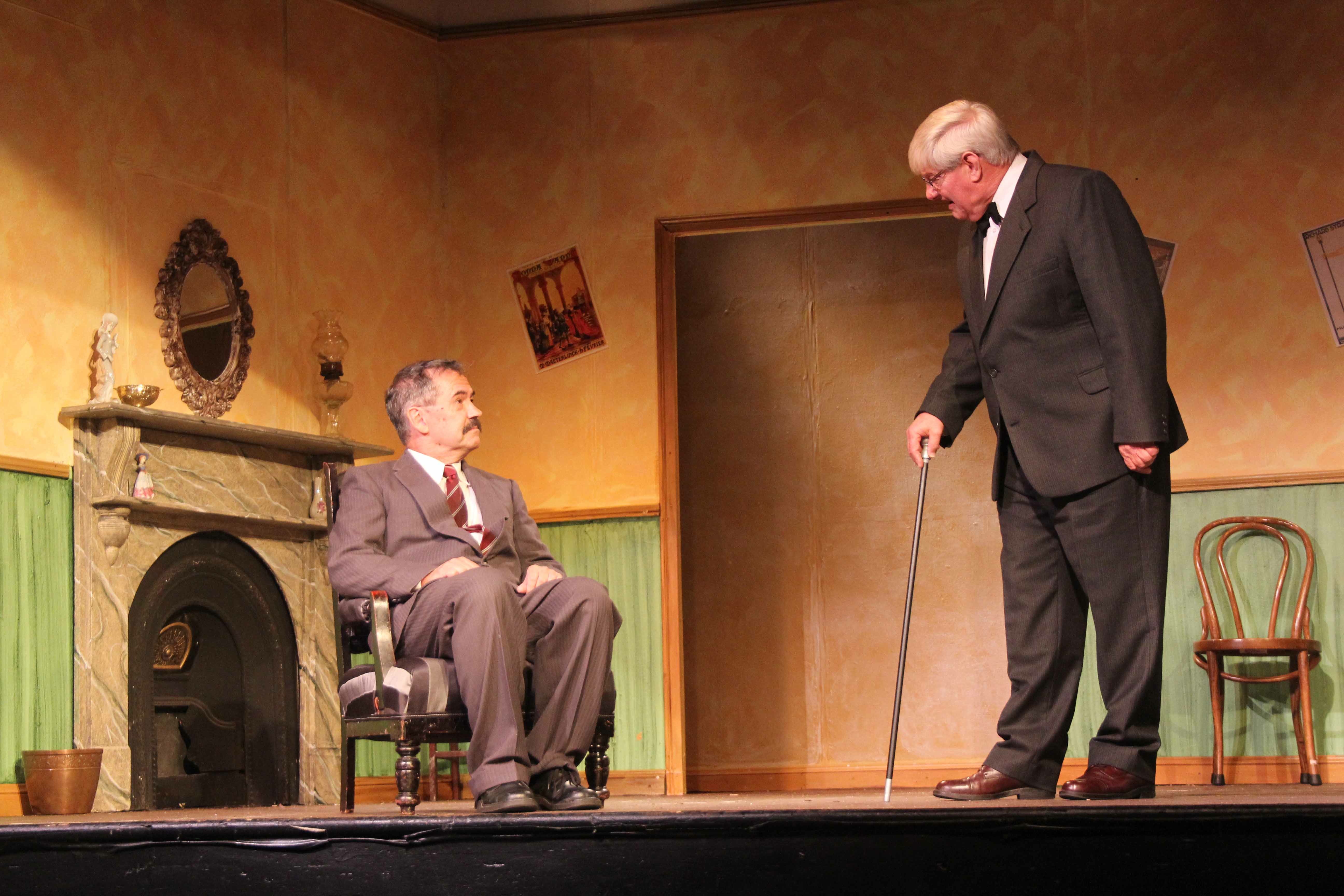
The green paint under the dado rails is acrylic mixed with generous amounts of Floetrol, cut with a bit of water, applied in a criss cross pattern, and then wiped off with a rag using vertical strokes. Very technical, folks. Basically you’re just applying transparent paint and then removing it again. The base coat is a matte, chalky mint green, also acrylic.

Above the dado rail the undercoat is a pale, matte yellow. Nothing fancy, just low sheen housepaint. Over the top of this blotchy orange-brown paint was applied in patches. When this looked truly hideous, like heat rash, a thin coat of watered down white acrylic was mopped over the top with a cloth. This is the poor man’s equivalent of lime-wash (yes, I know we’ve come full circle here).
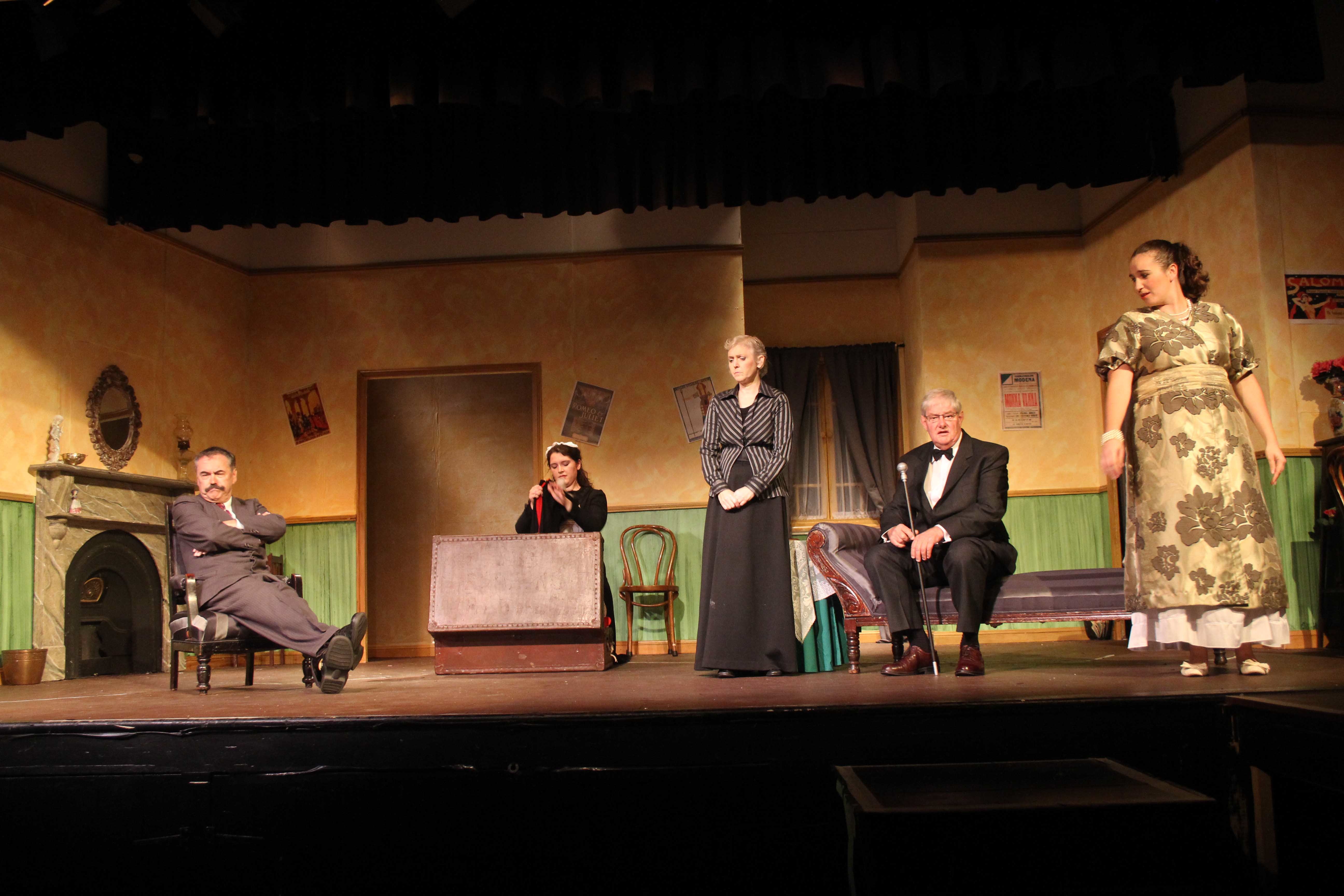
The wooden trim (picture rails and dado) were undercoated with a pale ochre, then given a not particularly shiny glaze of burnt umber acrylic paint, also mixed with Floetrol. And the fireplace was bagged with matte grey acrylic paint (bagging is as simple as it sounds: you hit wet paint with a plastic bag) and then veins were drawn/painted with black and white acrylic paint. If you want to make convincing marble, I’m told that badger brushes and clingwrap are great tools, and some people use corks or feathers to draw the veins. A coat of low sheen varnish also helps.
 Helen Hopcroft: an artist's life