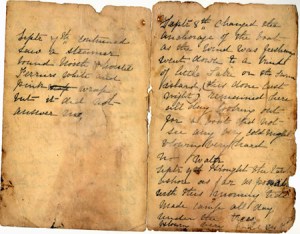
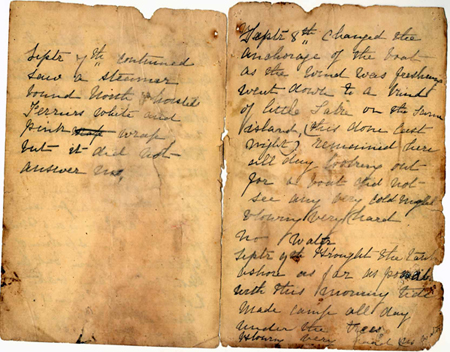
Mary Watson's diary
When I decided to start a blog, I did a brief tour of other people’s to see how to go about it. I discovered great stuff out there in cyberspace, very talented people generously sharing their ideas, but also noticed that some writers seemed to censor themselves, choose bland over bold, only include stuff that made them look good. I decided that blogging boiled down a to a simple decision: either write a polite blog and use it as a quasi publicity tool, or write the kind of blog that I’d like to read, and deal with any embarrassment or humiliation as it arose.
I like the blog format, the way it represents the continuation of the tradition of journal or diary keeping. I like how this kind of writing can be immediate, raw, uncensored, rough as guts, but sometimes contain such honesty and humour that you forgive it for all the crappy bits: the misunderstandings, vanity and relentless egotism. It can be as fascinating as a good letter, a drunken email, a bitter postcard.
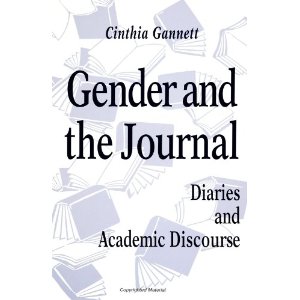
Last year I read Gender and the Journal: diaries and academic discourse by Cinthia Gannett. Loved it. Tracing the gendered nature of diary keeping, and therefore its tenuous status in the academy, the writer picked her way through the semantic difference between ‘diary’ and ‘journal’; examined the controversy surrounding the use of journals as an educational tool (when students start writing the unthinkable, or of the terrible things that have happened to them); cited various famous women’s diaries; and explored the idea of the journal as a ‘wild zone’ of creativity where people could unaffectedly be themselves or explore new identities.

Gender and the Journal: diaries and academic discourse
Here are some quotes that I particularly liked:
What would happen if one woman told the truth about her life? The world would split open. (page 81, Muriel Rukeyser, Kathe Kollwitz).
Could I write all, the world would turn to stone. (Catharine Sforzal 1462-1509)
Everyone knows that a place exists which is not economically or politically indebted to all the vileness and compromise. That is not obliged to reproduce the system. That is writing. If there is a somewhere else that can escape the infernal repetition, it lies in that direction, where it writes itself, where it dreams, where it invents new worlds. (Helene Cixous The Newly Born Woman, in Harriet Blodgett: Centuries of Female Days- English Women’s Private Diaries 1989).
The best of our writing is entangled with the messiness of our experience. (Nina Auerbach- Bauer 1990, 385).
It’s interesting because when I started this blog, just about no-one read it, so I was quite happy tap tap tapping away with whatever came into my head. Over time, however, I got better at working out how to link it with other social media and search engines, or perhaps word just spread, because now about a hundred people read it each week. In internet terms, this isn’t even a drop in the ocean, but for me it’s meaningful.
For some reason, though I’ve had stuff published in newspapers and magazines, I always thought about the reader in a generic sense (‘mustn’t bore the poor bastards…’) not as a collection of individuals and never in a numerical sense. Having an editor acting as a kind of filter gave me a sense that somehow I was less responsible for what I wrote. (Incidentally, I always like the story about the Tasmanian poet, Gwen Harwood, publishing a literary poem in a major national newspaper. It wasn’t until weeks later that people worked out that if you took the first letter of each stanza it spelt out ‘f**k all editors’).
I mention it purely because I’m currently battling self-consciousness. My ex-husband was helping me shift some furniture the other day, and when we put the heavy cabinet down, and were standing there puffing, he cracked ‘are you going to run off to the studio now and do some painting?’ He’d clearly read the blog entry where I’d described getting stuck into non-essential housework as a way of putting off making art.
At other times friends act as though we’ve had a conversation that we haven’t. They assume that I’ve read something, or done something, because I’ve blogged about it, not because I’ve discussed it with them. So that’s kind of weird too. I get emails that respond to the blog without mentioning it; people bringing up books I’ve just read or places I’ve recently visited; my Mum just waves her eyebrows at me. AP, speaking for all, and sounding guilty and interested, like he’d found my diary, reluctantly admitted ‘I read your blog…’
Although this blog is supposed to be about art and life, and how your life effects your creative work (and vice versa) it does sometimes stumble into quasi diary territory. I used to keep a diary, I started it a few months before my marriage hit the rocks, it was my place to pour out all the fear, pain and anger. But because I’m a writer, after a while I started looking at the diary’s contents objectively and musing ‘I could use this…’
At around this time I read The Bride Stripped Bare, a rather messy narrative adorned with some superb fragments of erotic literature. It started me daydreaming about the erotic genre. I’d read the Story of O years before (a library copy, thin with greasy pages) and had always meant to get around to writing, well, hardcore filth. So I decided to use my diary as the place where I could play with the idea of the erotic. And I wrote, and I wrote, and I wrote.
I tangled the whole thing up so it became a seamless piece of faction, named names, let my imagination off the leash, explored wordless cravings, subverted various provisions of the Crimes Act and generally had myself a high old time. Unfortunately I left the thing so badly hidden that at the height of the marriage breakdown, the raving, paranoid, jealous, half-crazed ex found it. You can’t imagine how well that went. Not. It was the worst possible combination of person, text and time. It reminded me of a quip from the diary of Jane Carlyle (wife of essayist Thomas Carlyle) who wrote that ‘I remember Charles Buller saying of the Duchess of Praslin’s murder, “What could a poor fellow do with a wife who kept a journal but murder her”’.
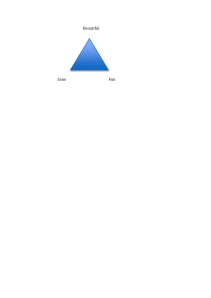
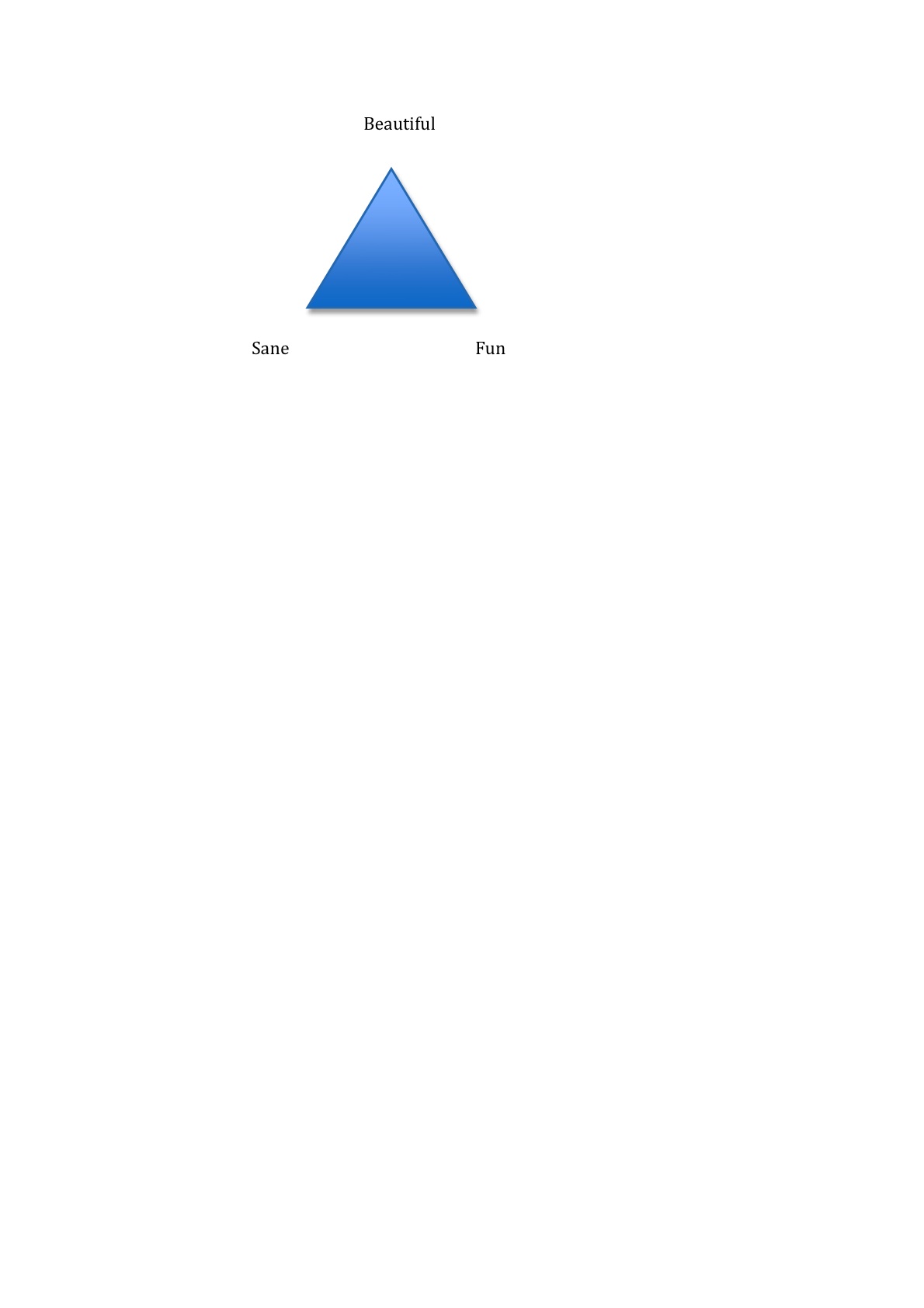
2 out of 3 ain't bad...
I’m finishing this entry with a triangle that AP sent me that represents his search for the perfect woman. In AP’s opinion, it’s not possible to have all three corners, you only ever get two at once. Enjoy.



 Helen Hopcroft: an artist's life


