Strangely enough, it was the question of scale that caused the most problems. You arrive, the mountains tower above you; every time you look at them it’s a shock. Every single word you think of to describe these towers of stone is inadequate.
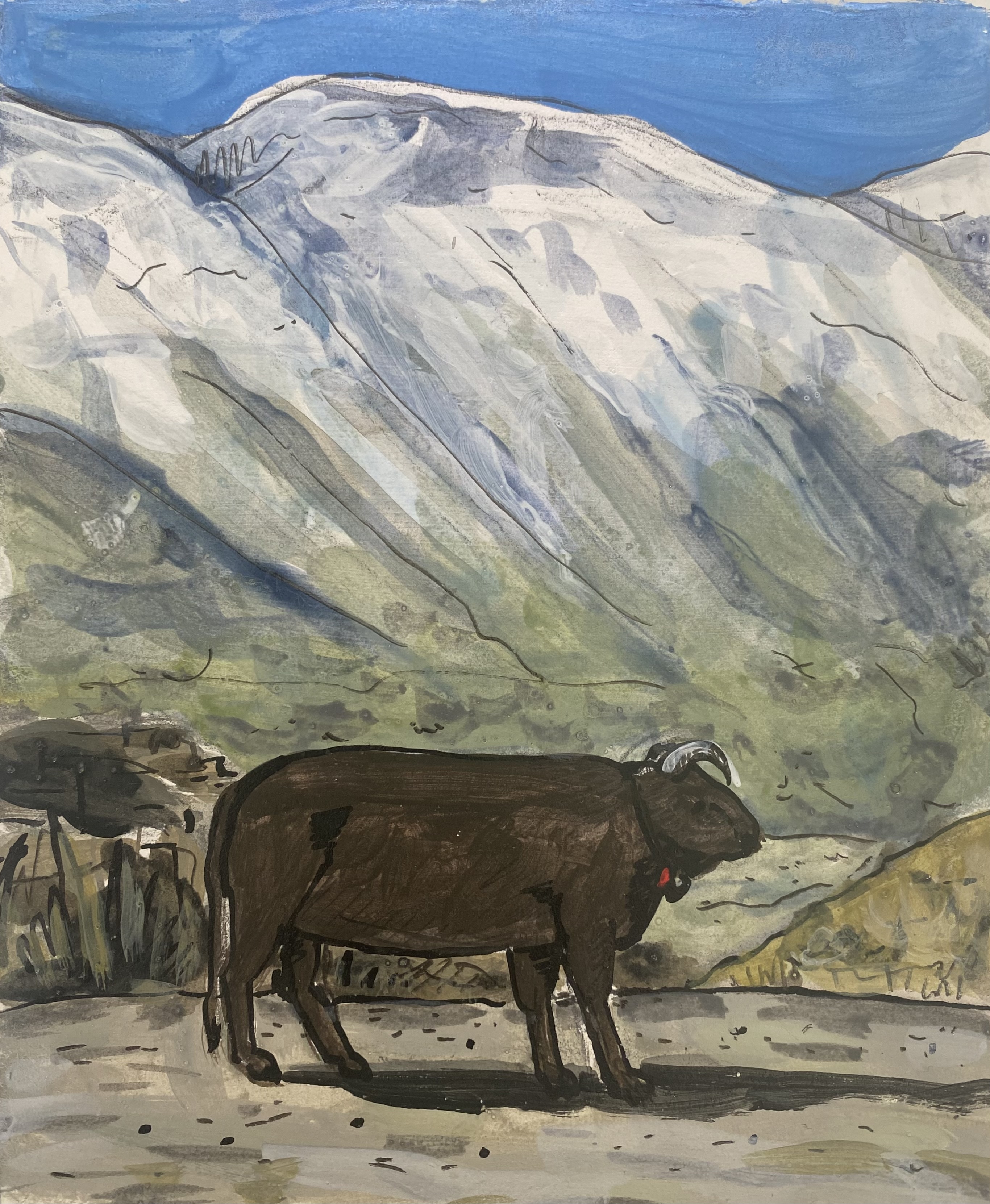
But because you’re an artist or a writer, and because you’ve come to this remote area to do an artist’s residency, it seems important that some attempt at representation is made. Your job is, quite literally, to encounter the world, interpret it using a symbolic language of your own devising. Then share it with other people, hoping that something of what you felt and thought comes across.
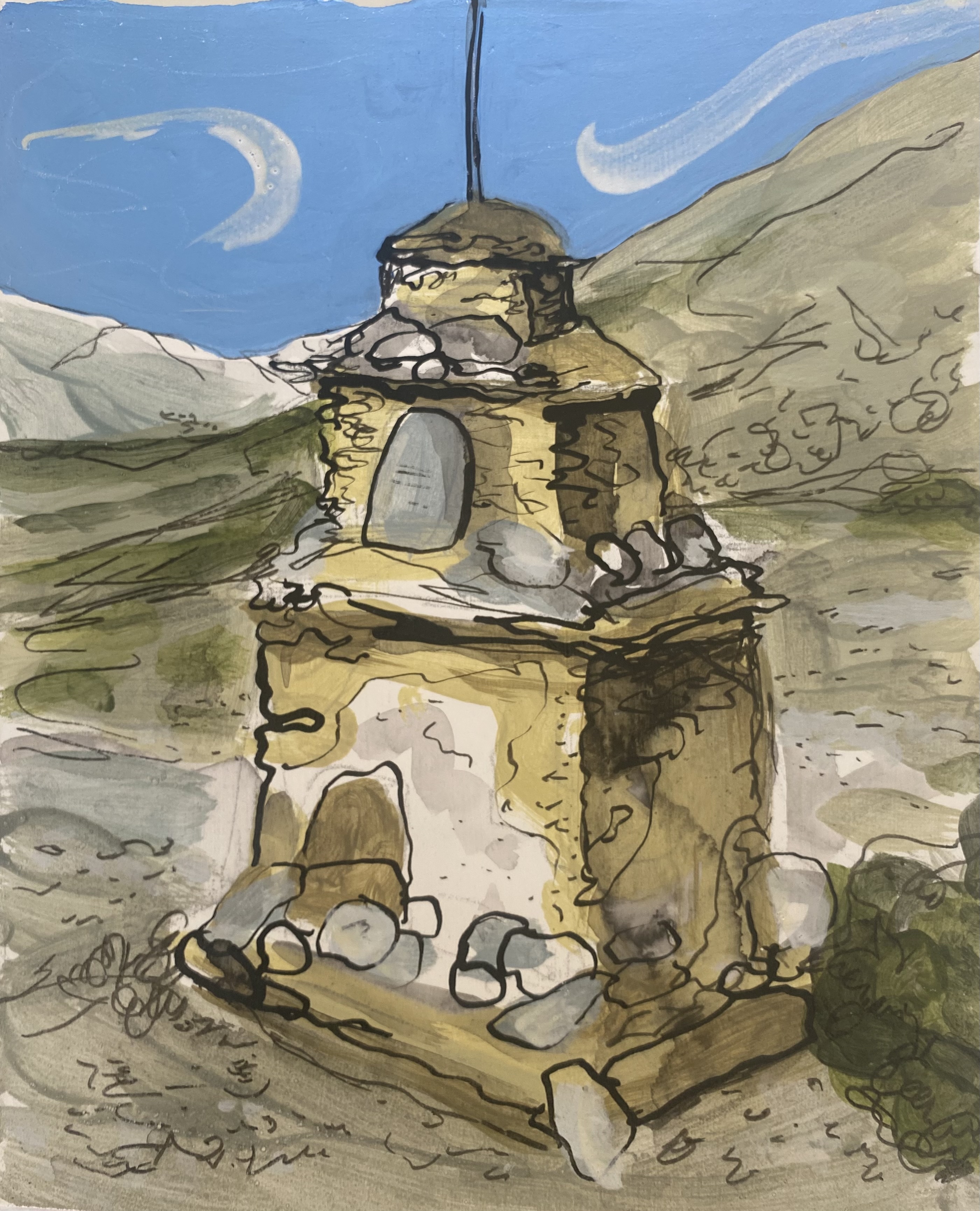
I spent a fair chunk of my residency thinking about size. About how to represent vastness, the infinite, something bigger and more powerful than language. Seeing these mountains was the first time I had experienced awe, yet the problem remained: how do you paint something beyond all human scale? How do you write about it?
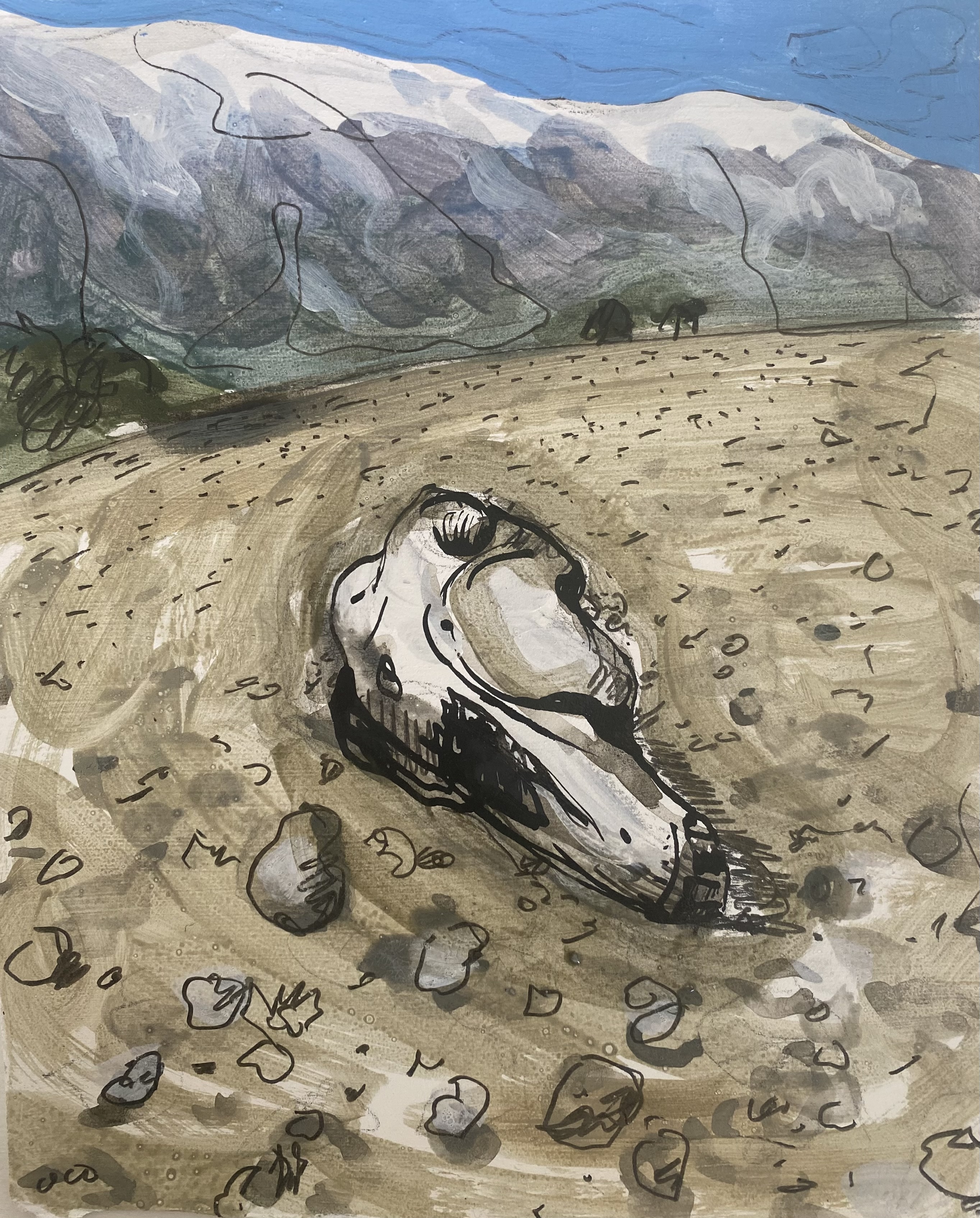
After a few attempts to paint the Himalayas on an A3 piece of Clairefontaine paper, and creating an image which looked and felt like a toy, I decided to focus on ordinary-sized things. Around the village of Ngawal were many smaller entities – domestic objects, animals, stone shrines, bonfires – which felt compelling. I painted them on little pieces of paper, mentally referring to them as ‘the icons of Ngawal’.
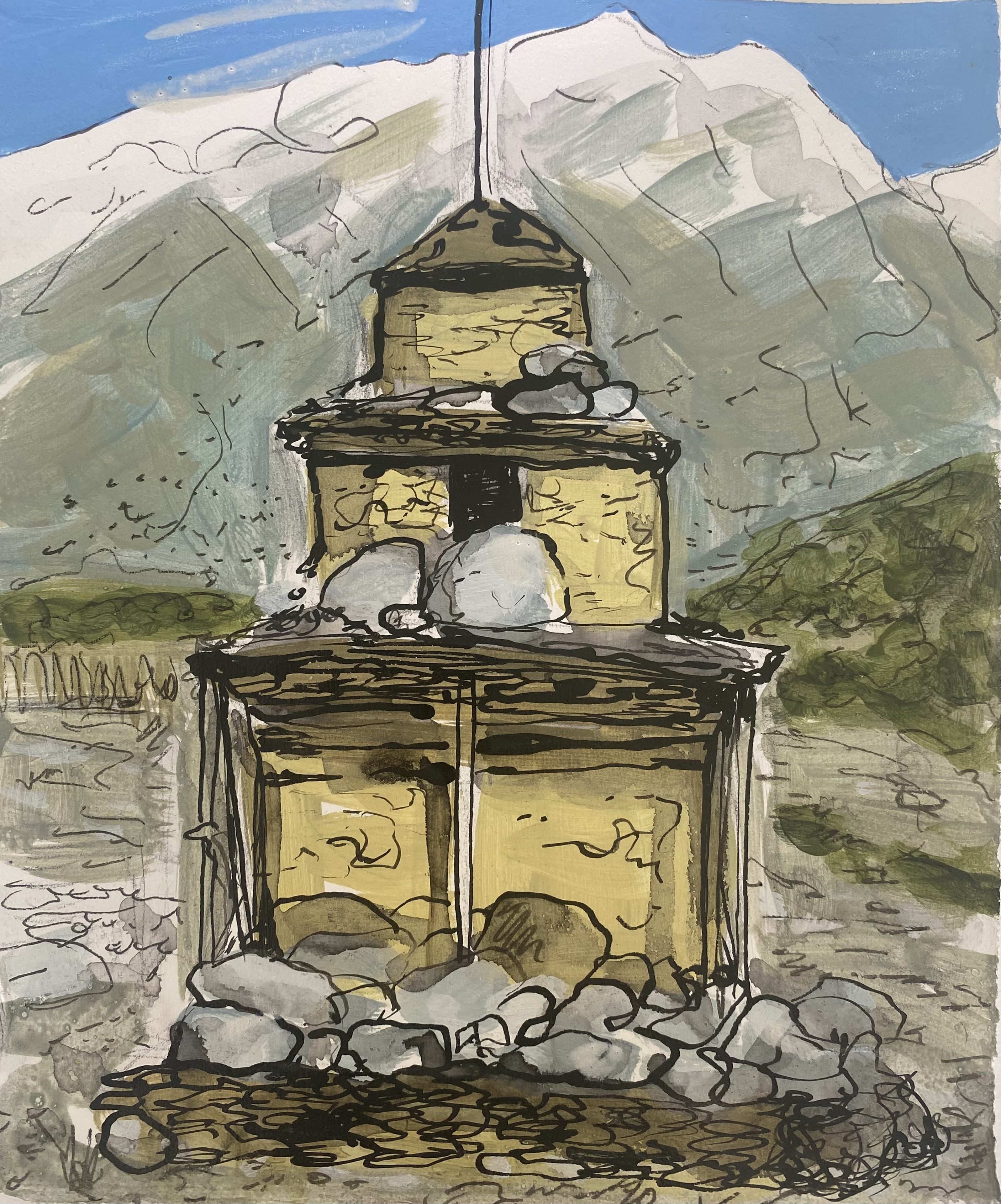
It was satisfying, comforting even, to encounter a human-scale object and be present with it. Something about the drawing process feels intimate, like a relationship, as if an exchange of energies is taking place.
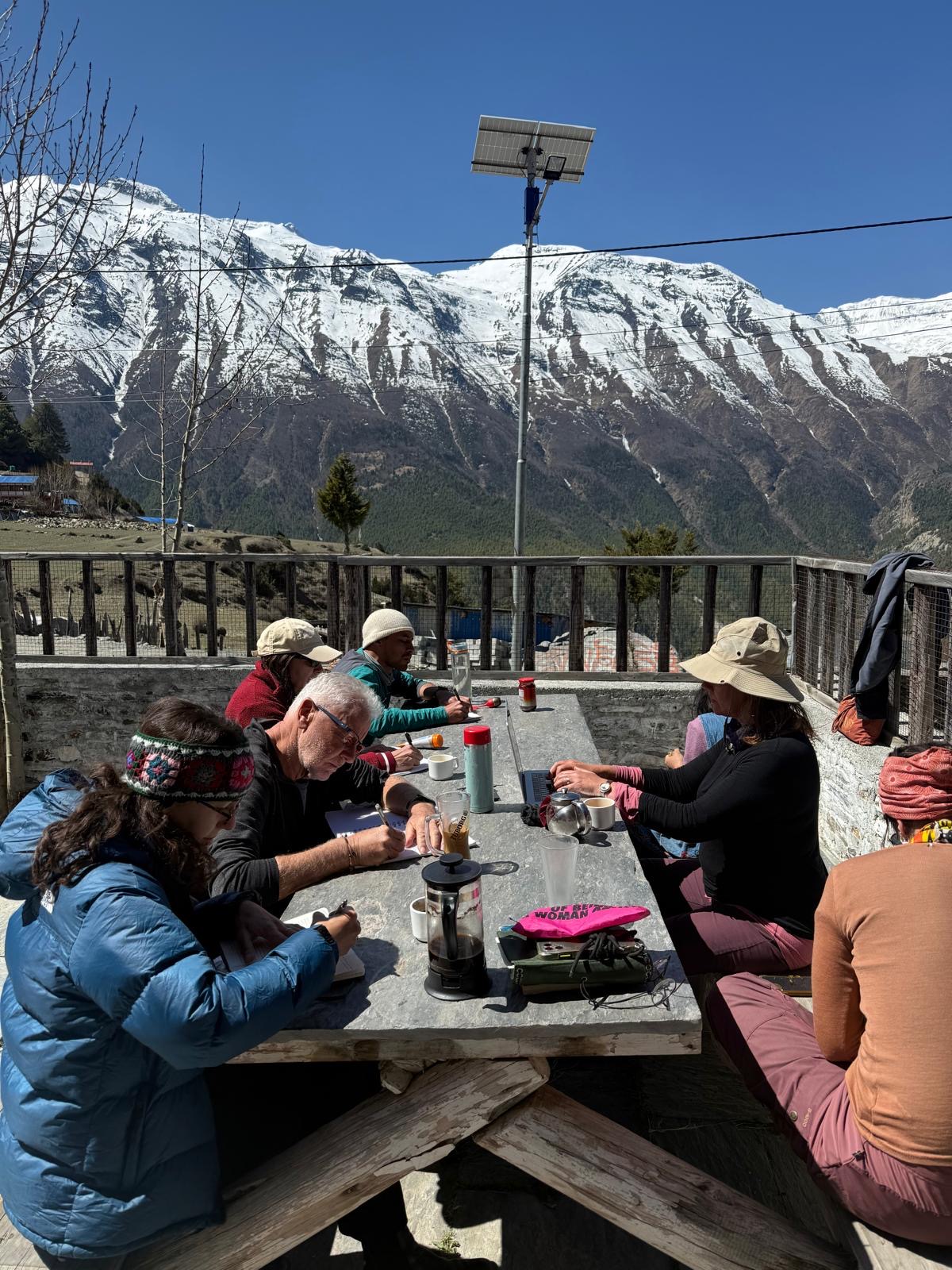
On my penultimate day, I decided to share this idea of struggling to represent vastness by hosting a creative writing workshop. With the mountains as our subject, we used stream of consciousness drafting exercises and prompts to write about things of impossible size. Preparing for the session the previous evening, I thought about writers who have tackled such subjects – including various sci-fi writers – and found some dramatic quotes by Tolkien and Herman Melville.
Tolkien describes the huge spider, Shelob, to chilling effect, which greatly impressed me when I was read the Lord of the Rings as a child. And as a young artist in London, I first read Moby Dick, and had been mesmerized by Melville’s ability to evoke the grandeur, size and terror of the white whale.


 Helen Hopcroft: an artist's life
Leave a comment