Archives for category: Uncategorized

Image

Lately I have been meditating on strength. It began simply enough, thinking about physical strength and has since expanded outwards, until everything seems connected to the idea. For the last few days everything I see, think, feel and do seems connected to the process of becoming stronger. Here’s how it all started…

About a week ago, I was in the gym, lifting something heavy, and musing about other things to distract myself. I’ve found that when an exercise gets tough, letting the mind wander, and thinking about something else, anything else, usually helps. On this particular day, it occurred to me, rather depressingly, that the exercise I was doing would only get more and more difficult as I aged. Each year the same weight would feel heavier.

After this prime piece of motivation, I thought ‘well, what’s the point?’ If exercise functions simply to slow inevitable physical decline, then is it really worth the effort? I’ve always been curious about why people exercise, and like to try and unpick my own motivations: if you’re honest with yourself, it’s kind of fun. Meanwhile, pop music blared and my class moved onto another exercise. So I was thinking about life, and about doing things that make you stronger, and pondering the link between these two things.

Suddenly it hit me: bam! That was the whole point. We live to become stronger. It doesn’t matter if our efforts become less and less effective as we age, as it’s the process that counts. It’s written into our life cycle. We emerge into the world, helpless and mewling; through childhood we learn the ropes of the world, yet even as young adults, we are unsure about many things. It’s only as we get older, and face many trials, that strength begins to settle into our bones.

Tomorrow my young daughter will have eye surgery. It’s an important operation, and I’m lucky to have a good surgeon and hospital, and a short wait on the public system’s notoriously meandering list. More broadly, I know I’m privileged to live in a country where I can take healthcare for granted. But still, she’s only five, and my only child, and when I think about the mechanics of the procedure I shudder.

As a parent, I know that my strength is my daughter’s strength, and that I can transmit anxiety as easily as I can communicate optimism: the choice is mine. This, obviously, is easier said than done. But perhaps strength is best thought of as a series of choices, rather than a single battle. It’s facing something that we don’t want to face, or doing something that we don’t want to do, and doing this over and over again. Here’s my bumper sticker summary: Strength is the tension between the urge to run and hide, and the determination to stay and fight.

Interestingly, I was reading a cracking extract from Mike Tyson’s upcoming biography, and he says pretty much the same thing. His first trainer taught him that fear is a force, either destructive or positive, depending on how you use it. Tyson writes about the gladiatorial combat within, and how the process of wrestling with fear made him tough. He talks about being bullied as a child and how this drove his ferocious fighting technique. Tyson never just climbed through the ropes: he ripped them apart like a beast seeking prey.

Image


(Photo credit: ESPN The magazine)

Another good read is to be found here. Fitness blogger Jen Sinkler interviews Jack Clark, a well known rugby coach, in an article titled ‘How to Win’. While rugby remains largely incomprehensible to me, I just don’t get it, I respond to Clark’s detailed knowledge of team dynamics. Essentially, his argument is that winning is a social process, and that you can build a team culture that facilitates collaboration and collective responsibility.  Clark believes resilience is a key aspect of mental strength: ‘The best fortune cookie you ever opened says ‘get knocked down nine times, get up ten’’. And that while its good to spend time talking about a team’s achievements, close attention needs to be paid to targeting weaknesses.

I’m amazed by the close alignment between physical and mental strength, how the process of training our bodies trains our minds, and vice versa. And how even the simple act of picking up a heavy weight mirrors how we tackle a real problem: it’s not something that we want to do, we imagine it as much worse than it is, but once we step forward and take action, fear dissipates, and the result is usually different from what we expect. Afterwards our sense of release always surprises us.

As I’ve got older, the line between body and mind hasn’t evaporated, but it has become much less clear. I remember years ago, interviewing a prima ballerina, and her comment that ‘all movement begins in the mind’. Like all top dancers, this woman was a steel angel, with formidable mental toughness and a ridiculously high pain barrier. Her art form was all about thinking your way to physically demanding outcome. 

It seems that strength, however we define it, comes from many places: experience/forgiveness, aligning mind and body, embracing fear, practising resilience, transforming weaknesses into personal strengths, family, friendships and love.


 

Q: What’s the next best thing to actually going to the gym? A: Reading about going to the gym. Q: How can you fit personal training into your busy lifestyle? A: By sitting down with an article by a personal trainer. Q: How can you feel toned, lean and muscular without any physical effort? A: Peruse a fitness blog!

Image

Yes folks, as a dedicated armchair athlete, and aspiring sports writer, I’ve come up with the perfect mind body balance. I’m pleased to report that my latest hobby is reading the internet’s dazzling array of fitness blogs. These wonderful sites- written by personal trainers, nutritionists, assorted nutters, fitness models et al- dish up all the latest info about exercise and diet. And the best thing is that they can be read while sitting on one’s butt with a cup of tea and low carb/high protein biscuit. Obviously, I’m joking about the biscuit: spekulatius, those nice gingerbread-almond combos, are my preferred weapon of choice.
After extensive research (about a month of sitting around with cups of teas, after my kid has gone to bed) I’ve come up with what I think are the cream of the current crop. However, like any good researcher, I’ve got to admit some bias in my selection and analysis:

(a) No pretty, no read: ok, so it’s superficial, but if the typography and graphics aren’t that hot, I’m not inclined to stay and read. I also give bonus marks for nice illustrations or relevant documentation. It shows that you care about detail and that you are in it for the long haul.

(b) Gender: while I occasionally read the manly blogs, often designated by black and grey colour schemes, adrenaline graphics and photos of rippling torsos, I’m more interested in content that targets women. The good side of this is that I get to find out about female friendly exercises and stuff that mainstream blogs won’t touch (e.g. exercising during menstruation). The bad side is that you have to wade through a certain amount of material about body image and eating disorders, which is useful information, but just not what I’m particularly interested in.

(c)  Punctuation: ok, so I’m leaving myself open here, but if you don’t know how to use a possessive apostrophe, I’m going to doubt your authority on all other subjects.

I have a host of other biases, but they’re really too nitpicky to list in detail.

Here’s my current faves:

Image

Jen Sinkler, a former rugby player and personal trainer, writes an engaging blog about strength training, nutrition and exercise. Her blog went viral a few months ago when she weighed into the ‘cardio versus weights debate’. When someone asked her what she did for cardio, she famously replied ‘lift weights faster’. And yes, you can buy a cute-shirt with this slogan on it.

I only worked out what CrossFit is fairly recently, and since them have been mentally translating it as ‘gymnastics for guys’. Yes, this is an awkward admission, but until quite late in the piece, I thought 50 Shades of Grey was a book about old people, so not understanding CrossFit is quite on par. Here’s a funny article by a CrossFit devotee and another piece, that got a heap of traffic, by a critical voice.

Image

A blog that makes me smile, probably for the wrong reasons, is Fitness on Toast. A ridiculously good looking Swedish trainer sashays around the world, being photographed in expensive workout outfits, and sometimes stopping to eat delicious food. So why do I grin? Just small things, like the post that says you need to throw your trainers out after six months, and a breezy ‘easy’ recipe that considers fresh wild salmon a fridge staple. I rest my case.

Image

If you’re interested in food, this nutritionist’s blog is a good read: it’s regularly updated, has nice pictures and recipes, and she’s generous with her linking. However as a fitness devotee, when she starts talking CrossFit, I’ve got no idea what’s going on. It’s like another language, with hieroglyphic scribbles on a whiteboard, its own syntax and vocabulary, the whole bit. Good to read on Mondays, as she does a nice round up of good posts from the world of fitness and exercise, but sometimes the content she links to does feel a bit ‘prayer and clean living’.

Image

One of my particular faves is Fit and Feminist: the name says it all.

Image

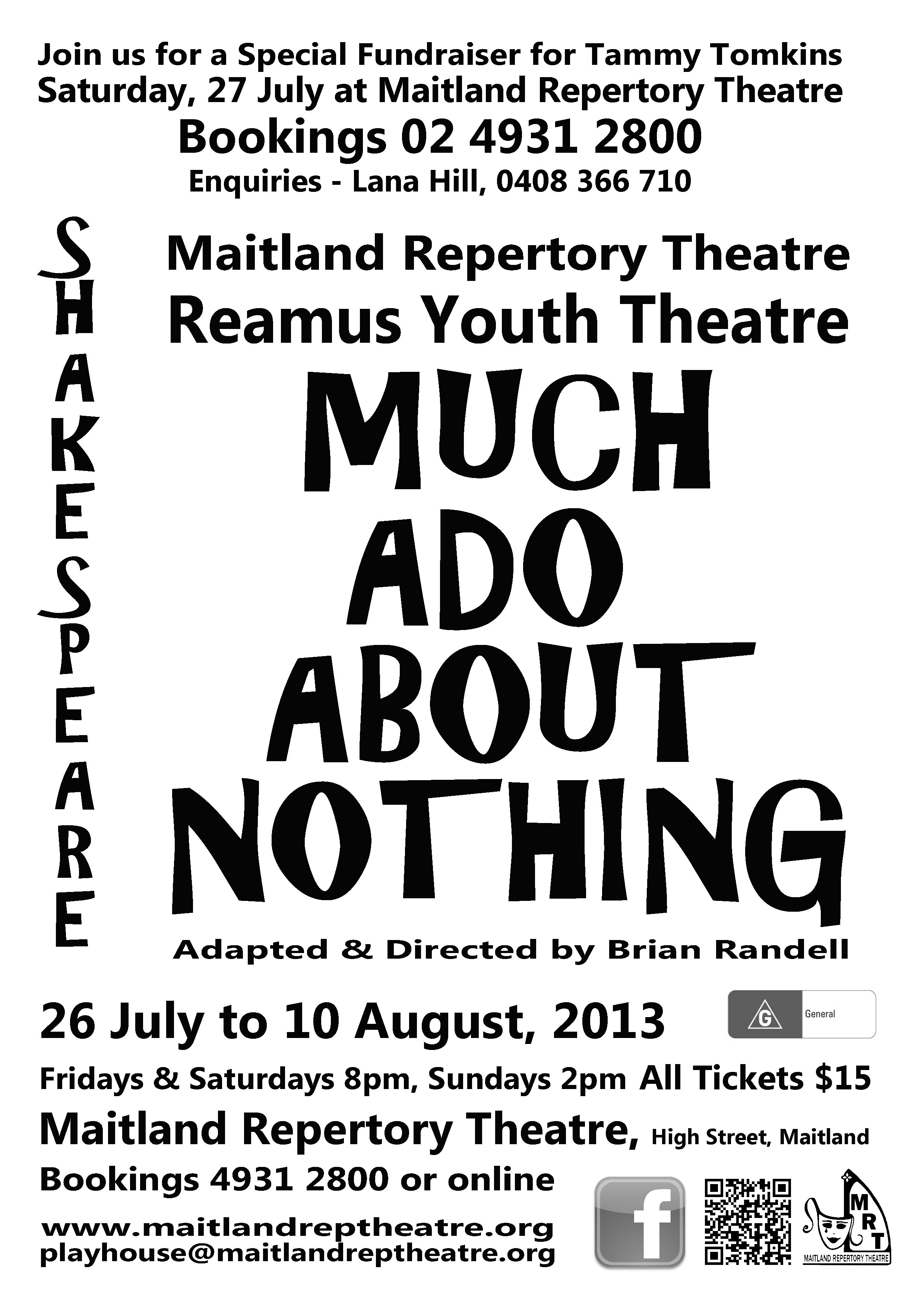
Maitland Repertory Theatre and its young adult company, Reamus Youth Theatre, are hosting a fundraiser for Tammy Tomkins on Saturday 27th July from 7.30pm onwards. For more information about Tammy and her family, please see this moving story in the Maitland Mercury.

Reamus will be performing Shakespeare’s much loved comedy Much Ado about Nothing. This production is directed and adapted by Brian Randell, and features a dedicated cast of young actors, many of whom have spent months working towards their first public appearance. Randell describes it as a “colourful, vibrant, funny but also focussed show” and praises his young cast’s professionalism. “It’s a chance to come out and support the youth. I mean, these guys spend two to three months, two to three nights a week, rehearsing this show”.

All tickets are $15 and can be purchased via Maitland Repertory Theatre’s online booking system or by calling Maitland Visitors’ Centre on 02 4931 2800 during business hours.

Image

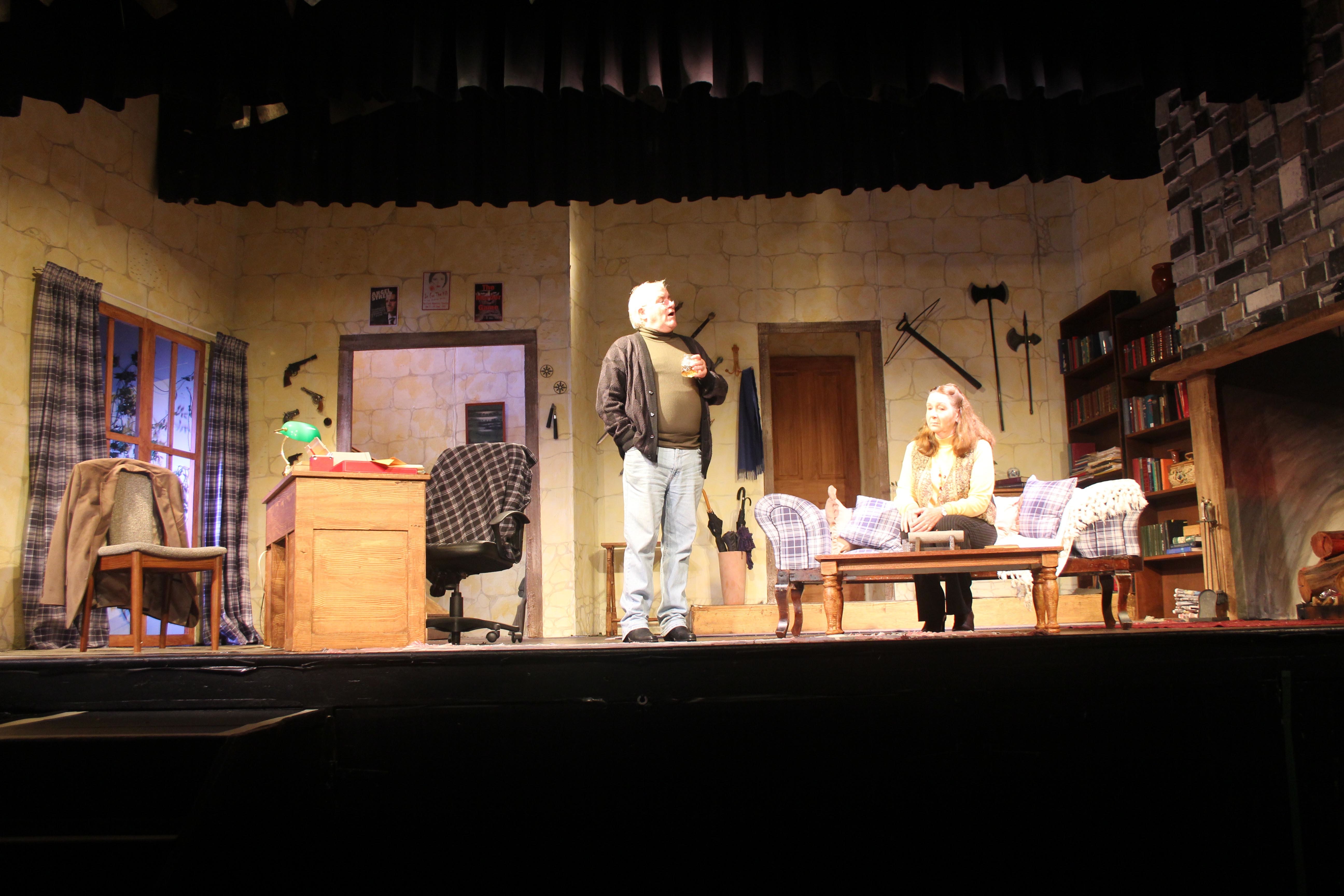
I recently painted the set for a Maitland Repertory Theatre production of Deathtrap, directed by Letitia Plume, which opened last Wednesday. Written by Ira Levin, Deathtrap holds the record as Broadway’s longest running comedy-thriller. And it’s not difficult to see why.

Deathtrap is intelligently written, with plots nestling inside plots, like sinister Russian dolls. At the end of each act, you think to yourself ‘ah ha! I’ve cracked it!’ but then it spins off into further machinations. Like any good thriller, nothing is as it seems. 

In a nutshell, Deathtrap is the tale of Sidney Bruhl, an aging playwright, famous for a couple of early hits, but now living off his wife’s money. He’s sitting at his desk, desperately trying to pen another decent play, when a letter from one of his former students arrives. The letter contains a manuscript, and as he reads it, Sidney realises that the young man, Clifford Anderson, has written a perfect play. Sensing the commercial potential of the manuscript, Sidney jokes to his wife that he’d happily kill to have written this play. Then he invites young Clifford to his house. 

What I like most about the play is that it’s a self fulfilling prophecy in action. A playwright writes a play about a playwright who writes a great play which, in the real world, gets turned into a Broadway blockbuster that runs for years. If you happen to be anywhere near Maitland, this production is worth checking out: the cast chuck themselves gleefully into their roles and the script itself is a thing of evil beauty. 

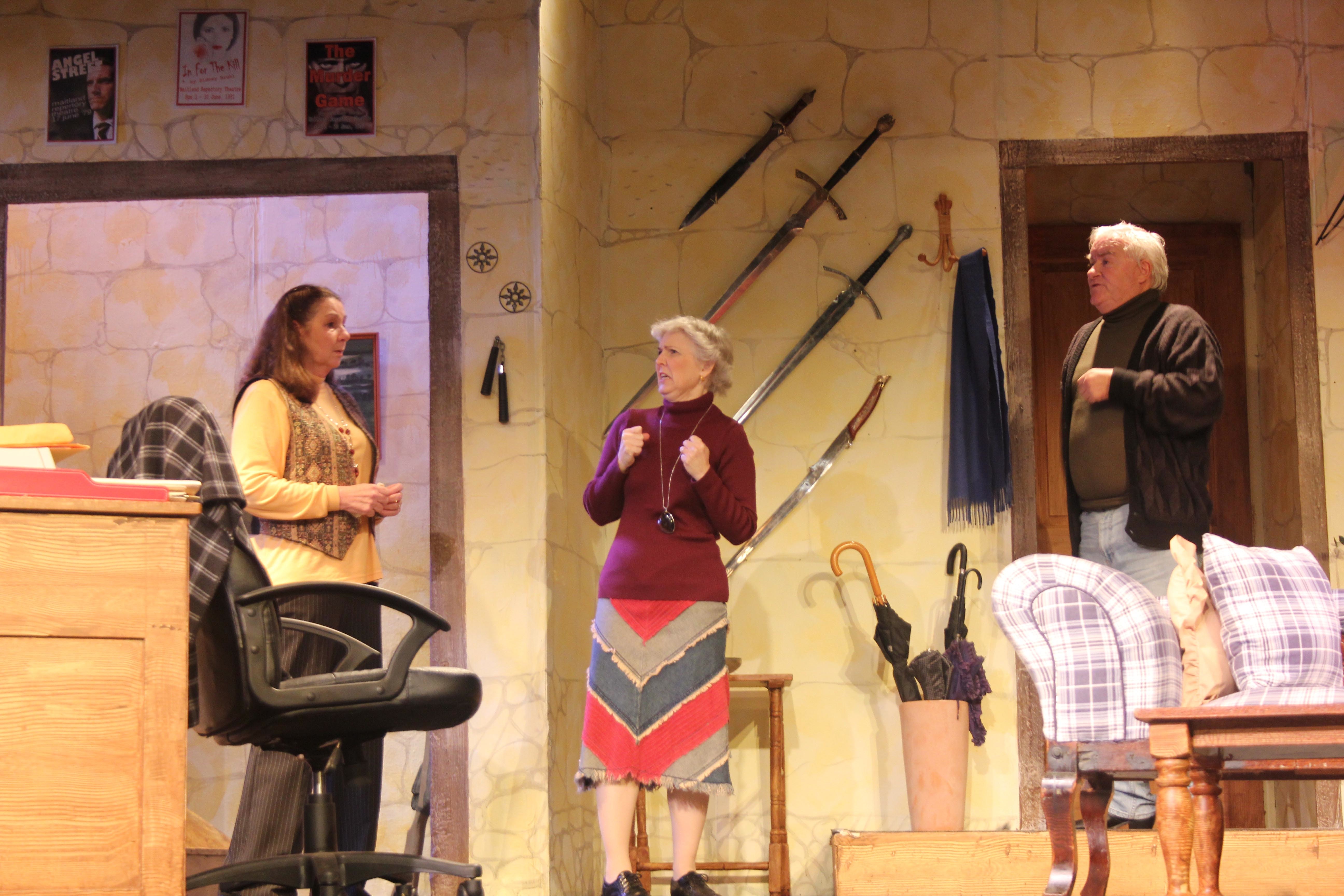
Deathtrap is set in a converted barn, circa late 1970s, hung with Sidney’s weapon collection and props from his previous thrillers. It’s a dangerous looking space, with swords, knives, guns, handcuffs and daggers all on display. At one point Sidney quips “what’s the good of owning a mace if you don’t get to use it occasionally?’ On one side of the stage is a large fireplace; antiques, bookshelves and a writing desk furnish the room.

The sets for this production proved a little trickier than the last lot, largely because I was having difficulty making the walls look like rendered stone. This is relatively easy if you can use an impasto effect, but the flats need to remain, well, flat so it was 2D trying to look 3D. In the end, I stuck a linear stone effect over the walls, hoping that this would relate to the patterns in the fireplace and furnishings. It’s completely different to what I’d originally pictured for the set, and although it’s rather busy, I quite like its butch, cartoony, over-the-top feel. 

Image

Image

Yesterday my Grandmother died: she was 93. Up until a few months ago, she was still living at home, and fiercely independent. Even the day before she died, she was still getting up, dressing herself and talking to people. She was the kind of person who believed in doing things well, and fighting any battles that needed to be fought with characteristic verve, determination and style.

As a young Catholic mother in New Zealand, my Grandmother raised six children, before moving to the island of Tasmania with her husband. My Grandfather built a house for his family in the industrial town of Burnie, and continued to chase his public service career, eventually becoming head of his department. A passionate rugby player, my Grandmother used to joke that if he’d known Tasmania didn’t have a rugby union team, he would never have moved there. After a cruel illness, he died early; my Grandmother’s bravery during this time was phenomenal.

My Grandmother was a strong supporter of the Arts, in all their forms. She painted and wrote poetry, and was always amazingly perceptive in her critiques of both creative works and people. In her early life, she taught art at Fahan School, a private girls college. She later managed the rare feat of turning her passion for creativity into a commercially viable concern.

With her sons Charlie and Mark, and husband Bernard, my Grandmother started Hobart’s first commercial gallery. (Or at least I’m fairly certain it was the first, but I’m happy to be corrected on this point). Salamanca Place Art Gallery was initially located in an old sandstone warehouse, on the corner of Salamanca Place and Wooby’s Lane, in a sprawling strip of buildings that once serviced Hobart’s notorious docks. The Gallery survived a couple of recessions, and at various times showed works by artists such as Tim Olsen and Brett Whiteley. Charlie eventually sold it to Dick Bett, who first moved his premises up the road, and re-named the business Dick Bett Gallery, and later to a shop front in North Hobart, where it traded as Bett Gallery. When Dick passed away, his children inherited the business, and it continues to trade as a respected contemporary art space.

I find it difficult to express the profound impact she had on both myself and her other grandchildren (Julien, Duncan, Rachel, Corinne, Natalie and Bernard). I remember having a conversation with my Grandmother, I must have been about twelve, when we discussed London’s famous art schools. She told me about the Royal Academy’s raised tiers in their life drawing room, and also about the Royal College. I vaguely recall asking her the difference between the two institutions, and she said something about the interesting painters, such as David Hockney, who had trained at the RCA. At that moment, I decided that I’d study at the RCA, which is something I eventually did.

In many families, working as an artist is actively discouraged. A Chinese friend once told me that she became an accountant because her parents told her that being an artist was “the way of the pauper”. I suspect that the same message is delivered across cultural boundaries everywhere. I rarely doubted that creativity was a vocation, and a worthwhile pursuit, and something that ranked high above most other professions, in that it spoke to the human spirit. In my family, my mother is a former State Gallery curator, and now paints and pots; my aunty established a feminist bookshop in the 1970s, taught English for many years, and now makes handmade books; my cousin Julien is a professional musician and talented writer; while my cousin Corinne sews like a dream and runs a creative business. Various other family members paint, garden, cook, curate, write, play, paint and build. I mention this because it is unusual for so many people in a family to act creatively, and this is largely due to my Grandmother’s influence.

When I was a young woman, living in London, my Grandmother acted as my psychic anchor. Life in a large city can be a lonely, expensive and disconnecting experience. During this time, I often wrote her letters, and when she was dying, discovered that she had saved them all. My mother gave me a large manila envelope with ‘Helen’ written on the front, and inside were these records of my former self. For some reason, I found the fact that she had kept them incredibly moving.

Grief is a strange emotion. For years now, whenever I visited Tasmania, at the end of each holiday I would say goodbye to my Grandmother. Each time I would think to myself ‘this is the last time I will see her’, and I took a mental snapshot of her face. In my memory is a perfect record of these final moments, lined up like photographs in an album. I kept on applying for artist residencies in Tasmania, hoping to spend some of her final years in the State, but for some reason, though my career functioned well elsewhere, I could never find much opportunity in my own State. I admit to a lingering grudge.

The last time I said goodbye, it really was the last time. The doctors gave her a blood tranfusion, which kept her alive for about a month, and allowed her family and friends to share some precious time before she passed. On our last day in Tasmania, Sophie and I spent the morning in her hospital room. We were there with my cousin Rachel, aunty Pam and my mother. I wheeled Sophie, an energetic five year old, around on my Grandmother’s mobility device and we talked and laughed. When we left, I turned around in the corridor, and blew my Grandmother a kiss. She blew one back, and I have another photograph in my mind of this moment. It’s something I will always treasure. 

R.I.P. Marjorie Leonora Hill (nee Gregory)

Image


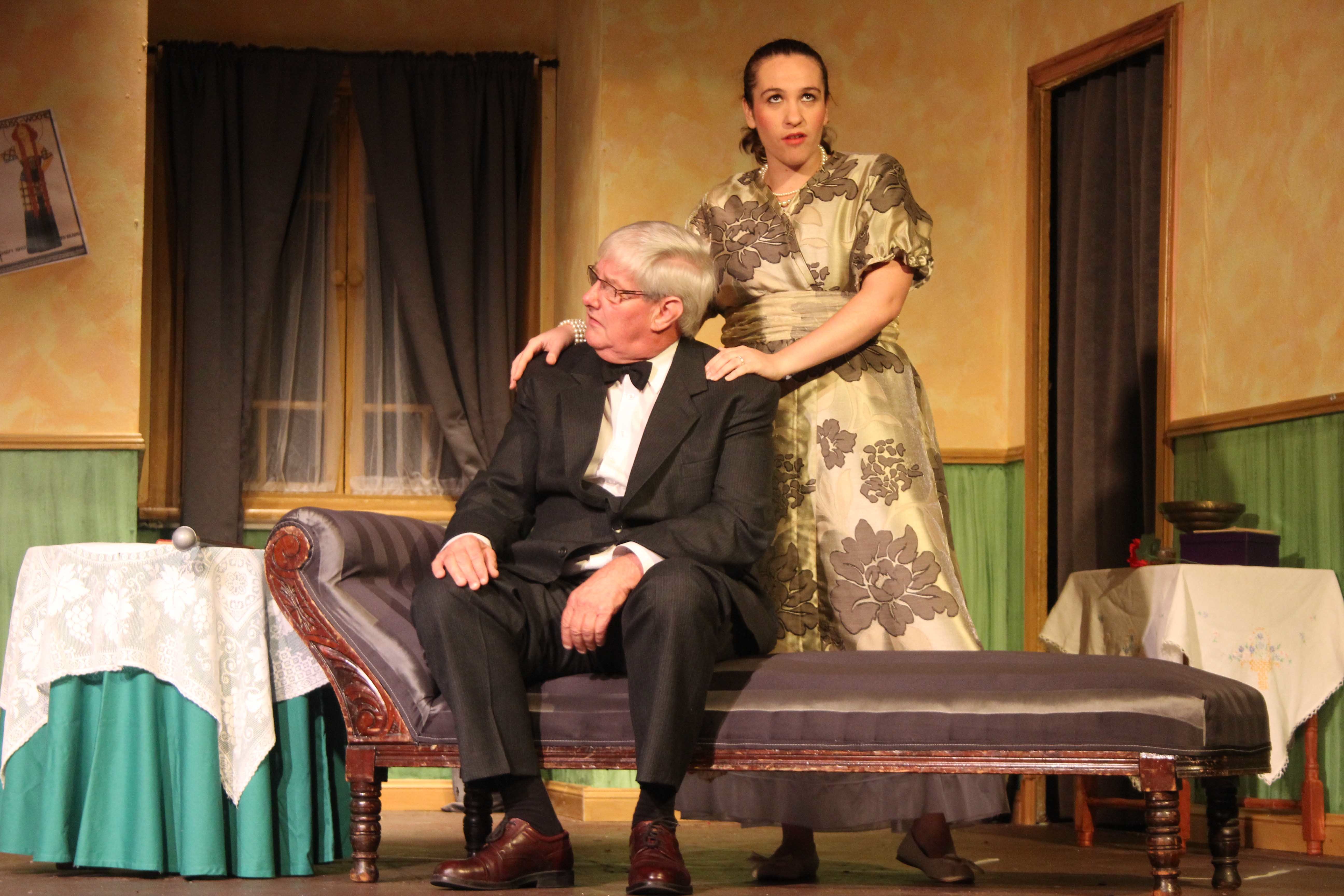
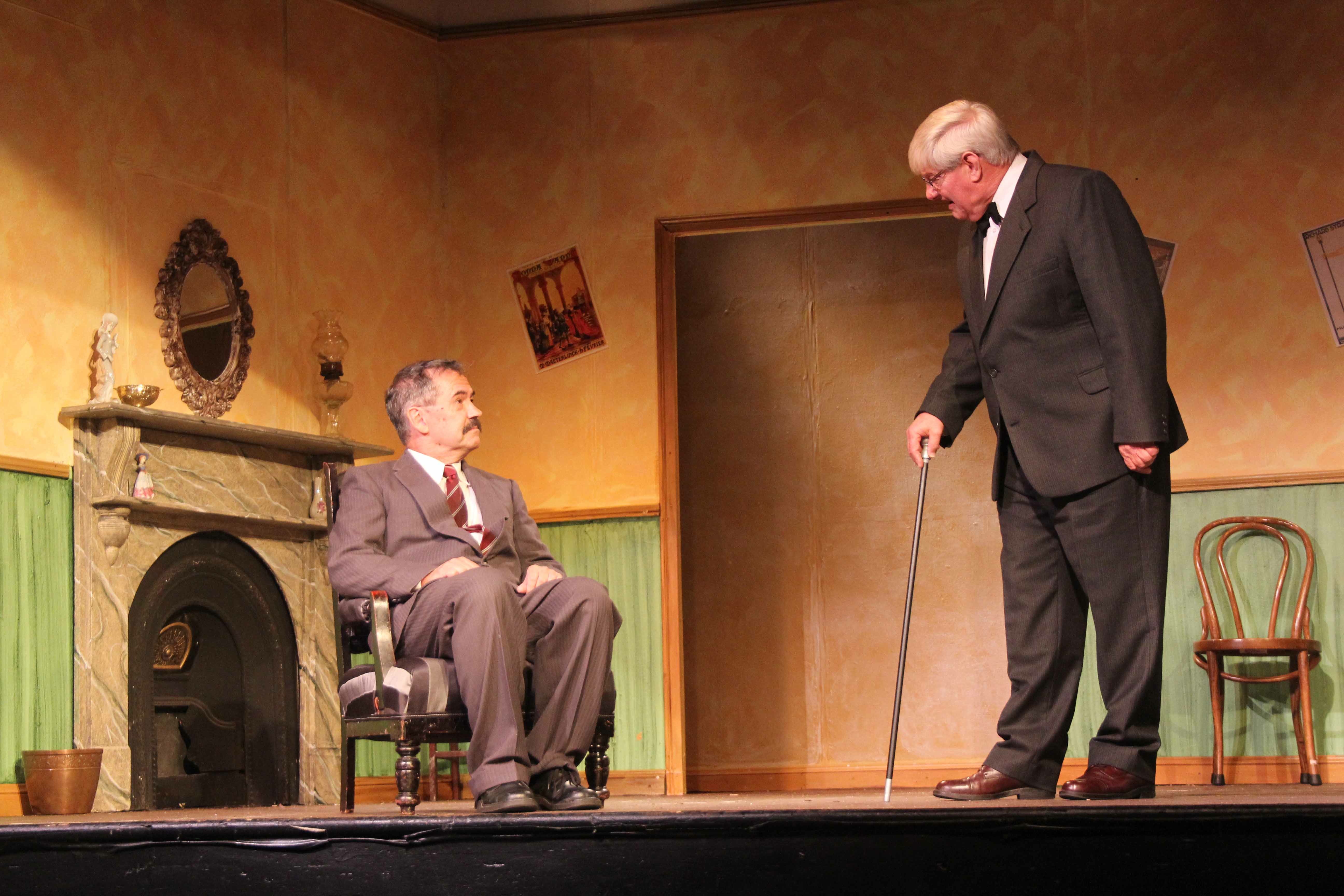
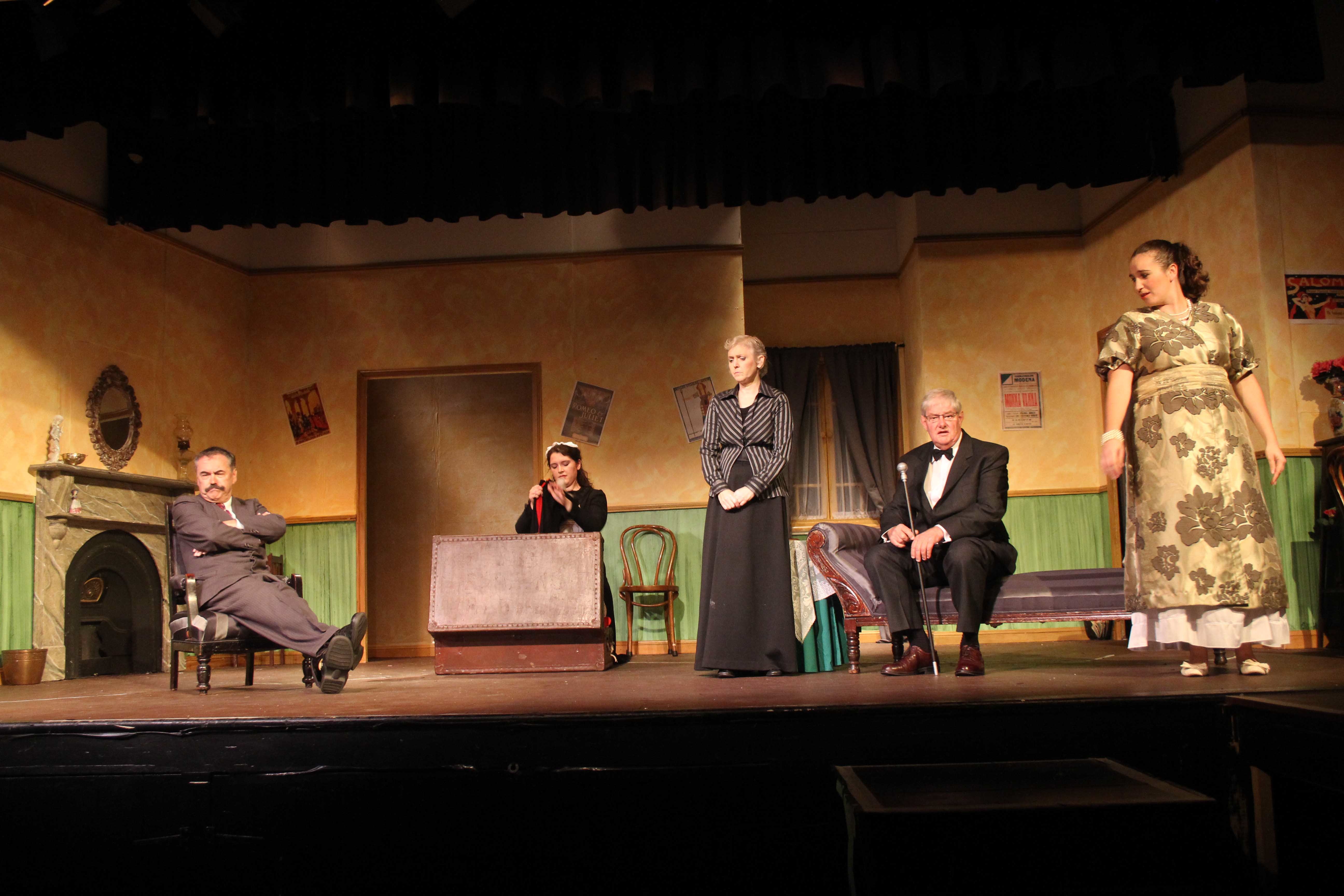
Recently I got all nostalgic about 80’s paint effects, largely as a result of working on the sets for The Guardsman, a play produced by Maitland Repertory Theatre. Described as a ‘light comedy about marriage’, The Guardsman was written by Ferenc Molnar and directed by Frank Oakes.

Image


The green paint under the dado rails is acrylic mixed with generous amounts of Floetrol, cut with a bit of water, applied in a criss cross pattern, and then wiped off with a rag using vertical strokes. Very technical, folks. Basically you’re just applying transparent paint and then removing it again. The base coat is a matte, chalky mint green, also acrylic. 

Image


Above the dado rail the undercoat is a pale, matte yellow. Nothing fancy, just low sheen housepaint. Over the top of this blotchy orange-brown paint was applied in patches. When this looked truly hideous, like heat rash, a thin coat of watered down white acrylic was mopped over the top with a cloth. This is the poor man’s equivalent of lime-wash (yes, I know we’ve come full circle here). 

Image


The wooden trim (picture rails and dado) were undercoated with a pale ochre, then given a not particularly shiny glaze of burnt umber acrylic paint, also mixed with Floetrol. And the fireplace was bagged with matte grey acrylic paint (bagging is as simple as it sounds: you hit wet paint with a plastic bag) and then veins were drawn/painted with black and white acrylic paint. If you want to make convincing marble, I’m told that badger brushes and clingwrap are great tools, and some people use corks or feathers to draw the veins. A coat of low sheen varnish also helps. 

IMG_5510

An odd instance of life turning full circle, but lately I’ve been working as a set painter for an amateur theatre company. The last time I did this job I was about eighteen, so more than twenty years ago, and I find I’m enjoying it just as much this time around. I got into it in the first place thinking ‘well, I like painting on large canvases, so the theatre company is really just giving me free art materials’.

IMG_5500

Unfortunately, like many young artists, my first professional gig as a set painter resulted in non payment and a fair bit of angst, so I decided to steer clear of theatre as a profession. I used to joke that ‘they’re actors, and so when they say that the cheque is in the post, you actually believe them…’

IMG_5499

This time around, I’m working for Maitland Repetory Theatre, and like the rest of the cast and crew, it’s all voluntary. Maitland Rep works out of a lovely old church, next to the Maitland Regional Art Gallery, and has a dedicated following of young and old thespians.

IMG_5497

I’ve been painting a set for The Guardsman, written by Ferenc Molnar and directed by Frank Oakes, which opens on the 10th April. So far I’ve been responsible for a not particularly convincing marble fireplace set, some blotchy old plaster on the walls, and faux wooden panelling below the dado rail. In case you’re interested in paint effects, Floetrol is my current weapon of choice, handy for all those 80s classics such as bagging, dragging, marbling, stone finishes, sponging and even the incurably naff rag rolling.

IMG_5490

Now if you’re old enough to remember the 80s, you’ll remember a time when a feature wall would have looked just like some poor unfortunate had run out of paint. Back in the day, interior designers never used to paint any surface without torturing it with some implement afterwards. So paint was scratched, distressed, sanded, waxed, imprinted with a variety of objects, or bulked up with various fillers so it acted like plaster. Why people insisted on making their belongings look old, I’ll never know, but there it is. And for a brief time in the mid 90s, I worked for a London construction company, doing this kind of work.

IMG_5486

I recently decided, largely on the basis of a casual conversation in a paint shop, that 80s paint effects were about to stage a comeback. I’d been considering buying Porter’s French Wash, a nice product that effectively acts as a scumble glaze. (Scumble glaze is sticky stuff you mix with paint so that it becomes more transparent, and you can see the brushstrokes after the paint dries; it’s as the pistachio is to shortbread when it comes to paint effects). I asked the guy behind the counter if he sold much of it, and he said ‘nah, not as much as the rest of their range’. So on the basis of this overwhelming evidence, I’ve thrown myself into a paint effects revival.

IMG_5480

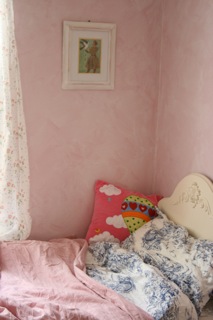
I figure that if I paint my house with these effects, by the time I get around to selling it, some years down the track, faux finishes will be a red hot trend. To this end, young Sophie has ended up with a pink blotchy bedroom (if it was a rash you’d definitely be off to the doctor) and I’m planning to attack the living room walls with a fetching shade of ochre.

Now if the ochre works, it will look like I am living in the pages of a giant foxed book, all creamy spotted and warm looking. Imagine a nice old pub ceiling, stained yellow brown with nicotine and water marks, and you’ve got the picture. However, there is always the risk that it will resemble some kind of giant animal burrow. Stay tuned….

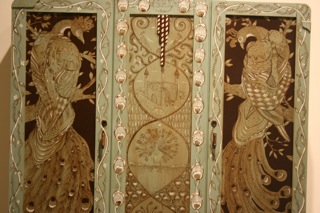
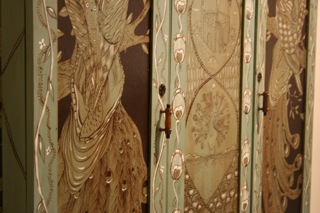
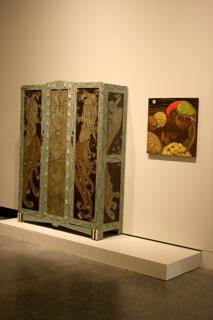
(Incidentally, I promised EH photos of the birdrobe, currently on show at MRAG as part of the Year of the Bird exhibition, and here they are. I must apologise for the quality of the images: flash on means wrong colour, flash off means low exposure and blurry shot. Either way, documenting my work is clearly a task I need to delegate).


Image


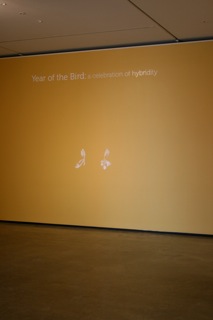
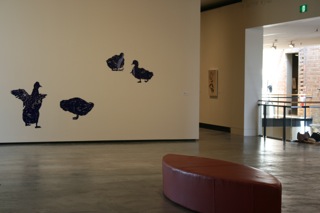
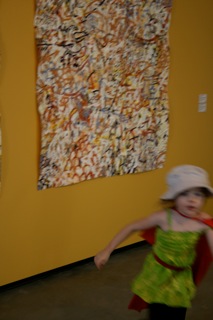
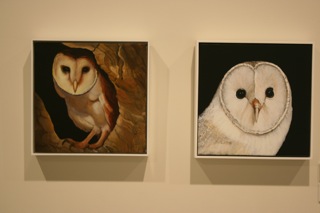
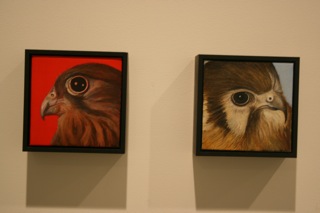
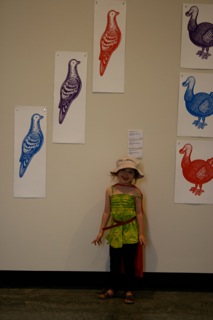
Today I went up to Maitland Regional Art Gallery to take some photographs of the Year of the Bird exhibition, curated by Caelli Jo Brooker and myself. All was going well except for two crucial factors: I’m very good at taking blurry action shots, and my little girl decided that the exhibition images would look better with her in all of them. After careful editing, I was left with a much smaller number of shots.Image


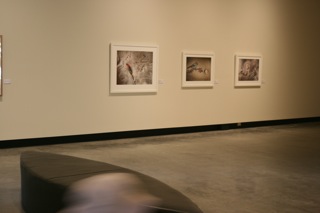
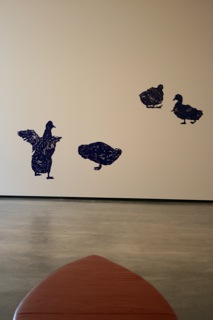
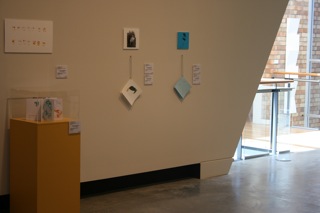
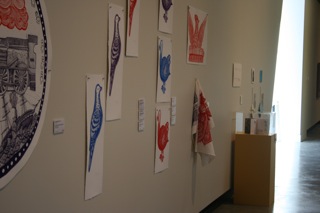
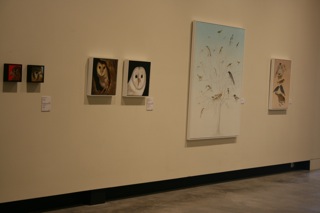
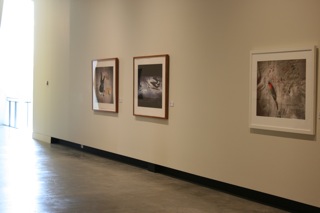
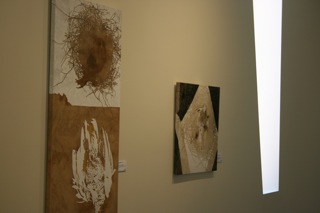
Marian Drew’s large scale photographs on the right hand wall, with Trevor Weekes’ mixed media drawings and paintings on the left. 

Image


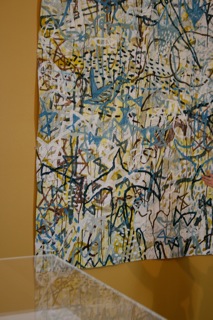
Tasmanian painter Helen Wright’s imagery (above). 


ImageImage


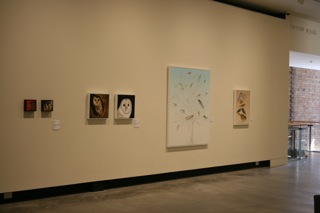
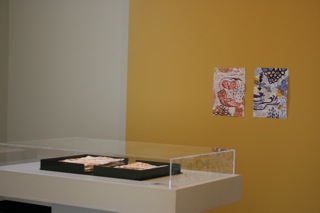
Marian Drew’s work was hung on a long wall, to the right as you entered the exhibition space; in the same gallery, on the end wall, Emma Van Leest’s intricate papercuts had a large yellow wall to themselves. 

ImageImage


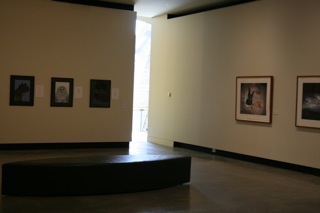
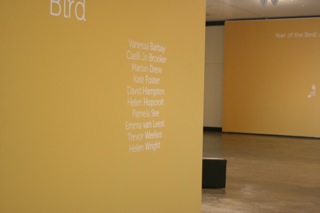
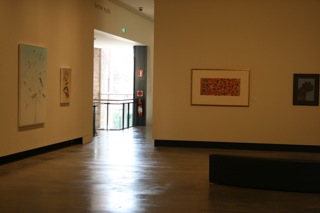
The exhibition is quite large, so it takes up two adjacent galleries: with the two galleries combined, the floor space is a long rectangle with a partition dividing it in half. The partition has Trevor Weekes’ imagery on the right hand side, and Pamela See’s installation on the other, with exhibition signage on the short side facing the entrance. 

ImageImage


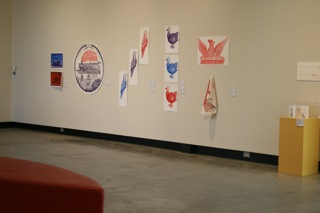
These are images from the gallery on the  left hand side. Pamela See’s blue acrylic installation is on the partition wall, with David Hampton’s prints on the long wall facing the entrance (next to David’s work you can just see some of Kate Foster and Merle Patchett’s collaborative series). 


Image


Kate Foster and Merle Patchett’s collaborative series. 


Image


Caelli Jo Brooker’s work on the yellow wall, and in a cabinet, on the short wall of the left hand side gallery. 


Image


Vanessa Barbay’s work has a wall to itself, in the left hand gallery, on the long wall facing David Hampton’s prints. 


Image


Another shot of Vanessa Barbay’s work, with Caelli Jo Brooker’s drawings in a case in the foreground. 


Image


Pamela See’s installation on the partition wall. You can just see Helen Wright’s paintings on a long wall in the right hand side gallery. 

ImageImage


David Hampton’s prints and Caelli Jo Brooker’s mixed media work. 


ImageImage


My dear daughter pretending to be some kind of French super hero. 

ImageImage


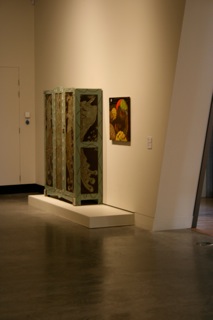
Vanessa Barbay’s work on the left, and my wardrobe and painting on the right. 


Image


Another shot of Helen Wright’s paintings. 


ImageImage


Close up images of Helen Wright’s work. 


Image


Marian Drew and Trevor Weekes. 


Image


Marian Drew. 


Image


Final image of Helen Wright’s paintings on the left, and Trevor Weekes’ images on the right. 

Image


Regular readers of this blog (all six of you!) will know that I recently moved into an old house. How old remains a mystery, but the builder who checked the place out for me, before I brought it, reckons that it’s probably at least an hundred years old, possibly more. He was excited to discover mortise and tennon joints in the ceiling joists, “been in the trade fourty years and never seen that before!”, and I too admit that my heart fluttered at the thought. 

Shortly after moving in, possibly as the result of carrying heavy furniture on a 42 degree day, I thought I saw a ghost. Yes, one shouldn’t fess up to this sort of thing, it puts one squarely in the crazy basket, but it was the strangest visual illusion. I was lying in bed, gazing blankly past my grey bedroom door, through to the front door, and wondering why on earth the previous occupants had felt the need for four dead-locks, when something shifted. It seemed as if a black cloud hovered into the room, making the grey bedroom door look suddenly darker. Most odd. 

Image


Anyway, for a few days I toyed with the thought that the place might be haunted, then spent a few more musing why anyone would put four deadlocks on a chipboard door frame. I tried to imagine some of the events that might have happened in my house over the years. Finally I decided that if the place was haunted, then I may as well learn to live with this as, after all, the ghost got here first. 

But why just resign yourself to something? Why not celebrate it? I’d been reading about the history of my new town and discovered that British survivors of the Napoleonic Wars were granted riverside land in an area known as Veterans Flats (nice land but it floods). So I decided that if my house was about fifty years older than previously thought, it could have once belonged to one of these sailors. 

Image


A few more days passed, where I pretended to myself that I was communing with the ghost, and I eventually came up with the person who I think once lived here. I mean, this is completely fictitious, so please bear with me. His name is Captain Frederick Johanssen, he was a French seaman with a Swedish mother, and he settled here after the war, with his adopted daughter and Chinese housekeeper. 

I have been busily inventing stories about the Captain’s daughter (pulled out of the Pacific Ocean, with no signs of shipwreck nearby, or any other survivors, just this little girl swimming alone in the sea, miles from land); his housekeeper (actually his lover and a trusted friend, but propriety and his nature forbade any public acknowledgement); and his Swedish mother (so beautiful that it scarred him for life). 

Captain Johanssen has become something of an obsession, but being a practical person, I’ve decided that this is a useful partnership. I’m currently working out a renovation plan for the house, and having excruciating taste in home furnishings, and an even worse sense of interior design, have solved this by asking one simple question: ‘would the Captain like it?’ If the answer is ‘non’, then the idea is discarded. 

The Captain, it appears, is prone to military straight rows of clipped box hedges; neat white paintwork; black window boxes with red geraniums; chestnut brown Chesterfield chairs with many buttons; polished brass and flooring that, it has to be said, looks a hell of a lot like a ship’s deck. I’m currently pondering how much rope, canvas and nautical paraphenalia one can pack into a house before it starts looking like a Maritime Museum gift shop. 

I’m also thinking that eventually I would like to write the history of the Captain’s life. 

Image

I thought I’d blog about my latest obsession: the peacock. While I’ve had periods of infatuation with various artists, writers, animals, men, drinks, sports and foods, this is my first time with the peacock. It began innocently enough, when my friend KRS began making these wonderfully strange sculptures of peacocks. Interested in female identity, and themes of vanity and beauty, her birds were often tied up in leather straps or wearing blindfolds. They were really mawish. 

Image


The next peacock sighting was a report by my cousin Julien from a music residency in Italy. He was holed up in a villa, a beautiful place with formal gardens, recording with a range of international and local musos. I was keen to visit, but with a young child, the timing just wasn’t appropriate. But I’ll always remember him writing me an email about the white peacock in the villa gardens. 

For me, this white peacock, has assumed the proportions of the mythic white whale. It was  the classic case of the hoilday abroad coming at the wrong stage in one’s life. Image


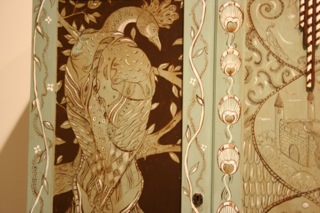
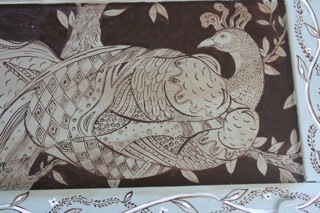
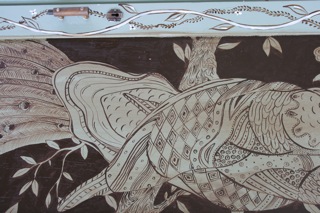
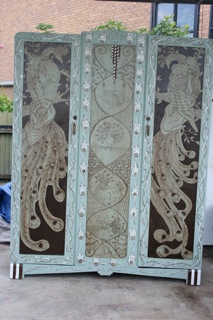
Anyway, I had Year of the Bird coming up, an exhibition curated by Caelli Jo Brooker and myself for Maitland Regional Art Gallery, and I was struggling to think of something to make for the show. Then it dawned on me: it was time to re-ignite peacock-philia! Caelli and her family delivered an old oak paneled wardrobe and I set about painting it in the carport. 


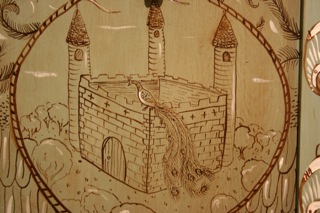
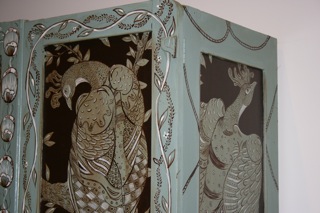
Ironically, birds have taken to crapping on the wardrobe, but I’ve decided that this is their way of expressing admiration. I’ve had a great time getting OTT with peacocks. On the wardrobe, which has some nice Art Nouveau panels (the shapes seem to suggest what subject matter they’d like to have on them) I’ve painted all things peacock.Image


There are peacock wings, peacock feathers, peacocks sitting on castles, Art Noveau/vaguely Japanese inspired peacocks, peacocks displaying, courting peacocks, (curried shrimp…), and various designs that are supposed to remind you of… the peacock. It’s never going to win any good taste awards, I’m quite certain of that. Image


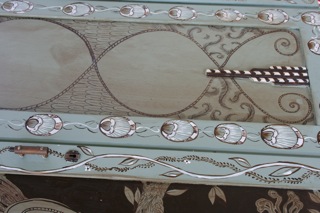
As the damned thing needs to be delivered to the gallery on Monday, I really need to finish it by Saturday to give it time to dry. The next step is to paint the decorative side panels, then I’m going to pick out some more highlights with white paint, toned down with a bit of burnt umber. Image


From a purely parsimonious perspective, I’ve got to admit to loving the underpainting in burnt umber technique, because the pigment is the cheapest of the range. Also, the thin paint applications mean that so far I’m only about three quarters of the way through a small tube, which is pretty good as I tend to be a bit of a paint hog. Image


Ah, the romance of the open studio! Plein air painting at its most budget. 

The next step will be to apply some thin washes of colour, hopefully once the flecks of white highlighting have dried, otherwise it’s going to be a horrible mess. Finally, the wardrobe will get a coat of sealer (if I have time) and some brown furniture polish. The theory is that the polish will tone down some of the colours, and make the green trim, which is a rather yucky spearmint chewing gum colour, look a bit more nuanced.Image


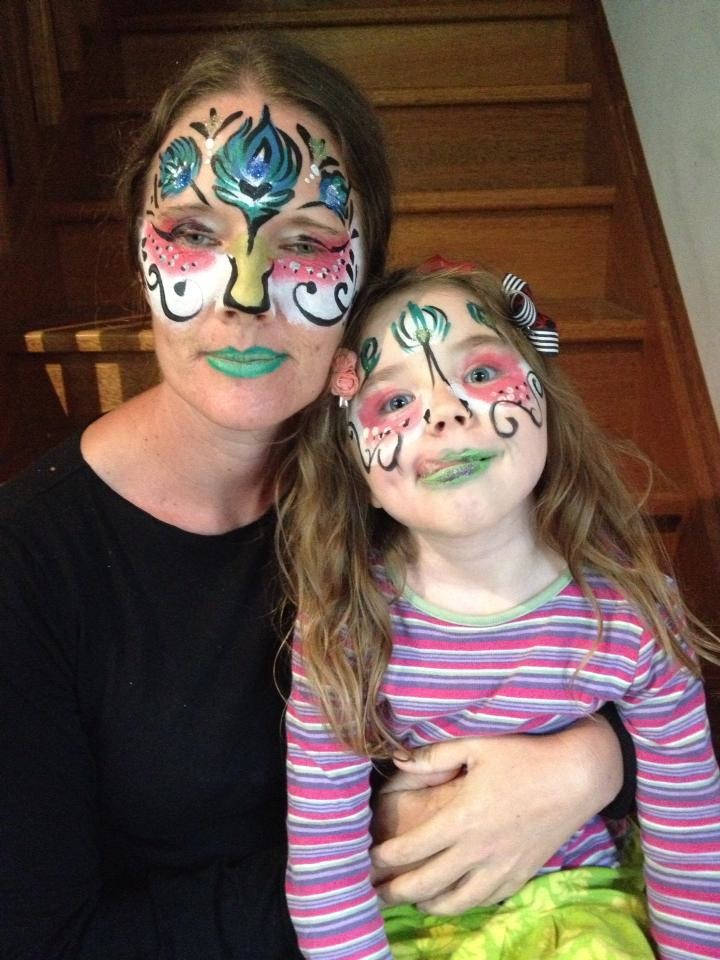
Thanks to Holley Ryan, who very kindly painted our faces with peacock designs, during a recent visit to EVM.