Archives for category: Uncategorized

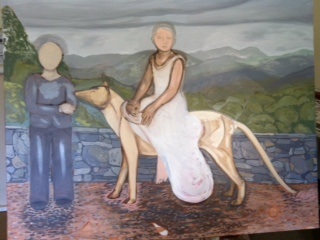
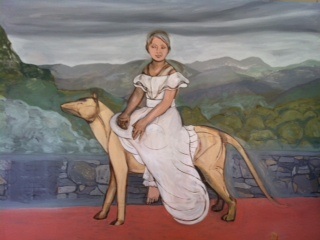
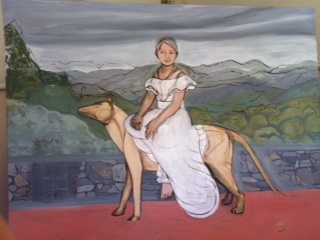
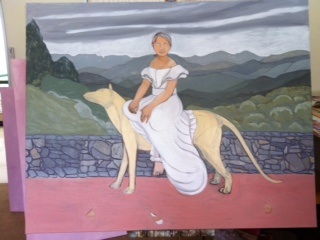
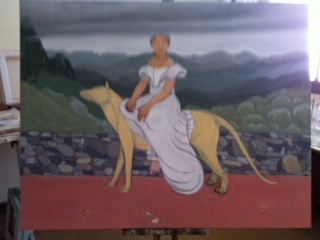
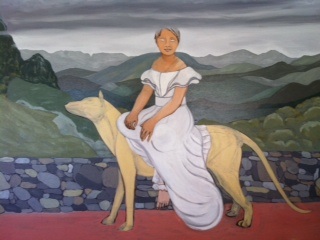
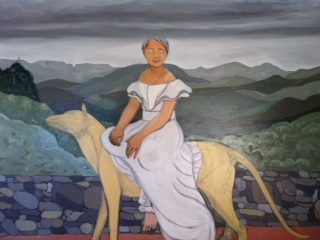
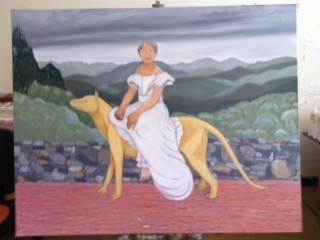
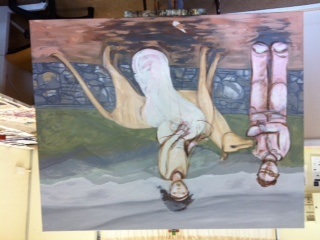
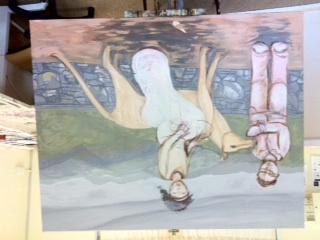
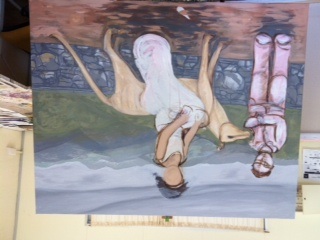
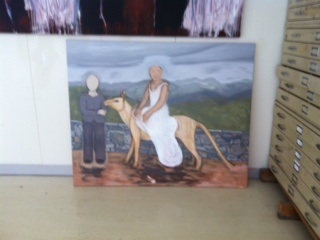
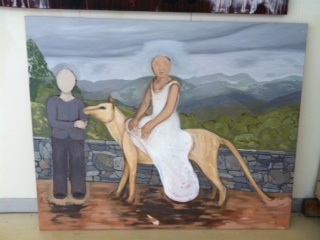
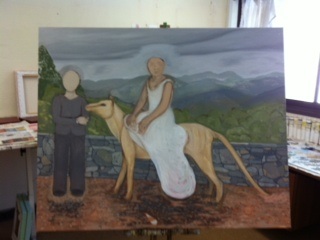
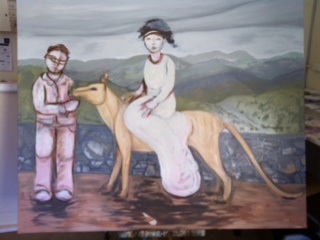
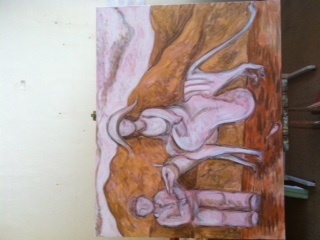
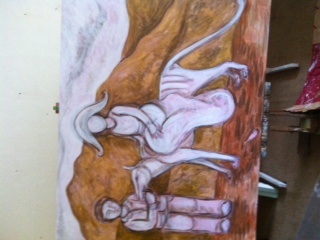
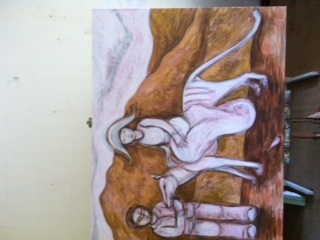
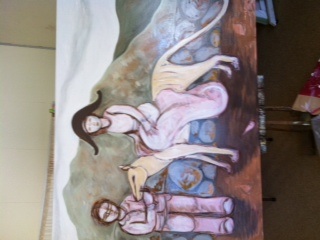
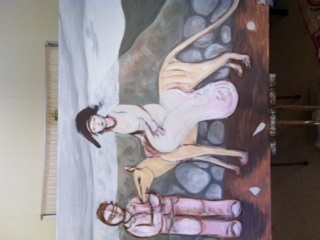
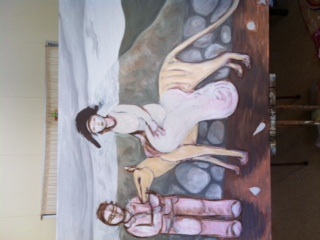
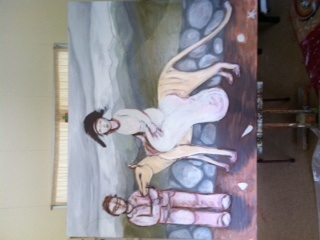
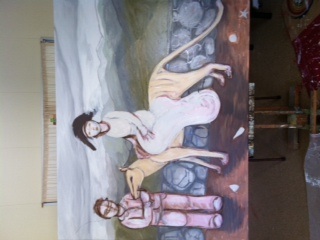
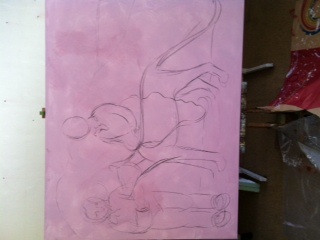
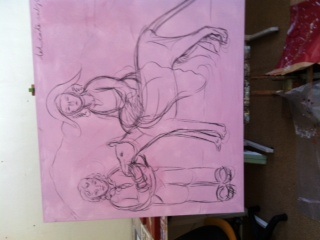
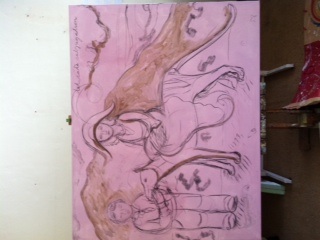
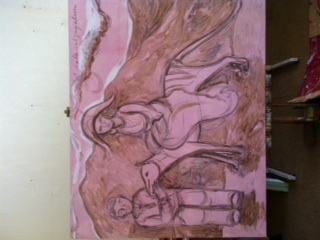
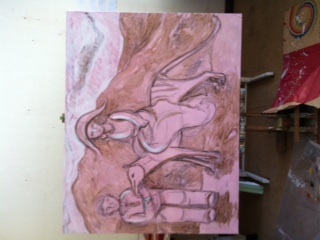
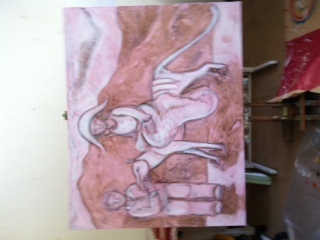
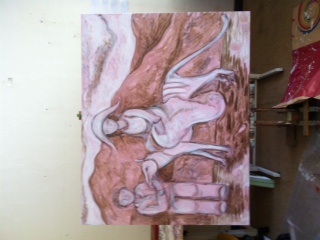
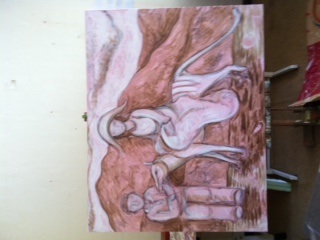
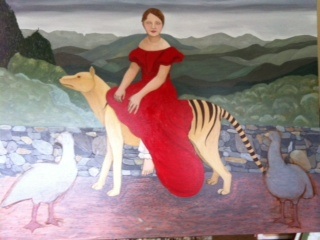
More updates on the painting I’m currently working on in my studio, The tiger bride, a largish oil on canvas of about 4′ x 5′. Like so many artworks, it is nothing like I had imagined it would be, and by the time it’s finished, I expected it will bear little resemblance to the original sketch.
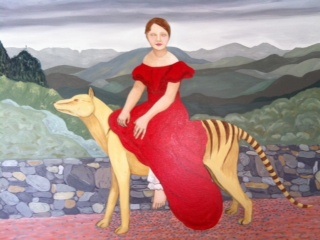
I hadn’t actually intended to paint something so detailed, complex and well, labour intensive. Most of the time now I’m working with very small brushes, it feels like you are embroidering the surface of the canvas with a tiny needle. I had a couple of visual flashes the other day, the first was how I wanted the figure to look (kind of dewy and airbrushed, like fashion photography or a high kitsch religious icon) and the second was of the tiger (greyish silver, every hair gleaming and distinct, like a cross between natural history illustration and the painful sincerity of naive art).
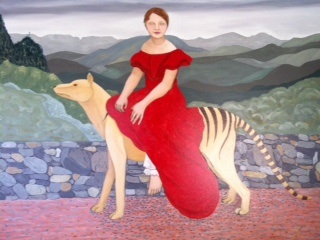
The intricacies of the surface reflect my long standing fascinating with Persian miniatures, where patterning is used to show spatial depth, and every inch of the picture’s surface is laden (groaning even) with detail. I’m interested in what happens when you take this kind of visual language and use it on a large image. My desire is to create something that is strange and claustrophobic, almost hallucinogenic, but it may always fail and come across as extreme naffness: a Disney fairy tale stage set.
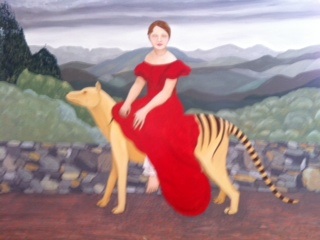
It’s that old thing about wanting to quote traditions without being subsumed by them. So I want the painting to reference the visual traditions of forms such as colonial art, naive painting and children’s book illustration but still be something separate and distinct. And with a darker edge: if it’s just a pretty image, then for me the thing doesn’t work. A subtext needs to be there, but neither obscure or obvious, balanced somewhere between the two extremes.
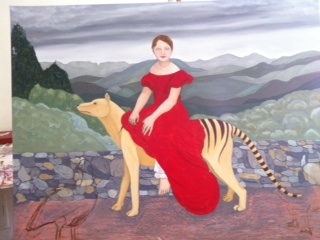
Another old idea, that of a trinity of figures. In this image I’ve just started sketching in the bride’s ‘handmaiden’s’, actually two Cape Barren Geese, indigenous to Tasmania. This is quietly humorous as Cape Barren Geese, from what I can remember from a camping trip on Maria Island, are cantankerous, stumpy and cross.
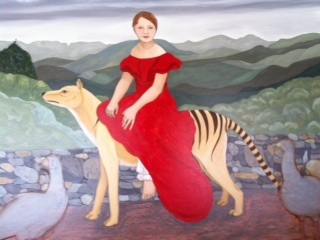
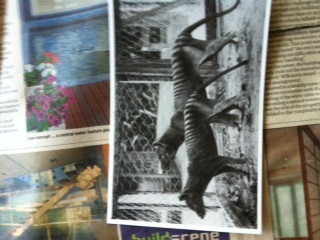
I dug up some more reference material for the Tasmanian Tiger. I’d been using an old black and white postcard, a photograph of the last couple of Tigers in captivity in Hobart Zoo, and a colour postcard of their skins. Then I found an early artist’s drawing that suggests that they had this line of white fur running underneath their jaws, down their chests, under the belly and extending through to a narrow line on the front of their rear haunches. I also found out that the tail was ‘stiff and unwaggable’, like a kangaroos, a piece of information I found oddly exciting. It was the word ‘unwaggable’ that did it.

More decorative elements have been added to this version; there’s some clematis on a bush to the left (from a book on Tasmanian flora). A proud notation states that they found ‘this magnificent display’ next to the East Derwent Highway. The flowers make this green foliage look even more like a screen, rather than a three dimensional form, I’m currently musing whether I like this or if it just looks wrong. A painting I worked on a couple of years ago, The Waterhole, featured a group of lollipop trees, each round circle of foliage operating as a series of flat, decorative overlapping shapes.

My sense is that this painting is nearly finished, although as I said earlier, I’m not sure what its final form will be. I’m still looking for some other element (perhaps the veil, perhaps the girl’s hair, perhaps a mask) that will make sense of all the painting’s disparate elements. Something that will make it potent. At the moment, there’s this feeling that it’s like a car body without an engine.
Finally, on the topic of how art has the potential to send one completely around the twist, check out this article from GQ. It just made me wanna get into the movie business!
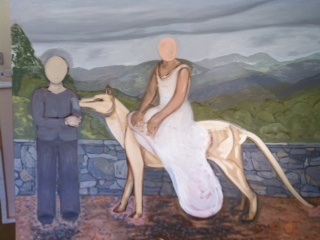
Life, as they say, gets in the way. In this case it got in the way of posting regular updates about the progress of The Tiger Bride. And, more specifically, I’ve lost track of how many days I’ve been working on the image: I think it’s about thirteen or fourteen.

The painting has changed quite substantially. I decided that the tilted stone wall, rather than being visually edgy and interesting, was just plain wrong. So that got re-painted.

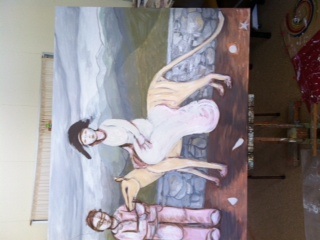
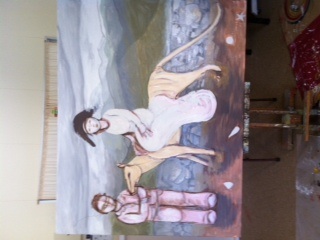
The next thing that went, ironically given that he was such a major part of the original composition, was the boy cradling the tiger’s head.

Artist angsting over painting!

I felt that the painting would work well with three elements: girl, animal and landscape, but not four. I also liked the ambiguity of the image once the boy was removed, with the displacement of the traditional boy meets girl dynamic, a whole host of strange possibilities open up: is the girl in fact the tiger’s bride? I’ve been reading some lovely fairy tales where ‘bride marries animal; animal turns out to be handsome prince enchanted by evil witch; animal removes skin and out steps a human’. Nice. There’s a nifty version when the bride decides to trap her husband in his human form by hurling his animal skin into the fire while he sleeps.

(Working wet on wet for the sky in this image; trying to get the everyday melodrama of Tasmanian cloud formations).

I’ve recently written a version of the tiger bride fairy tale, it’s part of the 1001 nights novella that I’ve blogged about earlier, but the roles are reversed. A human husband discovers his bride in her tiger skin, decides he prefers her that way, and throws her human skin onto the fire. I had this really strong, if grotesque, vision of a female skin flying through space, legs flopping around like stockings, breasts flaps waving in space.

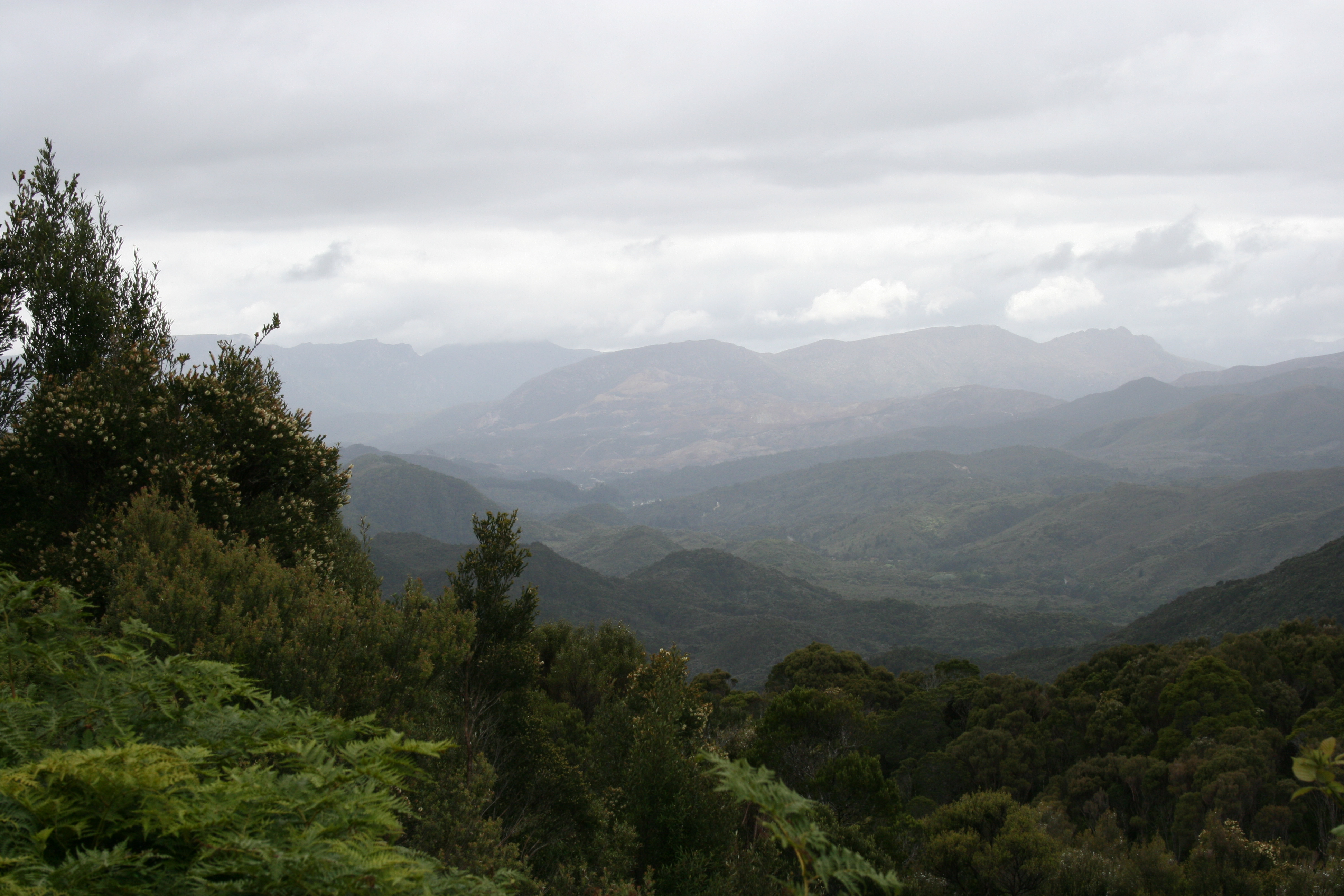
Forming up the landscape in this version, still using photographic reference from my last trip to the island. I’m not exactly sure where the shot of the landscape was taken, somewhere in the north east. Also strengthening the drawing of the tiger, trying to get my head around the anatomy of something that I have never seen.

In this image, the mountains on the left hand side of the range have been blocked in.

A bad, blurry photograph of more work being done on the landscape. Trying to balance the tonal values so that the tall tree in the foreground, on the left hand side, doesn’t jump out too much. Compositionally it’s kind of balanced by the tiger’s tail, you can see a left to right diagonal running through the piece which starts in the tall tree and ends in the tail. I think of the girl as sitting at the junction of a number of V shapes; it makes it quite a stable image that I’m planning to upset by painting in a veil blowing in the wind. The veil will hopefully add some dynamism back into the whole shebang.

The mountain range looks almost predatory.

I have this tendency to see space like a naive painter, so everything is flat or tipped up, or layered like a theatre set (one flat thing placed in front of another). I’m currently playing with things so I can introduce more of a sense of space, but on my own terms; I’m not interested in traditional pictorial space (i.e. things look like you’re looking out a window, everything recedes in a predictable fashion, things that are further away are less tonally distinct than things up close). And, like a naive painter, I don’t really like complex angles as straightforward or profile shapes seem visually more honest.

The dress reminds me of the figure on the front of Rolls Royces: a bit Art Nouveau.

I’m not entirely sure what I was working on here, I expect the landscape and perhaps fiddling with the wall (which is still too cartoony for its own good).

I was talking to my grandmother about this painting the other day. Now my 92 year old Nana is a good person to talk to about painting, with my grandfather she opened up a commercial art gallery in Hobart (I believe it was the first one); she also paints, writes poetry and taught art for a number of years. I was saying that this was the first major work for my next show at Despard Gallery, Strange Tales, and that I’d be happy to get it finished and out of the way. I mean, if you cock up the first painting in a series, self doubt starts to set in. And unfortunately the way I work means that the risk of failure is pretty much neck and neck with getting something good, or at least it feels like that.

Anyway I described this painting as a ‘heartbreaker’ and Nana took me the wrong way, thinking that it was something that had been sucking up emotional energy, and so she blurted out ‘you must take care of yourself, dear’. When I’d actually meant that it was difficult technically speaking. However, on reflection, it’s actually a much sadder painting that I’d envisaged and I think that’s why it’s giving me some grief, and also why I’ve been reluctant to blog about its progress.

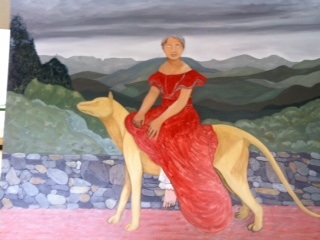
Victorian melodrama at play: the red dress arrives. Eventually this red dress will be thoroughly OTT, covered with lots of tiny bows and flounces like sea anemones. It’s important to me that the dress is at least as animated as the landscape and has a strange, female potency- a kind of entrancing, hypnotic, sucking quality.

At this stage the image is looking more like bride of Braveheart than anything else, something about the Scottish highlands in that background. And this is only going to get worse if I put in a mask or some other facial decoration, vaguely considering blue skin or an animal feature. I’m already anticipating the ripping off I shall receive from painting someone who looks like me (actually it’s from a photo of my daughter) in a classic regal pose riding on the Tasmanian State emblem. Like a radio play, I can hear this script: (Tasmanian artist in a whiney, aggrieved tone) ‘who the f**k does she think she is?’

You’ve got to stripe it, stripe it (to the tune of you’ve got to move it, move it…) And so the distinguishing feature arrives. Even if the viewer hadn’t already guessed the identity of the thylacine, this leaves one in no doubt. Next step is to grey down the gravel path underfoot, work on the flesh, do some more on the dress and the tiger fur. I’m playing around with lots of ideas, this desire to paint a rain of petals bursting from the sky like snow, this hankering after red and white roses, a longstanding inability to paint a human face without animalising it in some way. Such a sad, romantic image, the constant elegy of painting an extinct species, the gothic majesty of Tasmania’s landscape, a girl bravely attempting something ridiculous and impossible.

Paintings, like people, go through rough patches. Many paintings, again like people, start off beautifully: all fresh, clear and focussed. Unfortunately the process of actually painting (deciding how something should look, the drawing and composition, paint applications, considering possible readings of the imagery) erodes this initial clarity, particularly during the mid stages of the painting, which is where this one is now. I think of it as being like a mid life crisis! There’s this nice initial burst of enthusiasm, and clarity, when you’ve had this great idea and just want to paint it. Then the process of actually making the thing takes its toll, and enthusiasm wanes (I once read a great definition of ‘character’, as in to show character. It was continuing to pursue a project long after the initial burst of enthusiasm fades). Towards the end of most paintings, fortunately, there’s often a feeling of synthesis, as if all the threads have come together. But I’m not there with this one yet.
The good news is that it now has a provisional title: it’s either The Tiger Bride or Tiger Bride. I’m a bit sick of putting ‘the’ in front of all my titles, makes the paintings sound like 60s supergroups, however if I leave the ‘the’ off, it reminds me of 90s bands (Blur, Oasis et al). I can’t win! The title came out of a misunderstanding with my Aunty Pam. She emailed me about the painting, and mistaking the girl’s white dress for a wedding gown, referred to it as the ‘tiger’s bride’. I think the phrase ‘delicate subjugation’, written on the canvas earlier in the piece, and the sweetness of the image, probably helped formulate a marital interpretation.
Speaking of sweet images, a friend recently described my imagery as being stuck somewhere between ‘heart warming and heart rending’. I thought this was a great observation, neatly encapsulating what I’m trying to do with them, this balance between sweetness and horror. They don’t work if they’re just pretty, they don’t work if they’re just angsty, they function if both these elements are somehow balanced. Despite the fact that I’m trying to rid myself of lingering romantic delusions about painting, I know they don’t work unless the emotional aspect is spot on. Essentially I need to feel the paintings very clearly and deeply to get them to work.

I remember sitting around with a group of painters once, this was years ago, we were talking about love and relationships. I remember one man told the story of love gone wrong, and the rest of us listened supportively, making sure our kind faces were in place (he was a good guy). There was a brief pause when he’d finished, then he commented, in a completely different kind of voice, ‘got some good paintings out of it though!’ This sudden light surge of amusement flashed through the room as everyone went ‘ah ha!’ and grinned at each other. Not sure if this says anything good about artists, I suspect not, but it was an entertaining moment.

Still buggering around with the technical aspects of this work, the bones, if you like. The rock wall ended up being at a much greater angle than I’d anticipated, partly as the result of working in a small studio, you can’t get back far enough to check for distortion. But although it’s technically wrong, I kind of like its wack job awkwardness, and the way it counterbalances the diagonal of the mountain range in the background. You keep looking at the painting because the diagonal of the wall is so unsettling, like the deck of a ship, visually people seek balance and symmetry.

If the wall was completely horizontal, it would ground the painting too much, turn it into a static image, and make the wall between wild landscape and figures seem like an overly rigid (visual) barrier. Thematically, the whole painting is about boundaries, between men and women, humans and animals, tame and wild, wilderness and garden. It’s got to be both accurate and wrong, this is not a good description, and I’m not even entirely sure what it means, but it’s what I’m aiming for.

Day five in the studio was another short day. I have this routine, three days a week (when Sophie is in daycare): go to the gym for an hour in the morning, write for between one and two hours, then get into the studio at about midday and work until 4pm. At the moment I’m working on my neglected PhD, trying to cram a stack of writing and research into the next four months, while I’m still officially on leave from the program.

In the studio, day five involved getting oilier with my oil paints. All this means is that when you start painting with oils, the first layers have more turps (or solvent) in them, and as you lay down subsequent layers, you progressively mix more and more oil (or medium) in with the paint. Some people express this as working ‘lean to fat’. The reason for it is pretty simple. If you imagine mixing up some salad dressing in a jar, usually oil and vinegar, unless you shake it really hard all the oil will float to the top. This is because the oil is lighter than the acidic vinegar. (Or if you’ve ever worked in a bar, you’ll know that Baileys floats on just about anything else!).

It’s exactly the same principle with oil paint: you start painting with more turps (the vinegar) because if you did it the other way around, the layers with oil in them would try to ‘float’ to the top of the painting. This damages the substrate (think of a painting as being like a geological formation, or layers of different types of rock) because you’ve created something that is inherently unstable. Although we’re only talking about stuff that happens at a molecular level, the oil will always want to migrate to the surface of the painting. Like layers of rock, if the one down the bottom (and I’m talking small changes and very slow speeds here) moves faster than the ones above it, the surface of the earth will eventually give way and crack. Essentially an oil painting works the same way.

Another reason for working lean to fat is practical. Oil paint with more turps in it dries faster than oil paint with a greater ratio of oil in it. Turps, or solvent, has a much faster evaporation rate than oil (which relies on other stuff in the paint, and environmental factors such as heat and airflow, to dry). Painters typically spend the first phases of a painting working out the composition (some people plan this meticulously before beginning, other people, like me, like to embrace chaos or instinct) and blocking in their tonal values (I’m talking about relatively traditional methodologies here). Like laying the foundations of a house, it’s about big decisions and underlying structure, not fine detail. So you want to get it done quickly and be able to move the paint around freely, also quickly paint over stuff that isn’t working. If you’re working with very oily paint, this just can’t happen, as you’ll be sitting around waiting for it to dry.


Another factor is that very turpsey paint won’t stick to very oily paint: it just beads and splits. Imagine the way spilled water separates into little drops or pools on a glossy marble bench top and you’ve got the picture. The water can’t soak into the surface, and the shininess of the surface repels it, so there’s nothing for the liquid to do except cling to itself. The same thing applies to oil and turps (or solvent): generally the turps won’t spread across the surface, because the surface is repelling it, and surface tension kicks in, encouraging the turps to form droplets (as opposed to spreading out in a flat layer). Fascinating stuff!

Finally a good reason for fat over lean is that some artists like to mix glazes (transparent or semi transparent layers of coloured oil paint with a high ratio of oil to turps) and apply them to the final stages of their painting. Again, this is a fairly traditional methodology. The purpose of a glaze is to make the paintings colours look richer, deeper or darker (or sometimes to make the surface of the painting shinier). If you imagine the way light goes through a stained glass window, this is sort of how a glaze works. Light passes through the glaze, a transparent layer of paint, hits the underpainting, and bounces back up again (refracts). The light coming off the surface of the painting intensifies its colour, making it blaze, just like sunlight through coloured glass. Very pretty.

If you wasted your formative years on a surfboard, you’ll intuitively understand how a glaze works. Picture this: sunny day, blue sky, drifting around on clear water in an area with sparkling white crystalline sand. As you get closer to shore, light hits the water, goes through it, hits the white sand on the bottom, and bounces up again. The water is an intense blue-green and the refracted light makes it hard to see. This, my friend, is like a glaze.


Day two and three in the studio (not consecutive) involve more layers of acrylic paint and fiddling with the drawing…

It’s about this stage that I started missing oil paint, its sticky richness and intensity of colour. The acylic is fine for the underpainting, helps seal the canvas and means that you’re not waiting around for ages until it dries. It’s nice to handle, non toxic, ideal for mucking around with image and composition, but it just doesn’t have that…. thing.

I think it’s about this point that I started using oil paint over the top of the dry acrylic underpainting.

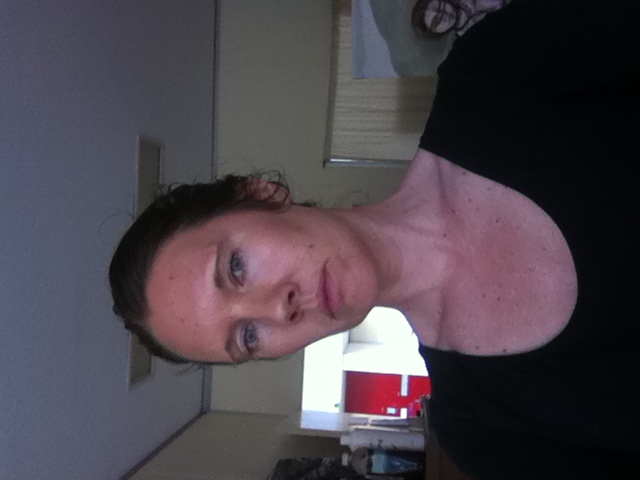
Me!

Reference material: the poor, doomed thylacines (Tasmanian Tiger).

What the painting looked like at the end of day three.

Came into the studio on day four and decided that I was creating major compositional, not to mention aesthetic, problems for myself. The mountain range behind the figures was originally planned to open up, on the right, into a wide bowl shaped valley. This would have given the painting some depth, a sense of space. However with the mountain rapidly turning into a one dimensional granite escarpment, and the low stone wall acting as another visual barrier, the whole thing was getting visually claustrophic. I dragged out some of my holiday snaps from Tasmania and decided to repaint the background using an actual mountain view as reference.

Nothing beats the real

The first stage involved repainting the sky with pale greys.

The next phase involved working out the tonal gradations and colours of the mountain ranges in the background. Using various mixes of warm grey at this point, mixed with some burnt umber, a bit of paynes grey, some black, titanium white, yellow, chromium green oxide and a couple of miscellaneous tubes of grey paint that my Aunty Pam gave me.

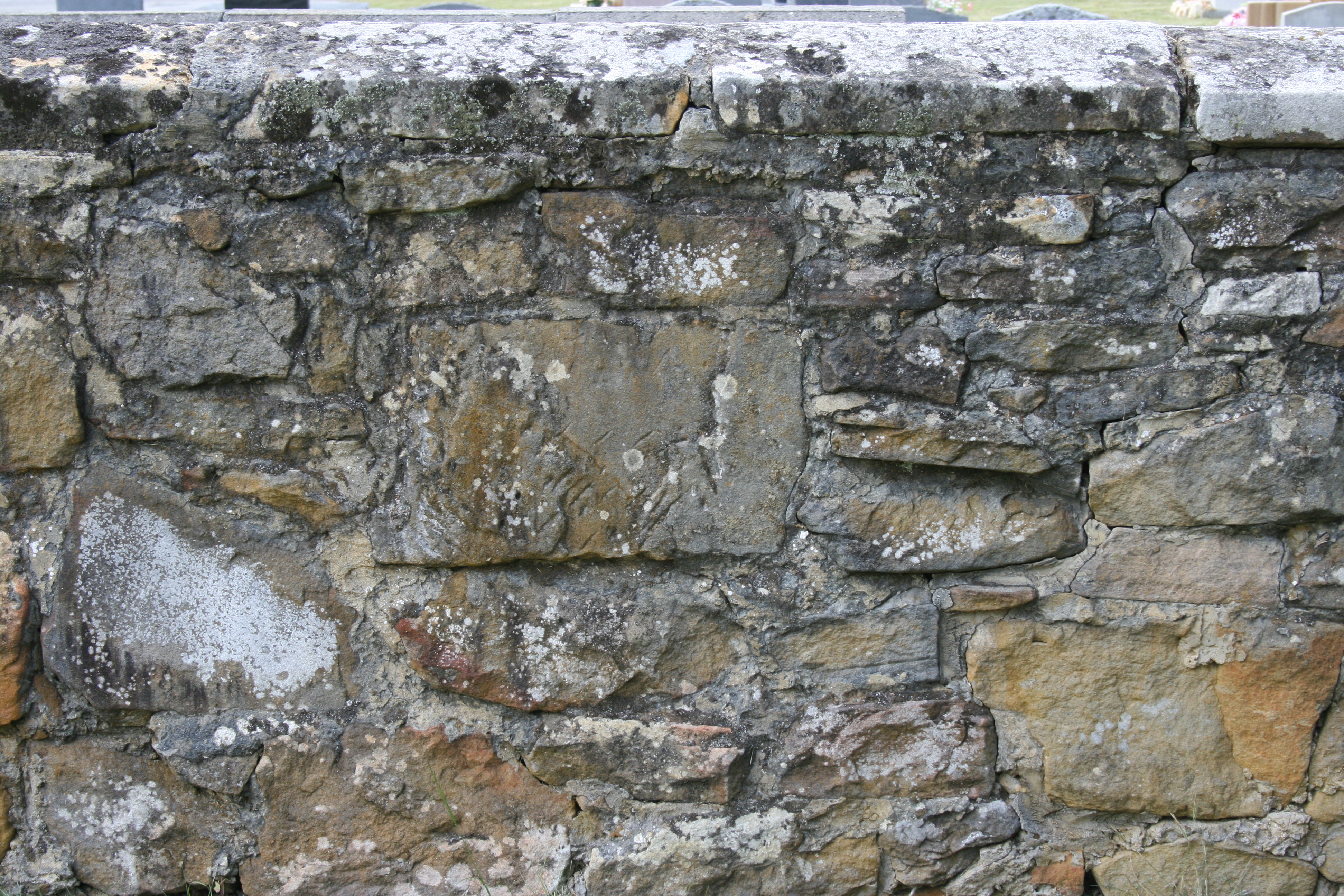
The final stage of day four, which was a short day in the studio. It still looks like a mess, but I’m much happier with the composition. Next step is to work on the rock wall in the foreground, using the following image as reference (it’s outside a country church in Tasmania).

More reference material…

After this I’ll go hunting for figure reference material for the children (probably involves photographing Sophie and one of her mates) and costume reference.


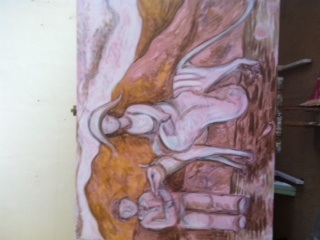
Another well intentioned attempt to follow a painting from ‘cradle to grave’, or rather from the first sketches through to the end product. The painting I have chosen is about 4′ x 5′ (must get into metric one day) and I have a special affection for it, although currently it remains untitled. It’s part of a series I’m working on for Despard Gallery, Tasmania, in preparation for my next solo exhibition with them in early 2012.

Strange Tales will include about six large paintings like this one, a number of smaller bird canvases, and perhaps some large scale charcoal drawings. I’ve found that I’m missing drawing, particularly drawing from life, the immediacy and the fluency of drawing media. Although I’m still working it out, most of these paintings will be specifically about Tasmania, the island’s history and its colonial art, this constant sense of the past and the present colliding.

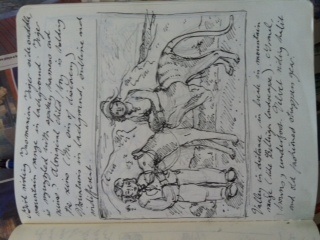
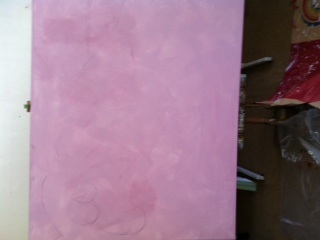
This is the canvas with its first coat of acrylic paint. While trying to replicate something of the style of either colonial or naive art, I’m sticking to some of the more traditional painting methods, like starting from a pinkish ground (usually closer to a red/brown or pale terracotta, but I want these images to be sickly sweet, right from the beginning). The image is of a small girl, wearing colonial era garb, riding a Tasmanian Tiger. A young boy holds the reins.

The initial sketch, executed with willow charcoal. At this point I’m referring quite constantly to the smaller sketch in my journal (pictured above).

Wrote the words ‘delicate subjugation’ on the top right of the canvas.

Introduce washes of acrylic paint to start picking out the tones.

White acrylic paint goes on…

End of the first day!


Dubbo Zoo

In May my ex-husband and I took our daughter on a road trip, in his campervan, to visit Dubbo Zoo. Driving through regional NSW, a sketchbook balanced precariously on my knees, I made notes about the journey. I remember being fascinated by the changes in the landscape, how one minute you could be in what seemed like absolute wilderness, and the next slap bang in the middle of coal mining territory. Unfortunately I didn’t take any photographs of the trip; I have a large, rather ostentatious camera, and I don’t like looking like a tourist, even when I am one. It was also clear that many of the small towns we visited were struggling financially, and it would seem like bad manners to run around shooting a dying town. 

After we got back, Sophie discovered the sketchbook and began drawing in it, so many of the rough notes I made (hard to read anyway due to the motion of the campervan) have been partly obliterated by toddler art. As it seems unlikely that they’ll survive many more drawings, I thought I’d transcribe what remains here. 

1st May 2011

Sandy Hollow-Art and Espresso-next to public school. A passive/aggressive grey cat- a healing cigarette- Sophie screaming ‘it doesn’t have lines on it’. Superb scones/ wired on coffee. Assumed the art work was by a female.

Merriwa- ‘home of the ?’- like Bowraville, the same wide streets, sleepy feel. Wondered at the cost of real estate then noticed a big glossy land release sign. Driving out of town noticed an exquisite palamino pony sharing a paddock with a herd of black steers. Didn’t stop- strip of lime green- silver grey yellow- road camber and rain run off.

Willy Wally Gully- sun going down- the drip picnic area- Ulan- Golbourn River- 80s music- radio/cd Cliff Richard/Pat Benatar/Crissie Amphlett, honouring the spirt of the bus’ era.

Toddlered journal

2nd May, 2011

It made me realise, despite my nature loving pretensions, I’m a city girl : said to Sophie ‘that’s some kind of frog’. Something stole soap during the night, Aaron irate. I consoled him with ‘don’t worry, you’re not the only one frothing at the mouth’.

A million stars/tall trees/open fire- Wolf Creek paranoia. Next morning, top of dirt road, walking hitchhiker. “That’s a funny place to be picked up- maybe he stole my soap”. Abandoned car by the side of the road.

So cold that if your arm out of bed, elbow locked, arm froze.

Morning-cheese on toast- walk to the Drip Gorge (better than Kakadu) 2.8km return.

Within five minutes driving through a massive mining area- huge trucks/high tensile power lines/seemingly endless coal trains. The Whitlams. Counting Crows. Black and white tree trunks. Stop in mining town of Ulan to ask directions. Pretty abandoned weatherboard Catholic Church, flaking white paint.

On our walk, square wombat droppings prompted a consideration of what manner of sphincter muscle would produce such a shape.

Ancient superstition: naming calls.

The price of imagination is fear- crawling into someone else’s skull and trying to see the world through their eyes, including maniacs (84 left at Dunedoo)- Divided Heart argument, offensive, potentially to non artist mothers, suggested that….

‘Dunedoo- where people make the difference’- red brick building. Shattered windsock.

The White Rose Cafe- 50s- tiny railway station-fresh coat of cream paint. Deserted pie shop- nice food. Threatening to rain “all this long grass and no stock to eat it. They got rid of all their stock because of the drought. Then the rain came, and there was no stock there to eat it”.

Codeine freak from way back, wouldn’t sell it because “I don’t know you”. Wondered if he’d got the same answer if he’d been wearing a suit.

Aaron’s gift of talking to marginalised people, for all my social justice principles, a warmth that I lack. Humanity?

The old and the new in the town bakery: old men, prematurely old, aged by the drought, RM Williams, jeans, caps. Young people in bright clothing and funky hair cuts. A woman in a zebra top, 50s, barges in, ignores or doesn’t see the queue, walks up to the counter and orders a caramel tart. They leave at the same time as me and she lets the door swing back in my face, again oblivious to my existence.

Truck driver ordering hot chocolate with sugar, sweet tooth, Aaron is a former long distance truck driver “wants to stay awake”.

No photos, feel like I’m intruding. Old Tassie joke about mainlanders visiting the island with a tenner and clean shirt and not changing either. Always stop and buy something in small towns.

4th May, 2011

Wednesday night: Millthorpe- Basalt.

Wednesday: Jeff Minchin exhibition- Dubbo Zoo- tortoises, super playground in Orange.

The toddler strikes again!

5th May, 2011

Thursday morning: coffee in Millthorpe General Store. Yellow labrador. Two schoolchildren smiled at me.

All sorts of vague dream/plans swirling through my head. Move here and let Sophie complete her primary school education.

Sitting by a big fire, checked out of parenting mode, sipping a Glenmorangie single malt. Overpriced.. keyhole windows, stained glass. School kids running up morning flag. Lollipop woman, friendly, assembled a huge pile of leaves. Sophie kicking leaves, red hooded jacket that Aunty Rose sent her. Trees various shades of red and orange. Cold night. Chest infection.

Millthorpe- still country (Bellingen a bunch of people from Sydney dumped in country) “precious”- sharp divide newcomers/locals… (round a corner and….be “home”). Conversation with woman in Orange park, while our girls played together. Grown up in Orange, now lives in Brisbane, she said, sounding proud, says ‘yous’. Referred to Tasmania as home and surprised myself.

Animals in various states of depression- a few perky specimens: camels, elephants (those accustomed to long association with humans- a bad marriage)… the others….

Otter society is strongly matriachal. Adolescent females peel off from the pack, living a solitary life until “the time is right”. Returning, according to… males hunt and…care for a pile of communal faeces… a territorial behaviour… Housekeeping was also… at the caravan park. A kind of suburban competitiveness. Intensified…neatly…belongings…mats.

The morning at the start of the world, coming out of Millthorpe. Cold air, bright low sun, cloudless sky. Dark shadows, winter foliage. Super clear vision, probably last night’s whisky.

Use italics for memory sequences/creative ideas/conversations. This idea that travel… through layers of the mind/memory/time.

A belt of fog over the distant horizon, road vanishing into, quickly burned away. Stop for a brick toilet break, by the time we were back on the road, the mist had burned away. …Surprised how  happy I am just bumming around. Not having to be anywhere by a particular time.

Sustainability in Action at the Yara Balba Art Studio

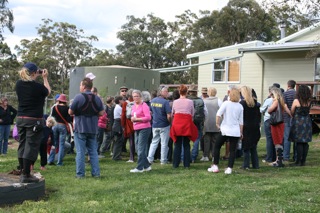
Well I’m pleased to announce that today’s Sustainability in Action event went off with a bang. The weather Gods smiled on us, and in contrast to Friday’s blitzkreig and Saturday’s cruel and unusual winds, we had a sunny day. This is obviously what you want when you’re organising a community event, particularly one where for at least part of the time people have got to be outdoors. We had about fifty people in attendance, probably largely as a result of coverage in The Newcastle Herald and the Lakes Mail, and a nice, chilled out vibe.

If there had been rain, this picture would have looked very different!

We had short presentations from property owner Margrete Erling, Greg Piper MP, Tony Voller from the Hunter-Central Rivers Catchment Managment Authority, Joy Edmonds from Morisset Sustainable Neighbourhood Group and Rosmairi Okeno, Morisset’s Town Centre coordinator (Southlake Business Chamber and Community Alliance).

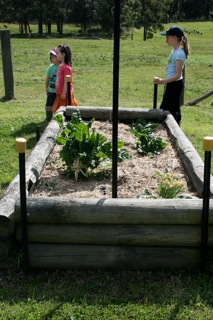
Raised vegetable garden beds.

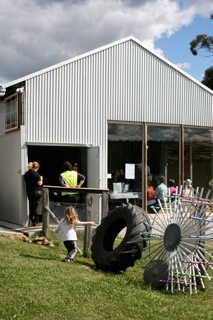
After the presentations, which all happened in the Yara Balba Art Studio, we all went for a tour of the property to look at a variety of green living features. We admired massive solar panels, passive solar architecture, huge water tanks, some natty vegetable gardens and the Taj Mahal of chicken runs. In the distance, horses looked picturesque, dams sparkled and every so often the dogs, who had been put inside for the event, let out a disappointed yelp.

Enjoying the sunshine.

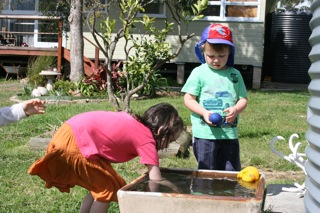
Sophie ran around in the long grass, pretending to be a leopard, while Margrete’s daughter good naturedly kept an eye on her. All the children seemed to enjoy themselves, there was much spirited dashing about, and more or less contained pandamonium. A metal sculpture with bells proved too good to resist, particularly during the speeches, and an old horse trough, complete with rubber duck, was also a winner.

Horse trough: with duck

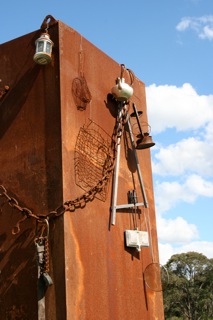
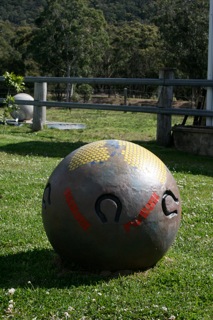
One of the things I love about this property is the way sustainability and creativity seem to go hand in hand. The landscape is dotted with pieces of sculpture, all made from things that were once used for a completely different purpose. It’s this fresh way of looking at objects, and seeing their innate potential, that I admire. Very little is thrown away, there’s always consideration of what other use something could have. And from a purely aesthetic point of view, this is kind of wonderful.

An old piece of jetty construction equipment becomes sculpture.

Concrete ball sculpture.

Thanks to everyone for coming along today and making it such a nice day.

Yara Balba Art Studio

A quick post to spruik an event I’m helping organise. Happening this Sunday 11th September, 1-3pm, ‘Sustainability in Action’ is a workshop organised by the newly formed Morisset Sustainable Neighbourhood Group. It’s basically all about showing people how changes to their properties, and lifestyles, can help them live greener. We’ll be doing a tour of a great farm, and Yara Balba art studio, in Mandalong as part of Sustainable House Day. There will be presentations from the Hunter-Central Rivers Catchment Management Authority, a stall from the green thumbs at the Yunung Community Garden, as well as lots of info on solar power, vegie gardens, water storage and most importantly, raising chickens. Mr Greg Piper, Lake Macquarie City Council Mayor and Independent Member for the State Electorate of Lake Macquarie, will be dropping by and we’re also pleased to welcome a representative from Mr Greg Combet’s office.

Happy, picturesque chickens at play: all part of the fun you can expect at Sustainability in Action!

Here’s a flyer, hope to see you there! Please note that bookings are essential as we’re trying to keep a track of numbers.

siaflyer6

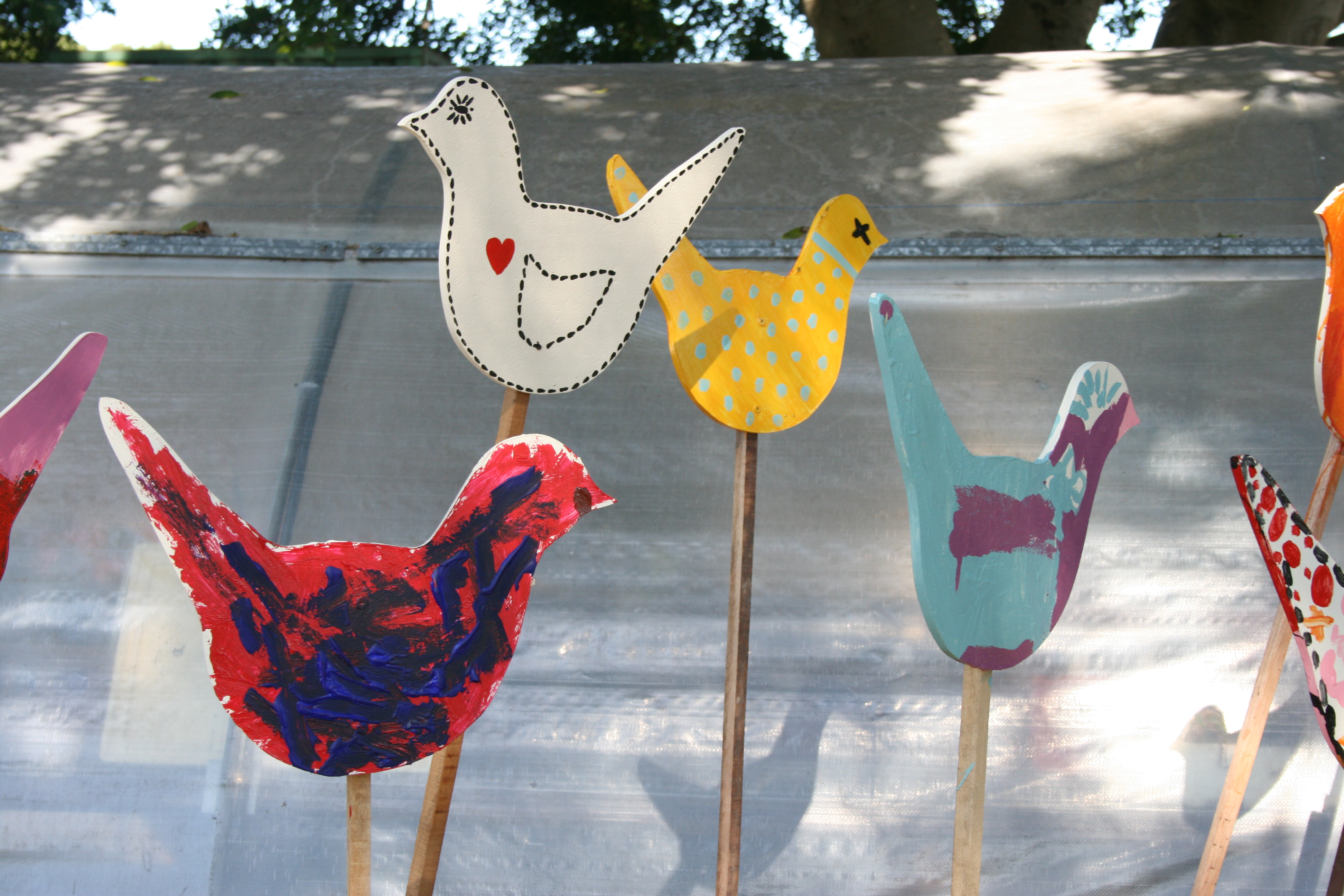
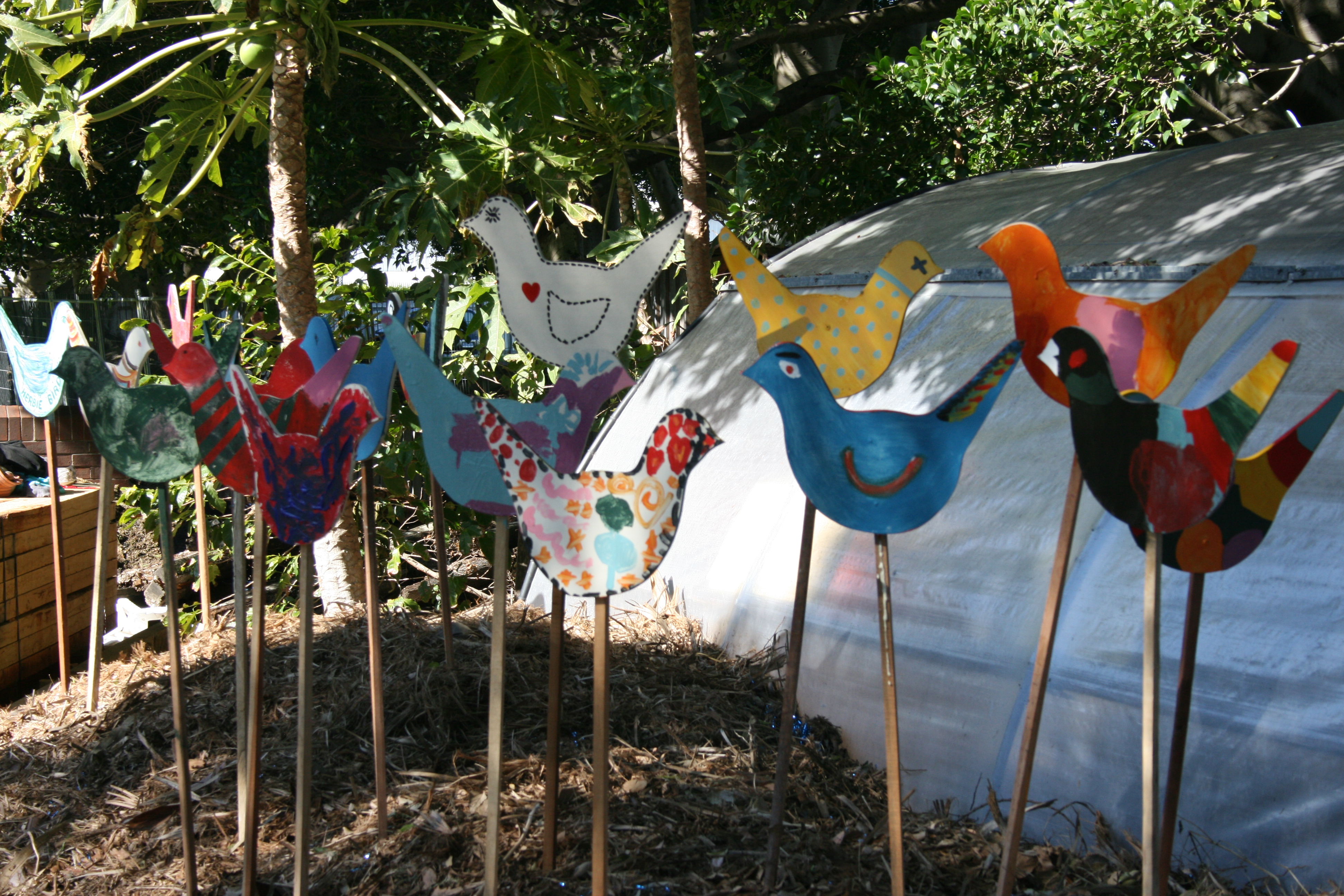
The flock

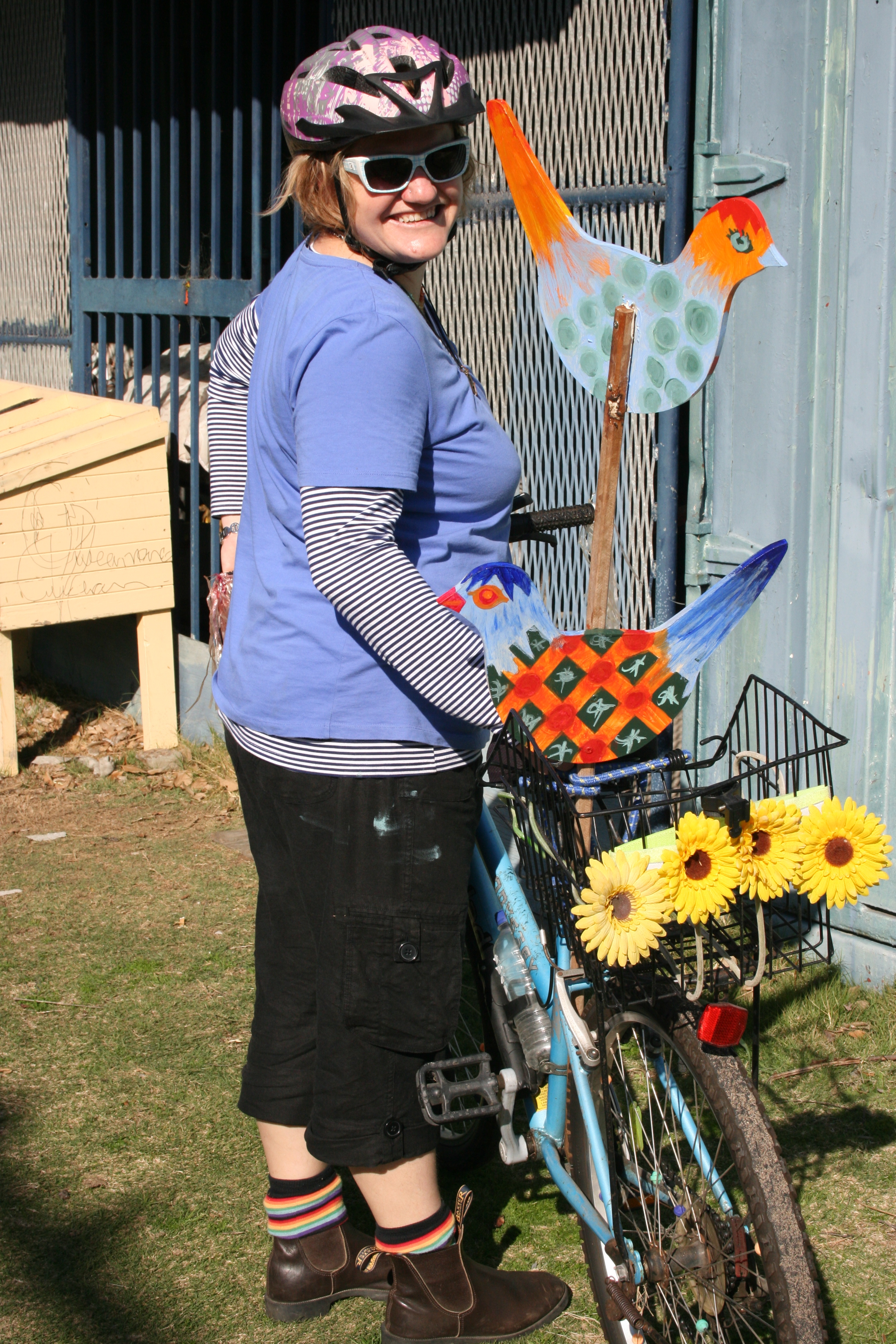
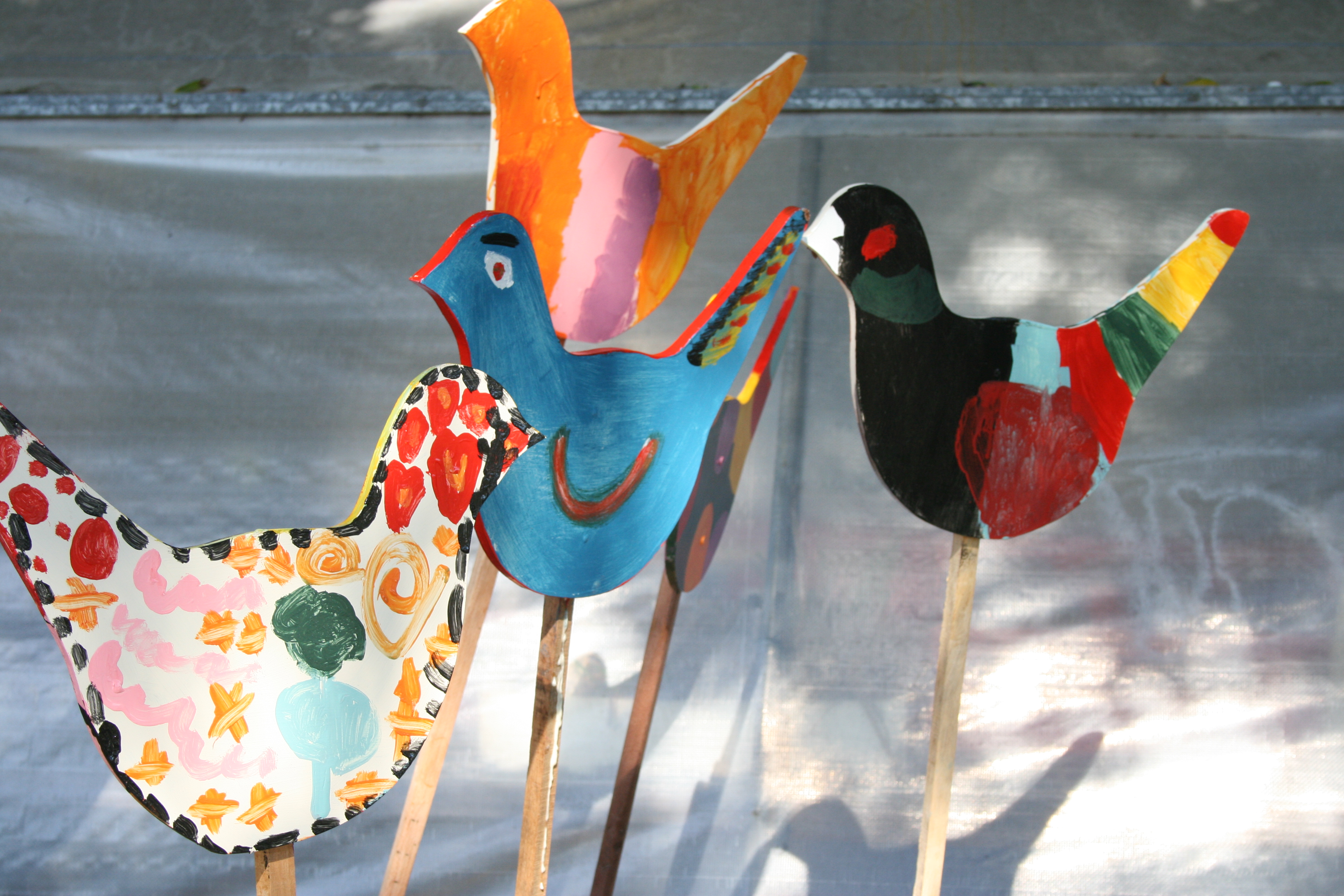
Just a quick note to say thank you to everyone who came along to the ‘Birds with Bling’ workshop last Sunday at Fig Tree Community Garden. We had a lovely day making bird shaped bird scarers, they’re unlikely to actually scare any birds, but they sure look cute! Thanks also to Jo from Fig Tree and Christina from Octapod for organising the workshop, and Newcastle artist Trevor Horsnell for co-facilitating it.

The flock on the compost heap

Making these bird scarers is quite a sweet school holiday project, so here’s a cheat sheet if you’re feeling like doing the bird.

You’ll need some weathertex sheeting, a jigsaw with a sharp blade, some hard wood garden stakes, paint brushes, sandpaper, filler (optional), water based primer/sealer, cardboard, paper, pencil, scissors, wood glue, drill bits and countersinking drill bit and a screw driver. For the paint, water based enamel works best and a good coat of vanish is advisable if they’re going to be living in your garden.

Rae of sunshine with one of the workshop's few double decker birds

Draw a bird shape on your sheet of cardboard. Keep it simple because you’re going to be cutting out this shape with a jigsaw and weathertex is dense material. (A good rule of thumb is that if the shape is hard to cut out with a pair of scissors, it’s going to be impossible to cut out with a jigsaw. You can use a scroll saw of course, but as ever the KISS principle applies). Prop the piece of cardboard up somewhere while you have a cup of tea and consider the shape. Then flip it over and have a look at the shape from the other side. Remember, don’t make it too large because weathertex is heavy and the bird is going to have to balance on top of a garden stake. If you’re still happy with the shape after a cuppa, trace it onto the weathertex sheet with a pencil.

(If you don’t have weathertex, you can use mdf or ply, but it’s less weather resistant and more likely to warp, so you’ll need to be even more particular about your priming and varnishing coats).

More birds ready to take flight

Cut the shape out with your jigsaw, give it a quick sand, then screw and glue it onto the hardwood stake. I was screwing through the stake into the back of the bird, but Trevor discovered it’s stronger to screw through the front of the bird into the stake. If you’re fussy about screw holes, countersink the holes and use filler. Apply two or three decent coats of primer on both sides. (It helps if you attach the stake first as this means you can paint both sides at once and stick it in the ground to let it dry).

If you’re a fly by the seat of your pants type, pick up your colourful enamel paints and start painting. If you prefer a more methodical approach, trace the bird onto a sheet of paper, and try out a few designs with pencil first (incidentally, this is a nice way of introducing kids to ideas about the design process). When it’s completely dry, apply a couple of coats of varnish. Enjoy!

The birds look good in groups of three: one plain colour, one patterned (stripes or spots are good), one with imagery (try painting something that you wouldn’t normally associate with a bird). And they’re also kind of cute as cut out shapes on a kid’s bedroom wall, particularly against a feature wall. Just drill a hole and hang up on a piece of ribbon.