Archives for category: Uncategorized

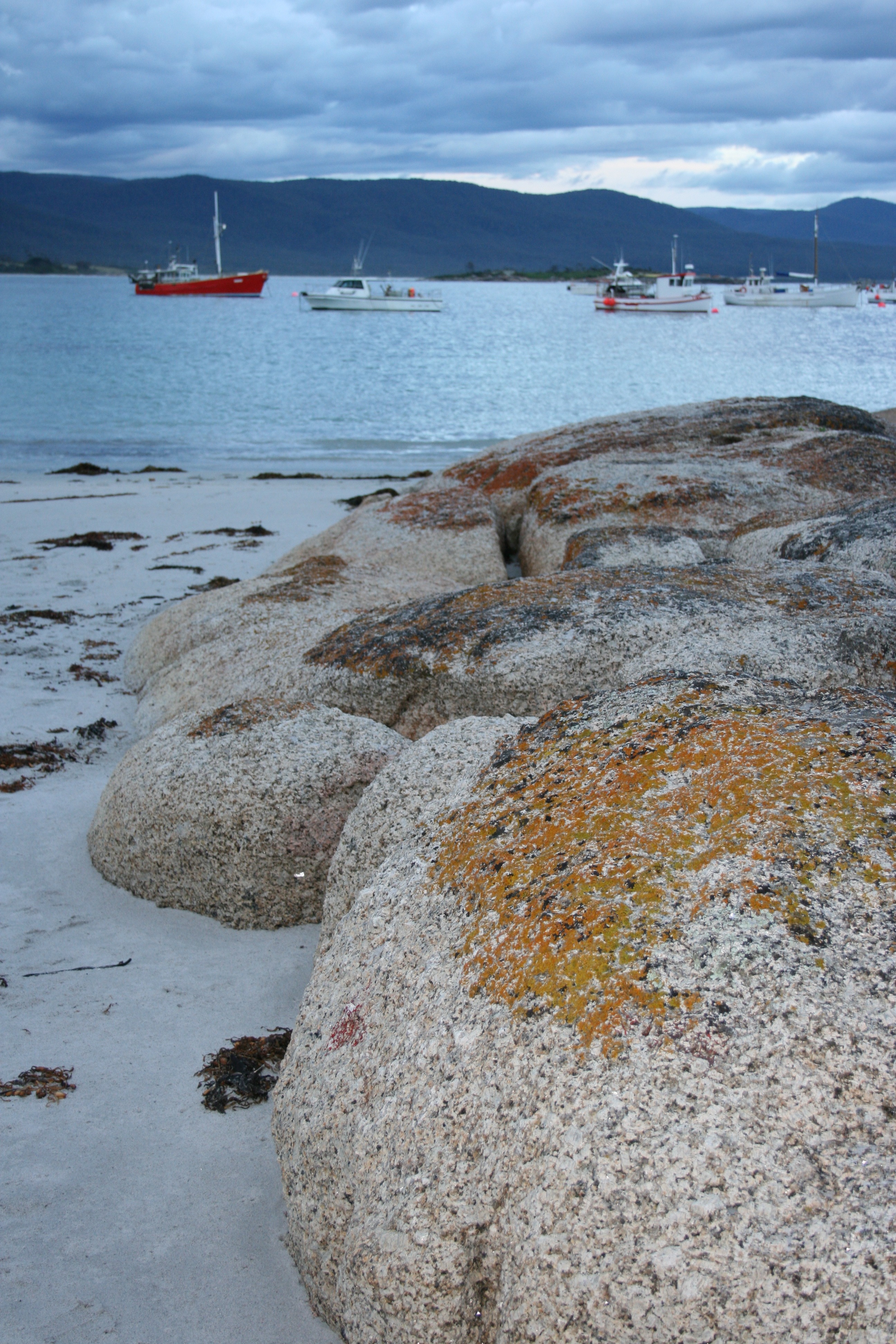
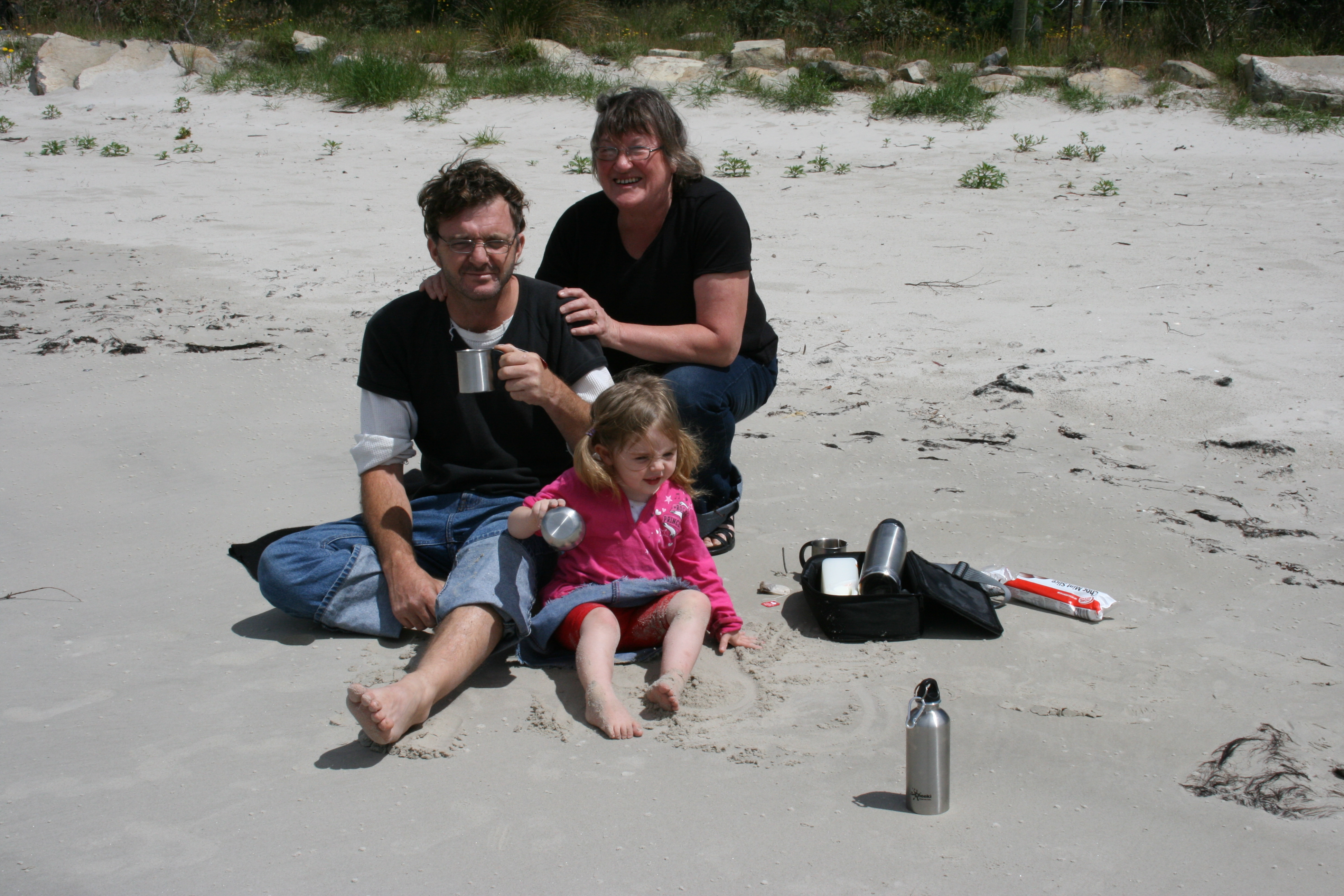
Summer day at a Tasmanian beach (a direct contradiction in terms)

The University semester starts next week bringing my beloved summer holidays to an abrupt end. One minute living in old jeans and egg splattered t-shirt; the next making an effort to look vaguely professional and like I know what I’m talking about. We’ve re-jigged one of the courses I’m teaching this semester so this week has been spent reading, reading, reading in preparation. Students, bless them, assume you know everything about the subject you’re teaching, and one doesn’t want to shatter their illusions, so I’m cramming.

My friend AV, who lectures in Fine Art at a University in Northern England, said she has perfected a thoughtful gaze, accompanied with an interested ‘ah…’ when yet another bright young thing bounces up to chat about an artist or theory she has only a passing acquaintance with. God bless Google is all I can say.

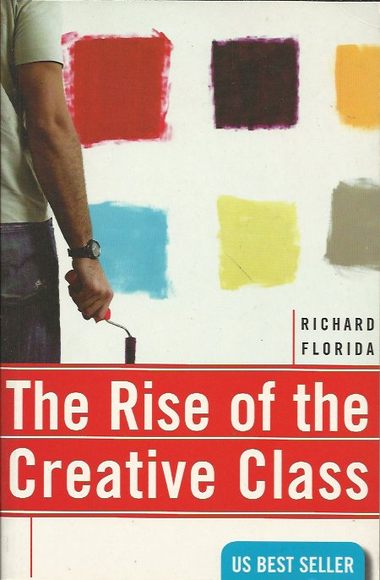
The Rise of the Creative Class by Richard Florida

I’m currently reading The rise of the creative class by Richard Florida, with The Cambridge handbook of creativity (eds James C. Kaufman and Robert J. Sternberg) waiting in the wings. Florida’s book is on a three day loan from the library so it had to take precedence. I’m enjoying it, I found his emphatic style off-putting to begin with, then started to appreciate him for his candour. Interestingly, he articulates profound changes to the way creative people live and work, stuff I’d been thinking about, but hadn’t really internalised that millions of other people were on exactly the same path. It’s a comforting realisation. Over the last five years I’ve been adapting my way of working so that I’m more often self employed than working for an employer; able to work from home (to accommodate motherhood); become much more selective about the work that I do and significantly more entrepreneurial; and consciously blurred the line between my personal and professional lives.

Here’s a couple of nice paragraphs from Florida’s book:

Creativity involves the ability to synthesise. Einstein captured it nicely when he called his own work ‘combinatory play’. It is a matter of sifting through data, perceptions and materials to come up with combinations that are new and useful. A creative synthesis is useful in such varied ways as producing a practical device, or a theory or insight that can be applied to solve a problem, or a work of art that can be appreciated.

Creativity requires self-assurance and the ability to take risks. In her comprehensive review of the field, The Creative Mind, Margaret Boden writes that creativity

‘involves not only a passionate interest but self-confidence too. A person needs a healthy self-respect to pursue novel ideas, and to make mistakes, despite criticism from others. Self-doubt there may be, but it cannot always win the day. Breaking generally accepted rules, or even stretching them, takes confidence. Continuing to do so, in the face of scepticism and scorn, takes even more’.

Speaking of self-doubt, today I painted for the first time in months. I’ve pretty much given up on the idea of renting a studio, I’m on a waiting list at a community art space, so I’ve cleaned out the back shed at home and I’m working there. I figure that I can get quite a bit done after my daughter is in bed, during her afternoon nap or when Aaron is looking after her; Mum is visiting next week, so potentially that’s more time in the studio.

Over the years I’ve noticed a series of quite predictable emotions and behaviours before I start painting, especially if there has been a longish break. First is this general feeling that life is black and white, not colour, and that everything is sort of crappy and second rate. This eventually segues into grumpiness and bitchy intolerance. Next is frantic procrastination, usually accompanied by house cleaning, dish washing, furniture moving, weed pulling and floor washing. The dominant emotion during the frantic activity phase is nameless dread. Finally, when self-doubt and internal negativity have become overwhelmingly pervasive, I go into the studio, wipe off the glass pallete so it’s nice and clean, and line my brushes up in a grid formation. Once I start I’m fine. There’s this quiet tidal wave of relief, pleasure, fulfilment. I find at the beginning of a painting cycle, which is where I am now, I see things really clearly: my eyes measure angles and tiny marks quite accurately. It’s only when I’m in the middle of a cycle (I’m talking in terms of months, if not years) that I tend to lose some visual clarity. Towards the end it sharpens up again.

I want to end this blog entry by quoting a great response I got to the last entry ‘A literary diet’ by my cousin’s partner KG. They live in Darwin and she writes:

Subject: Place and its influence

Hi Helen

Just read your ‘literary diet’. I remember visiting Venice after I’d been living in the Territory for a few years. The contrast was amazingly diverse. At complete opposite ends of the spectrum. Venice was full of beauty, art and opulence. A city that has been enduring dedicated to the zenith of man’s artistic and cultural achievements. I absolutely loved it. But in comparison to the Indigenous landscape of the Top End it seemed somehow inconsequential, a mere folly perhaps of humanity (perhaps that’s a little extreme). Here life, art, landscape, is ephemeral, transient yet infinitely enduring. ‘Art’ per se, and its practice almost seems trivial alongside day to day and cultural survival. Like so much of Aboriginal life, art is not a seperate entity but a deeply entwined component of social and cultural meaning. Having been born into a Weternised concept of life and art, I’m finding the landscape here challenges my core concepts and beliefs.

And on a very practical level, I don’t take on projects that I would ‘down south’. The weather conditions here simply mean that things don’t last. Dry weather and humidity mean that most objects deteriorate rapidly (such as books, paintings, textiles). And then cyclones obliterate written histories and urban community continuity! I think “Thank goodness the digital age is here”, but then we probably won’t be able to read any of our antiquated computer systems in twenty years either.

Well … that’s my initial response to reading your article’.

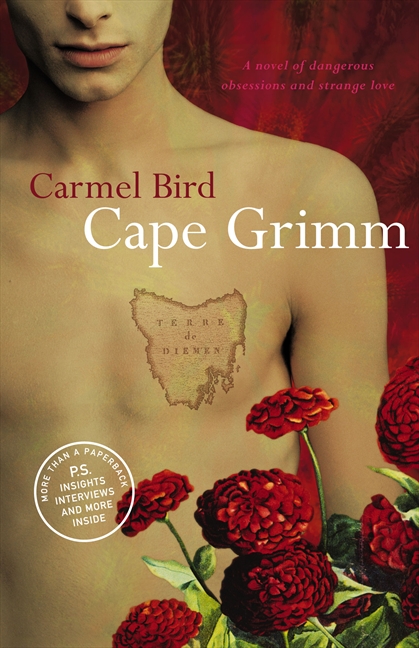
It’s interesting to speculate how what you read effects what you do in your life, how you live, what you think. For me, books and conversations often trigger a whole new way of thinking about something; but quite often it takes some time for their impact to manifest itself in real life. I thought I’d briefly blog about books, current and recent past, that have had some kind of influence on my painting and/or life. I’m one of those people who either read a lot or not at all, right now I’m gorging- this tends to happen before a new series of paintings. (The last series of paintings owed a debt to Chloe Hoopers’s A child’s book of true crime and Carmel Bird’s Cape Grimm. Bird’s image of married, red-haired twins continues to haunt my imagination: they’ve got under my skin).

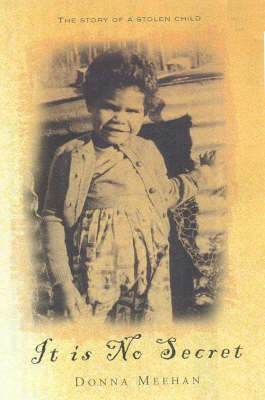
I’ve just finished reading Donna Meehan’s It’s no secret: the story of a stolen child. I interviewed Donna, a member of the Stolen Generations, as part of the 100 women book I was working on for the University of Newcastle, late last year. I was impressed by her and overwhelmed by the history that she represents. As a Mum, I’m still struggling to get my head around the fact that this happened to people in living memory. Interestingly, it was Carmel Bird who helped Meehan find a publisher for this, her first novel.

Donna Meehan's It's no secret: the story of a stolen child- http://www.boomerangbooks.com.au/bookImages/LARGE/949/9780091839949.jpg

I’m currently reading Angela Carter’s The Bloody Chamber and Contemporary fiction and the fairy tale, edited by Stephen Benson. My Aunty Pam recommended Carter’s book, and once I opened it I realised that I’ve already read it, maybe fifteen or twenty years ago. Certain phrases clanged in my memory: the mother’s ‘irreproachable’ bullet when she shoots her murderous son in law in the head; the key entering the lock of the secret chamber ‘like a hot knife through butter’; the visual image of the female horserider riding a horse at break neck speed along a shoreline, racing a flood tide; the bride’s husband closing her legs ‘like a book’. Benson’s book is handy because it includes an analysis of Carter’s re-telling of the Bluebeard tale, The Bloody Chamber, I hadn’t realised it was so controversial. Apparently she was working on a non-fiction study of the Marquis de Sade at the time she wrote Chamber, developing the idea of a moral pornographer, an oddly attractive concept but one that seems to disintegrate when you try and substantiate it via definition or example.

The Bloody Chamber by Angela Carter

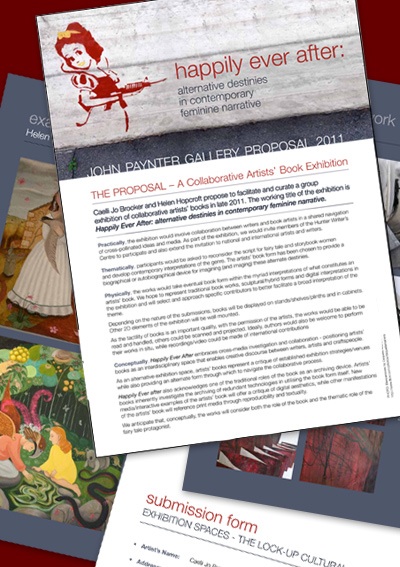
I’m in the process of organising, with Newcastle artist Caelli Jo Booker, a group exhibition of artists’ books, to be held at the John Paynter Gallery, June 1026th 2011. The exhibition is titled Happily Ever After: alternative destinies in contemporary feminine narrative so I’m rapidly finding out more about the fairy tale genre. The John Paynter Gallery is part of the Lock Up, an old police station that houses a museum, artists residency and the Hunter Writers Centre. Alongside the gallery are cells (one padded) and a prisoner exercise yard, both of which are used as alternative exhibition spaces. Click here if you’d like more information about the exhibition.

Happily Ever After montage- Caelli Jo Booker

Before Meehan’s book, I skimmed The Fate of Place: a Philosophical History by Edward S. Casey, much of which went over my head: it seems that place is a much slipperier concept than I’d given it credit for. I’d written an article about the work of Helen Dunkerley, a Newcastle based ceramic artist, and needed to give my instinctive reading of her work some kind of definite theoretical basis. Not sure how that went. The closest I could come to it was Deleuze and Guattari’s idea of ‘smooth space’, a theory of nomadic travel, particularly how different this kind of movement is to the Western concept of a journey, with its defined beginning and destination, and specifically how nomadic travel involves a very different way of thinking about the trinity of place, self and space.

Dunkerley travels a lot, migrating between jobs in Newcastle, upstate New York and the Virgin Islands. I wanted to explore how each of these places marked her work, whether she was conscious of them doing so, and if she deliberately incorporated any local or regional references into her work. I got interested in her work, and the idea of place, when she told me about digging some red clay out of her host’s garden in the Virgin Islands. The clay was made into ceramic sculptures which she exhibited in Newcastle.

Prior to that, I re-read the Patrick O’Brian’s Aubrey/Maturin series, a collection of rather brilliant historical novels set during the Napoleonic Wars. I earlier blogged that my daughter was named after one of the British ships involved in these battles: The Sophie. Since then I have read O’Brian’s final unfinished novel, including a thoughtful introduction that identified which boats and naval actions were real, which were invented, and which were a combination of fact and fiction. I discovered The Sophie belonged to the latter category. So there you go: my daughter owes her name to a literary invention!


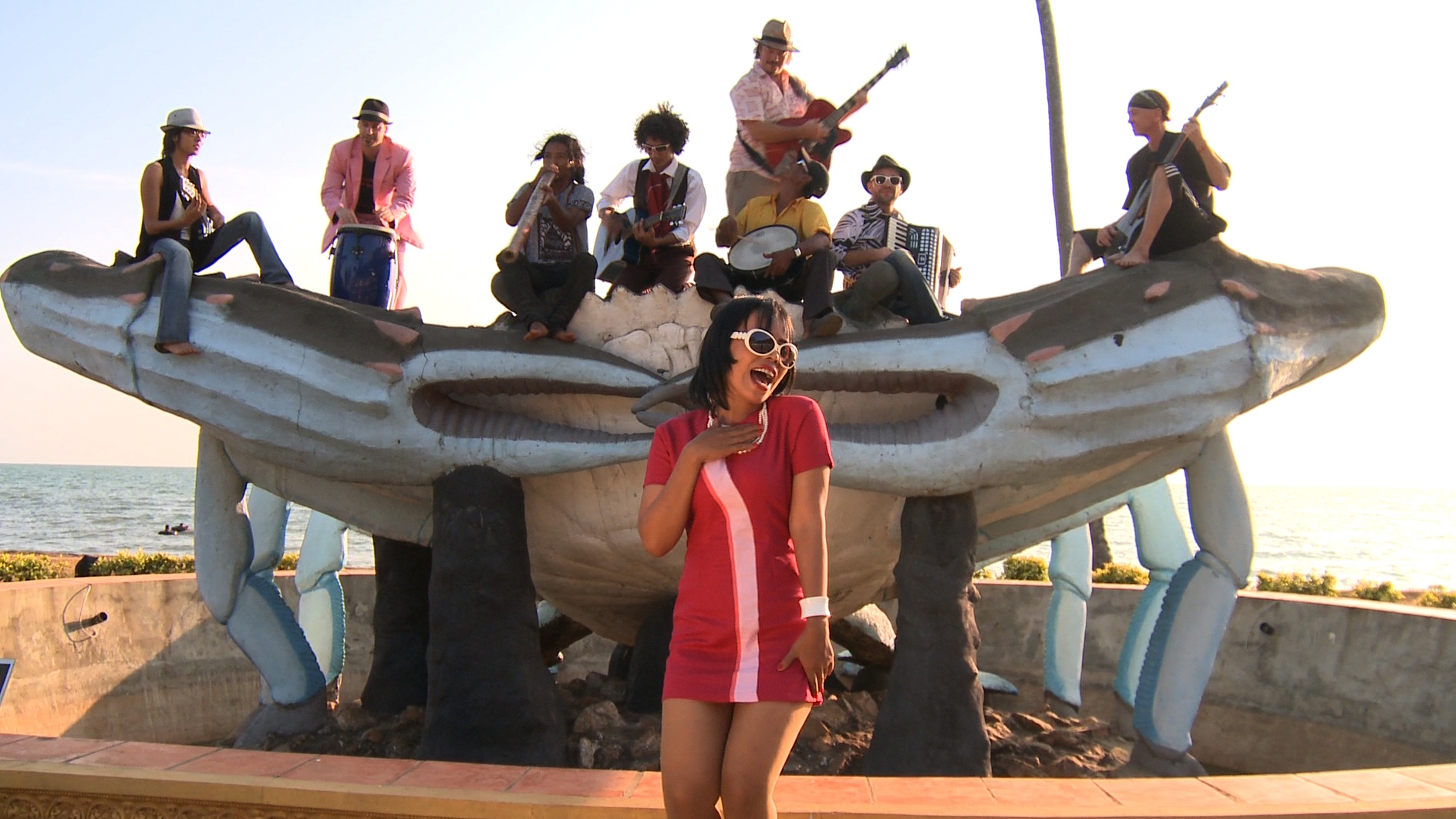
photograph of the Cambodian Space Project by Marc Eberle: http://marceberle.com/?p=136

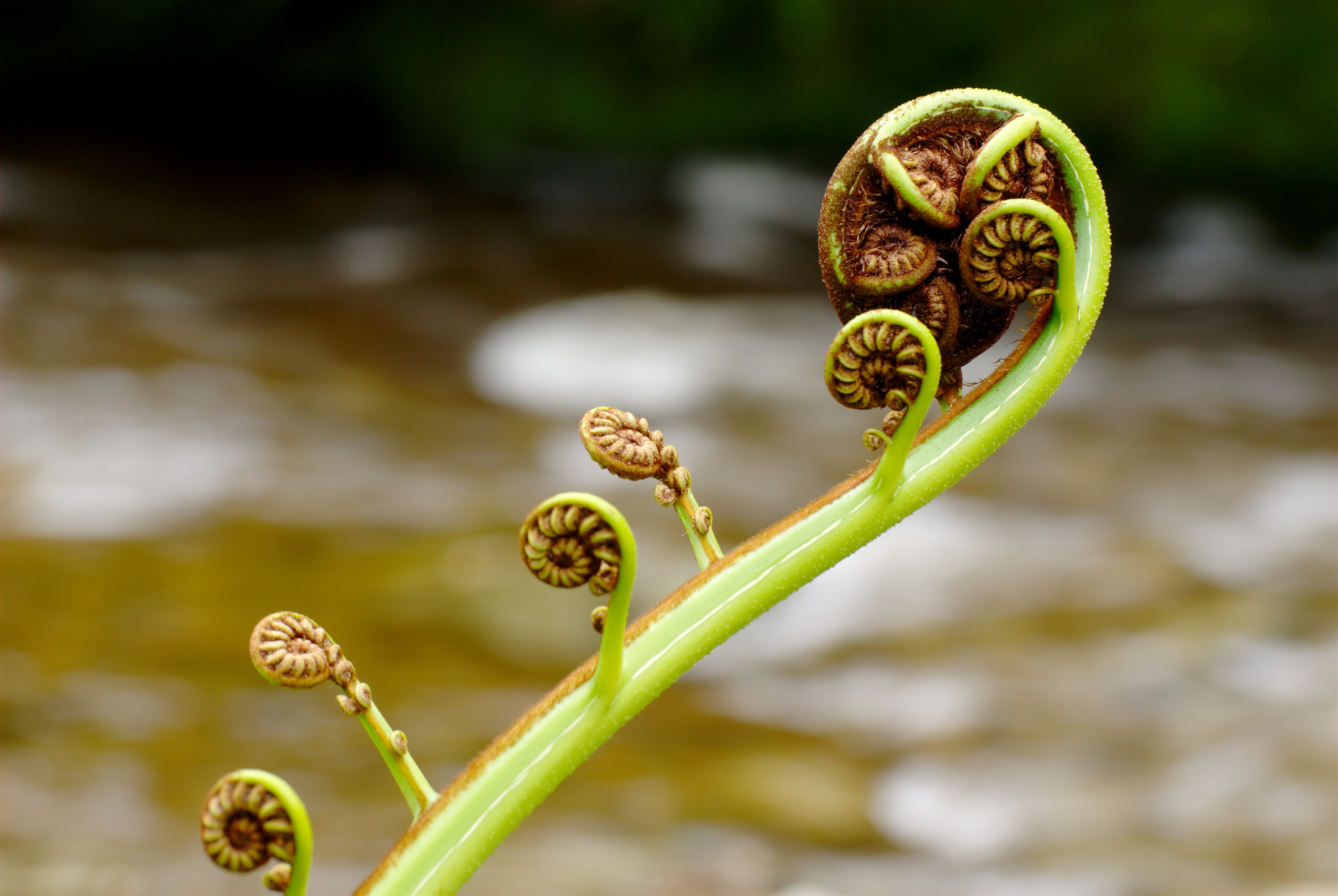
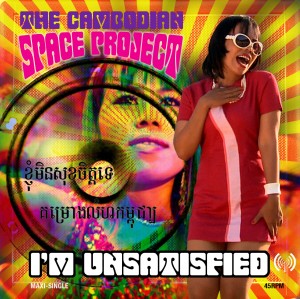
I recently visited Hobart for my cousin Julien’s wedding, a spectacle that I’ve been privately referring to as the ‘unicorn sighting’, Julien being an exotic creature and someone not inclined towards matrimony or the domestic sphere (I’ve mentioned him earlier in this blog in connection with his band: The Cambodian Space Project). Julien and Channthy married in a private ceremony in my Mum’s back garden, underneath an arch I’d decorated with ferns, red roses and white agapanthus. While decorating the arch, I grooved on the idea of residual paganism in Christian ceremonies, wondered about the possibility of hiding small animal icons in the arch, or burying them in the garden nearby. Then I decided that if my family caught me doing it they would probably think I was a nut. In the end I chose a particularly fecund piece of fern frond, the pale green bit right at the end which ends in a delicate curlice, and hid it at the top of the arch behind the roses. John Olsen draws these kind of curlices, I’ve always loved them, they’re all over the ancient pottery of the Agean Sea, and sometimes found in indigenous art forms; a dodgy art lecturer once suggested to me that they represent the infinite. For me they’re both a nice shape and something that symbolises new beginnings. A spiral is my eternal Spring, no puns intended.

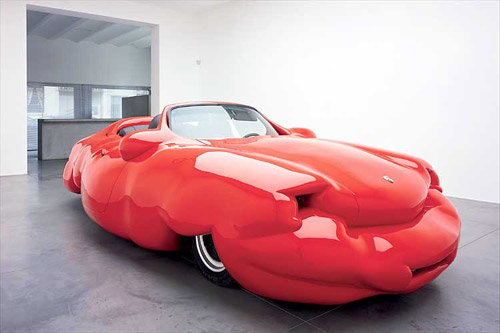
Another highlight of the latest Hobart trip was a visit to the newly opened MONA, Museum of Old and New Art. Mum dropped me off, I left her with Sophie as my darling toddler was heading towards Erich Wurm’s immaculate ‘Fat Car’ sculpture with outstretched arms and sticky fingers. In Sophie’s defence, I think she confused it with the bright red car that the Wiggles get around in. I like Wurm’s stuff, this was the first time I’d seen it in the flesh, kind of an exciting event for me. His fat sculptures brilliantly captures the essence of the times: the futility, mawish beauty, greed, relentless consumerism, self destructive neurosis and anxiety. They’re the visual equivalent of a hit record.
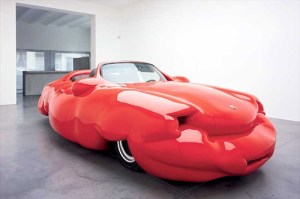
One of Erich Wurm's fat cars

I wish I’d recorded my feelings and impressions as I walked around the MONA space. I’d just spent a couple of hours in the gym so I was physically tired, and because I’d drunk a lot of water, I also badly needed a pee. If you’ve read anything about MONA, or visited the place, you’d know that one of its quirks is that the toilets aren’t marked. At all. If you need a toilet, to the point of worrying about wetting your pants, this strikes one as a particularly cruel piece of interior design. It made me think of two things: a school of architecture that used to incorporate false entrances and dead ends (apparently in one particular building, bike couriers used to dash in and run splat into a wall). And gender classification, how slippery it is, this idea that gender exists as a spectrum rather than an absolute state. Still, these ideas don’t help you when you badly need to piss.

I asked one of the security guards, a black guy with a London accent, and he pointed me in the right direction. MONA is underground, with dark walls and limited lighting. The combination of the guy’s lovely accent and the darkness caused an intense series of flashback memories of nights spent clubbing in London. This strange feeling of being drug-fucked in a nightclub, while looking at contemporary art, two different areas of my life fusing into one slightly mind-blowing experience.

MONA inspires claustrophia, anxiety, humour, frustration, thought, daydreams, new realisations, desire. It demands active participation from the viewer: this is its strength. It also manages to be quite annoying. Why? Things like the toilet signage (private musing that museum staff will get really sick of the constant query ‘where is the loo?’). Eschewing traditional signage and labelling the ‘O’, an electronic museum guide, provides artist biography, formal notes and a gonzo section with down to earth dialogue. Nice idea. The Gonzo section contained some gems, here’s some rough paraphrases: ‘Artist X lives in a shitty part of Manhattan’ ‘This artwork came with two invoices, not one, therefore we consider it two separate works’ ‘Artist Y is extremely good looking’ and ‘I paid half a million dollars for this piece of crap, so I’ve got to like it’.

The O content was mostly good, occasionally frustrating. I’m pretty straight: I like to deal with ideas with the personalities removed, like a piece of filleted fish. I understand there’s a person behind any idea, with their own biases and history, but I’m happy to accept this as the hidden structure that supports any piece of writing, kind of like a building’s foundations. With the MONA texts, I thought there was too much emphasis on the personalities of the people who put together the collection. Clicking the button on the O gadget is the equivalent of asking a question, and sometimes the text didn’t engage but deflected with humour and trivia. Clicking the same button multiple times usually got about three different responses. (It reminded me of Skinner’s early experiments on pigeons- the one where he got the birds to peck a button for food, and then experimented with which birds gave up first when the button stopped working). When you honestly want to know more about something, this can be infuriating. Like I said, I’m pretty straight.

http://www.moorilla.com.au/ ims/2010/mona_museum_2.jpg

The art was great. It’s one of the few spaces I’ve ever seen, actually the only one, where you can segue from a pen and ink drawing by Kathyrn Del Barton, with a river pouring out of her vagina, to an upright Egyptian mummy, black rimmed eyes gazing stoically at the museum patrons. Here are some flashes of stuff that made an impression: a white cube built into the museum, with pale Perspex door; inside a bank of video screens with people singing Madonna songs. A series of delicate ink and watercolour drawings, people, animal and tree forms, the O blurb sagely noting ‘there’s nothing we can say about these drawings- you just have to look at them’. An underwater wunderkammer containing carved antiquities, some of them copied from the originals, no weeds or bubbling bridge but fish swimming austerely in and out of the ancient forms. Flesh, naked flesh, with slogans written on it with felt tipped pen. A huge metal sculpture of a head, small holes providing windows through the skull into a poetic representation of a mind in action. A Juan Davila oil painting, a kangaroo felchering either Burke or Wills, I’m not sure which. Eric Wurm’s shiny red obese car. The huge Sidney Nolan rainbow snake, a surprisingly conventional backbone to the collection, a structure from which the other forms all seem to emanate. An ancient coffin, so small that a modern human would need to curl themselves into a ball to fit into it. A white library, every book blank, careful white tables with more blank paper. And again questioning the capacity of humans to aborb information in an increasingly complex world, a waterfall of words, the most popular search terms in Google, frequently updated, each liquid word hanging for less than a second before splashing onto the ground below, an eternal torrent of information.

A rich vein of anxiety running through everything, an overload of sex and death, the resonance of an individuals act of choice, a personal collection made public. It made me feel many things: creeped out, impressed, amused, moved, thoughtful, annoyed, alive, overwhelmed, surprised, aroused, but never disappointed or indifferent. I’ve got to say, opening a world class museum in Hobart, a small regional city with a perennially fragile economy, is an act of supreme generosity: locals are already talking about the Bilbao effect.

http://www.abc.net.au/reslib/ 200706/r154646_556754.jpg

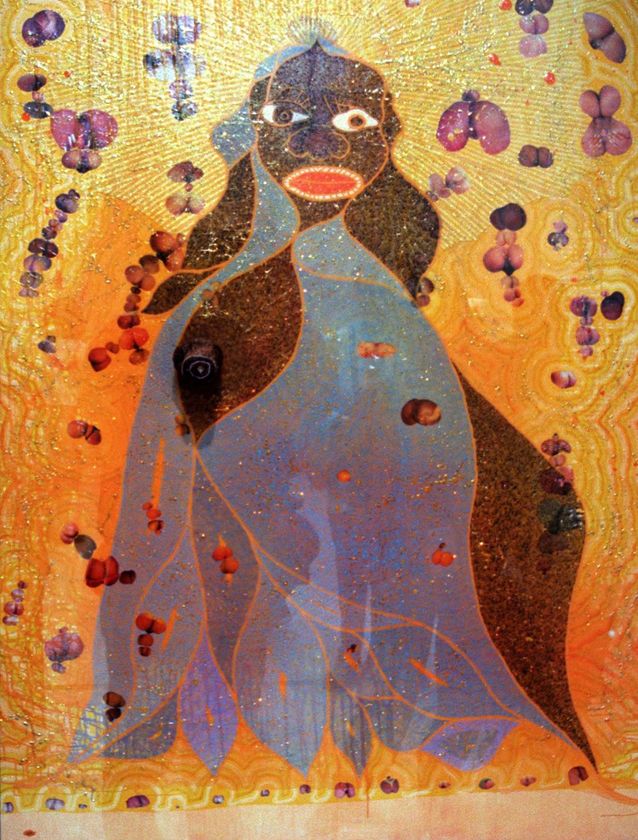
There were two artworks in the collection that loosely relate to my personal history: Chris Ofili’s black elephant dung Madonna, and Damien Hirst’s spin painting. Chris was the year ahead of me in the Painting Department of the Royal College of Art; after college I watched him become famous. I remember that he was a nice guy who worked hard in the studio, chased fame with a singular tenacity outside it, but once he achieved it seemed less than ecstatic. A memory: sitting in the rooftop college bar, drinking beer with RC, who see’s one of Chris’ ‘ELEPHANT SHIT’ stickers on the tabletop, and sets to peeling it off with a stubby thumb and forefinger, muttering as he does it ‘self promotional bullshit’. I said ‘I thought you liked him?’ ‘I do’ muttered RC, doggedly continuing to peel.

A final flash of memory: walking down an alleyway in Mayfair, on my way to an exhibition opening, and seeing Chris and his beautiful girlfriend climbing out of a car up ahead. She was extremely tall, with very pale skin and green eyes, wearing a black leather jacket. It was like watching a still from a movie.

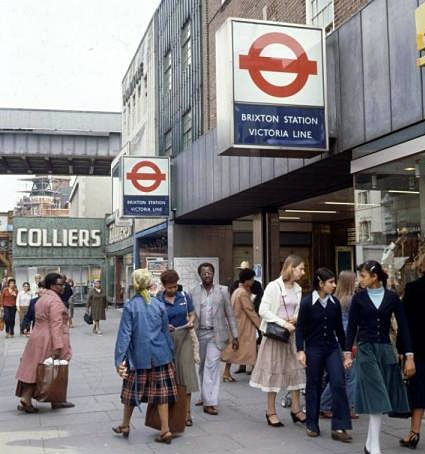
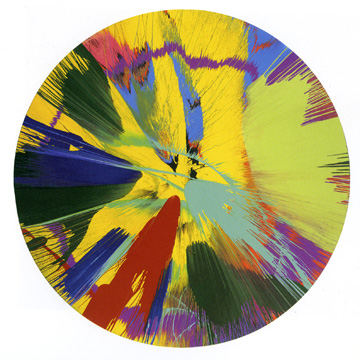
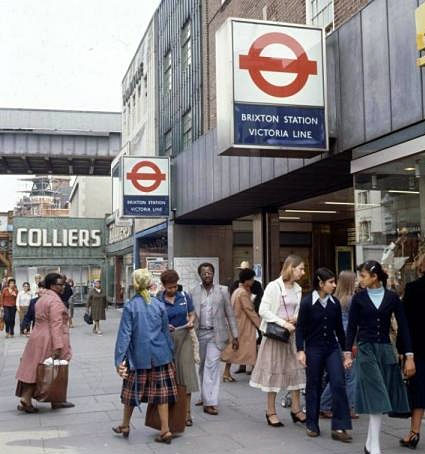
After I graduated from the Royal College, I got a studio in Brixton, South London. I can’t remember how I found the studio; I do remember going around with a couple of artists and an architect, inspecting derelict warehouses, empty for years, discussing whether we could turn them into artists’ studios. One of them had a rotting wooden floor and a huge pyramid of pigeon droppings; we walked quietly and gently, scared of falling through to the floor below, I remember kicking open a rusted shut door. The architect owned quite a few old buildings. Eventually two of us ended up with studios on a site he owned in Brixton, three old warehouses and a decaying Georgian mansion. Damien Hirst had a studio there but by this time he was quite famous and his assistants seemed to make most of the work. The Brixton studio team used to make the formaldehyde animals and the spin paintings. Always the horse-trader, RC asked me if I wanted a job pumping formaldehyde ‘I can probably get you in…’ I was still at the idealistic/stupid end of the professional spectrum and replied no, that I didn’t want to spend my life making another artist’s work for them. RC looked impressed, and I continued washing dishes for a living; yep, I was dumb. Probably still am.

Spin painting: http://www.thecityreview.com/ momaubs.html

I had a private chortle when I saw the spin painting in the MONA collection and read the O blurb. I remember this shitty post industrial studio complex in the middle of a South London housing estate; freezing cold, grey skies and constant rain; a large collection of rusting cars guarded by a savage dog; huge iron gates that were supposed to keep out intruders (they didn’t); giant rats with orange ticks; mud. It was so cold that one artist used to paint in an army surplus parachute jumpsuit and another built himself a plastic room within his studio to keep warm. In the middle of the central courtyard there was an overflowing rubbish skip. From time to time the skip housed rejects from some really good artists: I remember pulling out an early Nicky Hoberman, once a failed spin painting got chucked out (there was a fuss when someone later tried to sell it) often there were tins with the remains of the enamel paint used to make the spin paintings. One of the artists painted their kitchen cupboards with the remnants. Hirst’s assistants used to joke about making the spin paintings, hold up three paint tins of warm orange colours with a mocking declamation of ‘Autumn!’, brandish tins of pale green with a cry of ‘Spring!’ Artists in the other studios were quietly bemused by the success of the spin paintings.

The head of Hirst’s studio team was fairly obnoxious; when his wife had a kid he sweetened up a bit, but prior to that he was usually unfriendly. One day I knocked on Hirst’s studio door (I was living in my studio in the Georgian mansion at this stage) to give them an invitation to an American friend’s exhibition. He was rudely dismissive, enjoying the power to be rude to someone when they want something, and I felt pissed off and hurt. I don’t think I would have minded so much if I’d been plugging my own show, but because it was someone I liked, who was going through a rough time, I resented it enormously.

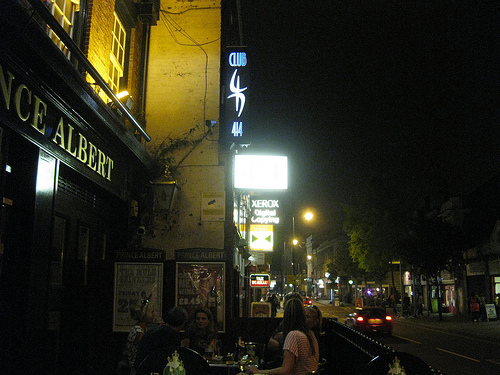
Brixton pub, Coldharbour lane: http://www.flickr.com/photos/ bluebeart/4476566101/

A few nights later I went to the pub with a friend, drank bucket loads of beer, and came home to the studio urgently needing a piss. (I should add at this point that the studios were sometimes without running water and electricity). I’d read a review of a contemporary Shakespeare production, one in which Lady Macbeth urinated on the stage floor during each London performance. In an interview with the actress, someone asked her what she thought about peeing on stage in front of a crowded house. She replied with gusto: ‘I usually think: that was a damned good piss’. And I’ve always been a fan of the dubious story about Jackson Pollock urinating in Peggy Guggenheim’s fireplace. So on this particular night, with a bladder as bloated as an airship and with the memory of the rude assistant fresh in my mind, I staggered over and peed on Damien Hirst’s studio doorstep. It was incredibly satisfying and, just like the actress, I thought to myself ‘damn, that was a good piss’. Anyway, when I was wandering around MONA looking for the toilets, it’s something that I remembered.
Another project that I’ve had hanging around for a while is a half-finished detective novel set in the city of Newcastle, NSW. I sometimes work on it after Sophie’s in bed, so I call it my Novel Night Job. I had written quite a few chapters when it became clear that I needed to know much more about policing, and Customs procedures in Newcastle, to get the details right.

I also stuffed around with the gender of my main character, instinctively wanting to write in a male voice, then getting distracted by the idea that a female character could embody a kind of surrogate ego: the attraction of sending one’s literary doppelganger on adventures that one is unlikely to embark upon in real life (mainly on the grounds of public health, morality and financial considerations). Then realism kicked in, and I decided that such a female character was not plausible, and that she would continually trigger reader disbelief, not suspend it. A pity really.

I eventually settled on a very good looking male anti-hero. The desire is to have a main character who teeters on the edge of reader empathy. I want him to be bad in a very ordinary, everyday kind of way, making the usual crap decisions people make (sleeping around on his pregnant girlfriend) but still managing to enforce some kind of moral code when pushed. I want his every action, his every decision, to hint at a polarised childhood, spoiled and brutalised: adoring mother, disciplinarian father. And for the thematic arch of the novel to be more about him growing up than it is about solving a crime, per se.
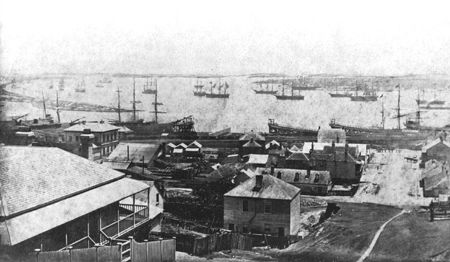
Newcastle Harbour in the 1870s

Much thought, conversation and cups of tea went into refining the logical premise that underlies the plot. Crimes novels are basically the narrative equivalent of problem solving, it’s one of the reasons people like them so much: they like to hunt, find solutions, discover the missing piece of a puzzle. Initially I wrote one of my main witnesses as a psychic, but then decided that it was a crap, easy way out of logical dilemma. It cut the guts out of the story.

Now I’ve got the harder, starker problems of pure logic and probability. I’m going to interview a couple of people who work, or have worked, in fields related to my novel’s plot (it revolves around Newcastle Harbour and police station) so I can get the kind of detail I need to invent something plausible. A bit like a well rounded scam, or propaganda: little bits of truth to make the whole construction convincing. (A nice story about Steven King springs to mind: apparently he once wore a t-shirt with the slogan I MADE IT UP to a literary festival). For many years, my hero was James Ellroy, a writer with an amazing ability to use history as the train track for his private obsessions. Here’s a clip of Ellroy answering 10 questions for Time magazine:

I’m umming and ahhing about whether to try and get a grant to help me complete this novel. In some ways I agree with friend RF’s stark analysis: if a book is any good, why would it need a grant? (I’m not convinced by this argument in the visual arts). On the other hand, whether I’m in the studio or writing, I regard any time spent away from my kid as requiring some kind of justification, whether it’s financial or to do with health and wellbeing, etc. Therefore I’m hesitant to plough an awful lot of time into a novel without knowing if I’ll ever get it published. (A lot of shrieking from the purists at this point, ‘art for art’s sake!’, but I’ve reached the point in my life where I won’t work for free). The deciding factor will be this: if, after talking to my interview subjects, I can come up with a plot scenario that is compelling, interesting and authentic, I’ll go ahead. On the other hand, if it looks like it will be one of those ‘I’ll do it for the practice/experience’ projects, I won’t bother. We’ll see.
The first chapter is too badly written to post now, I’m still at the stage where I’m trying to get things down quickly, not nicely, but when it’s looking a bit better I’ll do so.

Kangaroo Valley


Sadly January, designated as my Fun Month, will shortly come to a close. Latest activity in pursuit of hedonism was TM’s 40th birthday party in Kangaroo Valley last weekend. The valley is a beautiful place, high sides and its own weather, lush greenery, mists. Population the usual mix of disaffected Sydneysiders and hardened country folk. Party included lots of kids and some great toys: walled trampoline, shark head water slides, swimming pool, mobile sandpit, glow sticks and ground-hugging scooters. If you’re planning a holiday in the Valley, here’s a link with some tourist and accommodation info:

http://www.kangaroovalleytourist.asn.au/home/

As part of the whole sustainability lifestyle thing, I’m aiming to use my car less, with the eventual goal of learning to live without it. To get to the party I caught a train to Central, carrying Sophie’s car seat, and then got a lift to Kangaroo Valley with two of TM’s friends. Coming back, there was trackwork, which meant a lift to Bowral with the same two friends, now very hungover; a bus to Liverpool; an un-airconditioned train from Liverpool to Central; another train from Central to Morisset; and then a lift from Morisset to Dora Creek. It ended up being an all day event.

Two remarkable people and one notable meal encountered en route. The first person I got talking to at the Bowral bus station. It’s a wealthy area, and I couldn’t be bother carrying the car-seat and suitcase any longer, so I’d left them on the station seat and was walking with Sophie up towards the town to get a cup of tea. Coming down the road towards me was a likeable looking woman (bad teeth, sweet smile, scruffy hair) who looked like she was heading towards the station: she was. I asked if she’d keep an eye on my bag, she agreed (later noting that she herself wouldn’t have left it there) and then, because Sophie was having the toddler equivalent of a bad hair day, walked across the road with us towards the town, holding Sophie’s other hand, chatting all the way.

Gumnut Patisserie, Bowral

Which leads me to the notable meal, purchased at Bowral’s Gumnut Patisserie, a country bakery with a reassuring array of trophies for things like scones and bread lined up on the top shelf. Great food. Sophie and I ate a couple of small quiches, and a custard pie, so rich it left a layer of creamy fat on the top of your mouth. We shared a miniature fruit tart with an enormous blueberry teetering on its edge, only just held in place with sugar glaze, like the boulder at the top of Ambush Valley in an old fashioned Western movie. Sophie got the blueberry.

Returning to the station, the suitcase and the strange lady. Odd snippets of our conversation spring to mind: her son is studying veterinary science and lives in Toowoomba. Despite having lost all his belongings in the flood, the thing that really bothered him was that all his friends in a nearby town were air-lifted out by Black Hawk choppers. We discussed the layout of the Mittagong primary school playground as opposed to the one in Bowral: Mittagong infinitely superior, Bowral involves a road crossing and a parcel of land behind a church; the age children stop whining: six to sixteen, after and before that, forget it; shoeing horses: how people think it’s easy; falling off horses: how not to do it. And the poisonous nature of agapantha sap: toddler diverted as she headed towards the station’s attractive, flowery bushes.

I’m pretty sure this woman thought I was a frigging idiot, wandering around on a super-hot day, with a car-seat and toddler, both wearing freebie Corona hats that Jules had given us, and a certain post party vibe that is as easy to spot as it is hard to hide. But I really liked her. When she got on her bus, ducking to avoid an elderly man who was getting off, apparently the lawyer who had settled her grandmother’s estate (“country towns…” I cracked, and she grinned). I said to Sophie “that was your fairy godmother” as we waved to her. No idea what her name was.

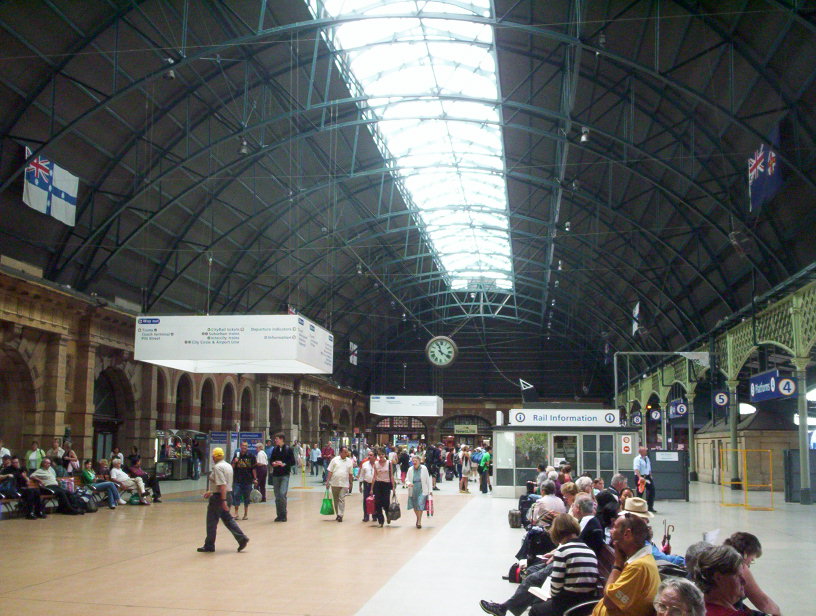
Central Station, Sydney

Second remarkable individual encountered somewhere on the line from Liverpool to Central. Young guy jumps on train with two toddlers and sits down near us. Thongs, tattoes, shaved head with rat-tail, shorts. He’s shirtless but stands up to pull a t-shirt on, realises it’s back to front, pulls it off again and eventually gets it on. I notice him mainly because he has a beautiful body, because the t-shirt is already stained with sweat, and because he seems so typically Australian, whatever that is. Sophie has, by this point, had enough of public transport and is behaving pretty badly. At certain points, there’s lots of screaming. I’m hot, crabby and not helping matters by trying to control her too much, instead of just accepting that a toddler is a toddler, not an adult, and you can’t expect them to sit there and look out the window. Sometimes you do have to let them crawl around on the crappy train floor looking for treasure.

The guy, on the other hand, is handling his two toddlers wonderfully. Segued smoothly from ‘can we see a butterfly out the window?’ to witty bouts of ‘look, Daddy’s wearing toddler hat’ and back to ‘Look! There is a butterfly out the window, you just missed it’. Brilliant stuff: masterful. Got talking to the guy, admired his skills, he looked pleased when I said that I he was obviously closely bonded to his kids. Here are some fragments of the conversation: kids names are Mark and Matthew; Matthew is two years older, but has been diagnosed with autism, ‘he’s my angel’; Dad has been through hell with his kids, he has them on the weekends, their Mum went away for a year; Mark is wearing a cool t-shirt with a carp on it; Dad used to work at a Japanese coy farm, t-shirt a hand me down but lasting well. Got off train, guy offered to help, he ended up holding Sophie’s hand and Sophie ended up holding Matthew’s hand; three transit cops looked amused as trio of wobbly toddlers exited train.

Guy tried to hit on me, politely deflected it, didn’t want to waste his time, and I know a bad boy when I see one (something about the tattoes, the body, the emphasis on being just a little bit too honest, a bit twitchy around authority figures). But I mention him, because whatever his relationship with the criminal justice system, and I’m sure there’s been one, he was managing two toddlers on a hot day like a pro.


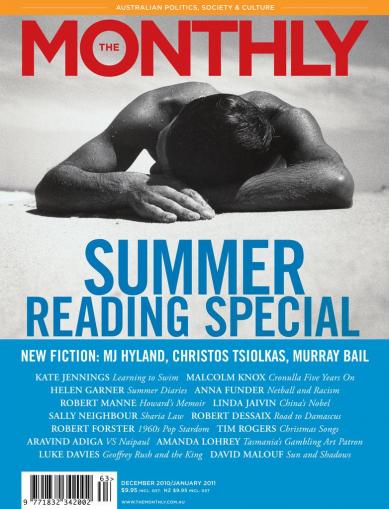
December/January 2011 edition of The Monthly

People are always suggesting that you read this or that, some great book or article, and mostly you don’t. In my case it’s not laziness, ill will or a lack of faith in their judgement, more a sense that the right books come to you when you’re ready for them, and what may be deeply fascinating to one reader is as “interesting as a bucket full of warm spit” (to borrow a description of the US Vice Presidency role) to another. So when a writer friend said that I should read a profile of Tasmanian art collector David Walsh in The Monthly, describing it as very well written, I responded enthusiastically with no intention of actually doing so.

About a week later I was standing at Central Station waiting for a train to the airport. Looking at the magazine covers on offer at the nearby newsstand, I saw a copy of The Monthly with a copy of Max Dupain’s Sunbaker on the cover. http://www.themonthly.com.au/

Now I have a particular interest in this image, having recently suffered through a pile of undergraduate essays on the topic of the expression of Australian national identity in the visual arts, so I was drawn to it. Handed over my $9.95 and ended up enjoying the magazine, and the profile, enormously. Great selection of diary entries by Helen Garner; nifty article on swimming by Kate Jennings; and an album review by Chistos Tsiolkas of the Gaza Strips that sent me scurrying into the nearest Sanity record store, only to be told by the attendant, after checking his computer, that he had a listing for the Gaza Strippers, and was that what I was after?

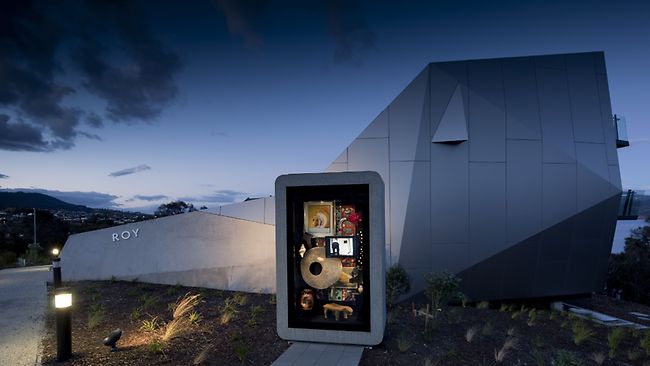
MONA: source The Australian newspaper

MONA, the museum of old and new art, David Walsh’s brainchild, recently opened in Hobart, so I was curious about him and his collection. One of his comments caused me a fair bit of angst. It was words to the effect that when he questions artists about their work, quite often they don’t seem to know what they’re actually doing, or don’t have a strong rationale for why they do what they do. Yup, after years of fluffing answers to these kind of questions, I knew exactly what he was talking about. Since then I’ve been mulling over how to describe what I do, why I do it, and what keeps me doing it. Oh, I forgot to mention, Walsh also noted that artists seem to be driven by the twin poles of sex or death: artistic peacocking behaviour for procreation purposes, or seeking immortality via the creation of cultural artefacts. Honestly, I’d have to stick myself in the first category, purely on the basis that sex appears to be much more fun than death.

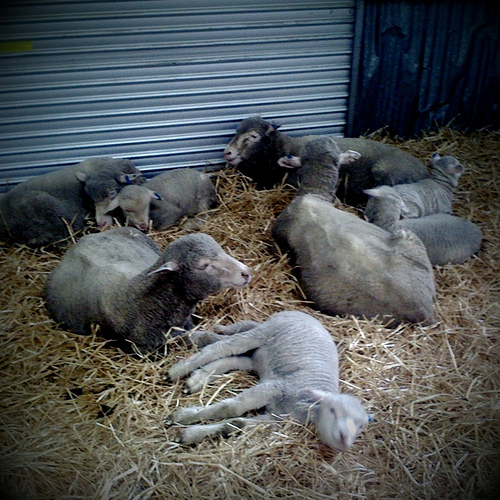
To answer questions about why I continue to like making art, it makes sense to look back at where and when the behaviour originated. Very early (still in nappies and before my parents’ marriage busted up) I remember pulling a red geranium apart and being absolutely fascinated by the colour. I thought it was incredible that the more I ripped the flower up, the more red there was. At kindergarten, I fell in love with a Pakistaani carer, and used to dash off bird drawings just for the intense pleasure of his praise. After kindergarten, I painted a black sheep from the Royal Hobart Show with a blue ribbon around its neck, standing on yellow straw. I remember agonising over how to paint the eye, given that I had already used the darkest colour in my palette for the fleece. (In the end I gave the eye a brown outline and coloured it black too). About the same time, Mum and I were visiting one of her friends, and I was deeply envious of one of their kid’s paintings stuck on the fridge. It was a painting of a rainbow and all the colours had bled into each other: I wasn’t sure how I could get paint to do this (nothing more complex than wet on wet paint application).  So very early on I was noticing colour and paintings and thinking about how to make them, how to match the picture in my mind with what came out on the paper.

The next generation of Royal Hobart Show sheep: photo ozjimbob @ flickr.com

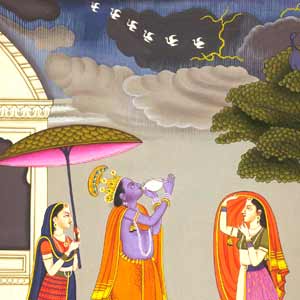
My grandparents both painted and ran a commercial art gallery, and my Mum had been a curator at a State Art Gallery, so I was lucky to have been exposed to lots of interesting imagery. Another key early influence was MP, the writer I mentioned earlier, who suggested I read the David Walsh piece. In the 70s she used to import Indian miniature paintings and artefacts so I grew up looking at images of half human/animal gods with anti-naturalistic colour, non western perspective, pattern used to describe pictorial depth and animate figures and clothing. These had a huge impact, though I didn’t realise it at the time, something that remains with me to this day.

As I got older, I became attuned to the idea that art could be used as a wild zone where you could express forbidden feelings, thoughts and desires. It was a visual code that only you could crack, a powerful but quiet form of protest, creation as a transcendent space. I began to use animal imagery as a signifier for human experience, partly because I like animals and their forms, and partly to make the code more oblique. The animals would become stand-ins for human actors and actions. I’ve mentioned early that I didn’t like growing up in Hobart, always felt really out of place, couldn’t wait to leave. I experienced the place as claustrophobic, it gave me a feeling of being locked in a room in which the air is slowly being sucked out. For a long time, and this is really juvenile, my greatest fear was becoming a paraplegiac, unable to speak, and being stuck in a hospital bed with a view of Hobart City.

Indian miniature painting

Sometimes, of course, art was a handy social tool. Kids who can draw are always useful or entertaining for other kids, and so it was with me too. I remember drawing a friend in primary school, the drawing turned out well (her face was turned ¾ away from me and the light was hitting her cheekbone), and having a queue of little girls wanting me to draw them too. I also remember becoming aware of human beauty at this age. I remember watching a boy and a girl run around the oval like wild animals, the curve of a friend’s spine as she got dressed after gym.

Over the years I have returned again and again to the same cycle of images, mostly based around interactions between humans and animals, or combinations of human and animal forms. There are often two girls, I call them the fishwives, standing side by side near the ocean. My cousin Rachel were, and are, as different as two people can be, but because we grew up together she is like my sister, the other to which I define myself. This is a perennial issue, but parents seem to be stricter on their girls than their boys, and keep them closer to home. I paint the two girls frozen in immobility, wearing their best dresses, waiting for a metaphorical ship (life, action, whatever) that may or may not arrive.

Another recurring images, again two figures, standing outside an old fashioned squat colonial church, shades of American Gothic. Not sure entirely what this one is about, but I paint it when I’m in love, and when I’m out of love, the expressions of the couple changing each time. It’s an image that only works when the emotional conditions are right, I’ve tried painting a replica of one that I sold and it didn’t work. Another image that I like, but am yet to paint in a way that I am satisfied with, a cat with a woman’s head, lactating milk on the floor of a red, velvet tent, with little ships sailing in the milk. Other recurring images: a tree draped with human bodies and animals; a man standing in a boat, his arms outstretched; human and animal heads on striped poles, like cocktail swizzle sticks or channel markers; a ship in a bottle experiencing a violent squall.

So the central themes, I guess, are claustrophobia; dislocation; the pressure between inner and outer selves, social expectation; the female condition; sensuality versus morality; freedom versus confinement; stasis against adventure. A pressure valve of sorts. And all bound up in the weird psychic resonance of the Tasmanian landscape, with its beauty, suppression of history, violent past and present, and disconnected, bottom of the world sense of place. I’m always trying to balance the sweetness and horror of the island: I suppose all places are, to some extent, like this, but I’ve always experienced Tasmania more intensely than most places I’ve been.

It would be tempting at this moment to conclude ‘well, it’s just therapy, innit?’ And in many ways, I can reluctantly admit that it’s true: art does bring me psychic calm, I get shitty when I’m not painting, I don’t feel like I’m properly alive. But although art does have a therapeutic role, aligning my inner and outer selves, this is not why I continue painting and exhibiting. I am driven to try and create one true image, one image where everything works and nothing can be changed, something that speaks to the viewer in a clear voice. I know that this is far from being a novel idea, but I’ve always felt that the universal is reached via the personal, and that my obligation is to be an honest conduit of what I feel and experience. My main job at the moment is to nail the techniques so I create the best possible version of the images in my imagination. In a strange sort of way, I feel like I was born with all the images I ever wanted to paint, and that the only thing that I need to continue to work on is how to do it.

Well, I’m afraid that’s my best answer to the question of why I make art and what I’m trying to do. Hopefully I won’t run into David Walsh at a dinner party anytime soon.

***

Two bits of trivia about sex: late one night, afterwards, I had this intense visualisation of a blue diamond shape embedded in the flesh near my navel. Days later, and this peculiar image remained. I tried googling the symbolism of the blue diamond shape, but apart from finding out that natural blue diamonds are extremely expensive and rare, and that a blue diamond tattoo is used by elite security forces, nothing much of consequence.

Toying with the idea of painting myself blue and renting myself out as a tantric sex instructor for a laugh. Burn some dodgy incence, look ethereal and smug, talk about chakras, dogmas and karmas. Beautiful. Read a few books on the subject beforehand and hey presto! The perfect scam. The idea reminds me of a funny film about a New Zealand travel writer who never actually visited the places he wrote about or recommended. People used to abuse him in the street: ‘I took my girlfriend there on our honeymoon!’

***

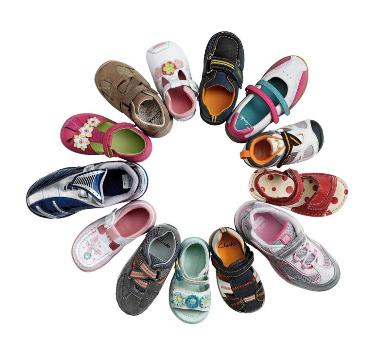
Sophie needed new shoes so Aaron and I took her shopping. David Jones in Newcastle is closing down, the end of an era, and lots of things are on sale. She got a practical pair of brown Velcro sandals, a white pair of trainers and a sparkly pair of white sandals for when she’s a bit bigger. Her Dad wasn’t so keen on the sparkly sandals, but she loved them so, holding them as if they were priceless treasure.

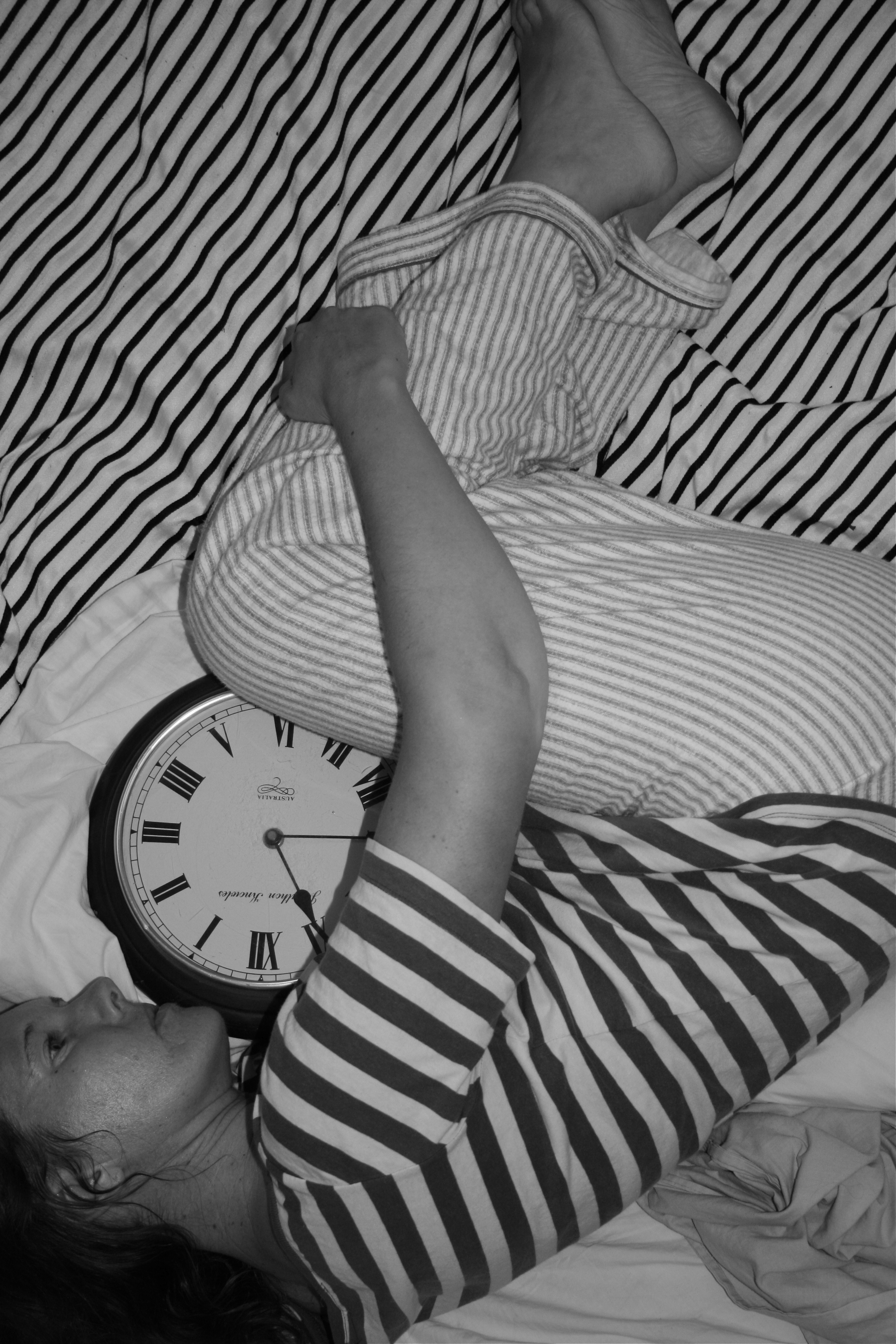
Sunday morning

A few days ago I read two things that pulled my mind in completely different directions on the subject of aging. With my fourtieth birthday just around the corner, I’m currently quite interested, compulsive actually, about the topic. Instead of doing what most people do, which seems to be a quiet, internalized distintergration, I thought I’d have a very public year long explosion. Why behave irresponsibly for a few days when you can sustain it for 365?

Sitting in the mechanic’s waiting room, reading a copy of Women’s Weekly, something of a foreign journal to me, I received a rude shock. Deeply absorbed in the editorial, I realized that the magazine’s target demographic was… me! Time had crept away from me, leaving any edge I once inhabited far behind; I was supposed to be interested in finger food, affordable fashion and big covers. I got as far as the letters section before the mechanic told me that they didn’t have my car’s oil filter in stock. But this is what I gleaned from the uber supportive, fannish letters and the nervous horse/kind groom tone of the editorial: an awful lot of women are freaking out.

There were stories about anoxerics, bulimics, body image, sickness, relationship breakdowns, influential female role models (Lara Bingle cropped up here, I know next to nothing about her except that she got very well paid for a bikini tourism advertisement and now drives a nice car; and that the guys I sail with perk up when her name is mentioned). Basically there was an awful lot of stuff about how to feel good when you don’t, and how it’s all ok. There, there dear- your sisters are here for you.

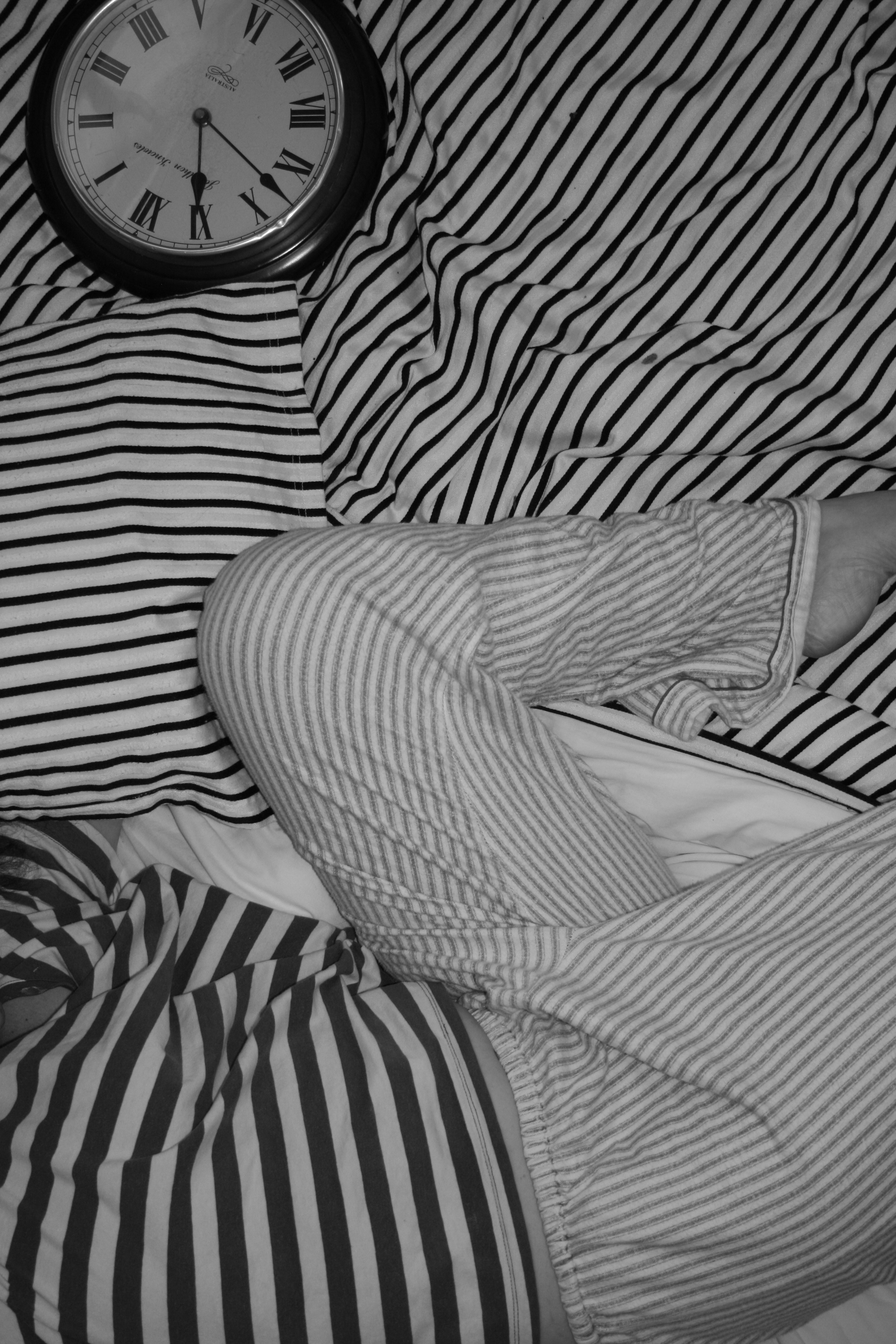
Sunday morning

It was at this point that I started to freak out. There is something about a well meant, supportive, motherly tone that makes me run. Fast. Really fast. It’s like a hairdresser coming towards you holding up a sharp pair of scissors and saying ‘it won’t hurt a bit’ and smiling, the light hitting her large teeth- kerching! I mean I know that aging happens, but I usually pretty much ignore it, with a body image that swings between ‘I am just so totally hot’ to ‘whatever’. I can remember as a twenty something thinking that men may not fancy me due to acne (it was quite globular), and now twenty years later I assume that they probably wouldn’t find me attractive due to wrinkles, a bookended endgame state which is kind of amusing if you think about it.

Ironically later that same day I took my first ever plunge into Michel Houellebecq, specifically The possibility of an island, the novel about an offensive stand up comedian who survives an apocalypse through the judicious use of human clones. For those unfamiliar with the work of Michel Houellebecq, a quick Google will tell you that he is the enfant terrible of French contemporary literature, writing in the provocative tradition of Marquis de Sade. People tend to either like him or hate him: like him for his honesty, hate him for his honesty, like him for being so mean, hate him for the same, love his trashiness and spirited quest to offend, and so on.

Sunday morning

One of the themes the novel tackles early on is fourty year old women. Described as possessing ‘fat asses and flannel breasts’, the lead character cruelly observes ‘life begins at fifty, but that’s only because it ends at fourty’. There’s also the oh so funny, much circulated joke: What do you call the fat around a vagina? The women. (I’ve privately tried reversing the gender of this joke a few times but while the female subject seems to attract weary sniggers, a male subject doesn’t work at all. It comes across as either too factual to be funny or just like you got the joke wrong. Interesting). There’s also a fair bit about the plummet in erotic value at this age, the female habit of trying to talk up a hopeless situation, desperation at the end of the line, futile attempts to make sex mysterious etc.

Despising Houellebecq for his nastiness, but reluctantly admitting that this is an enemy worth fighting; and disdaining the Women’s Weekly for their cloying haven, guaranteed to seduce, smother and dis-empower, I find myself at something of a cross roads. Today I went to the gym, pumped iron, observed the men and boys doing the same thing, and thought about the aging process. It struck me that all ages, everyone is at the end of a line, knowing only as much as the days they have lived, with no inkling of what tomorrow may bring. And at this point there seems to be a huge amount of wisdom, fatalism, kindness and compassion condensed into a single word: whatever.


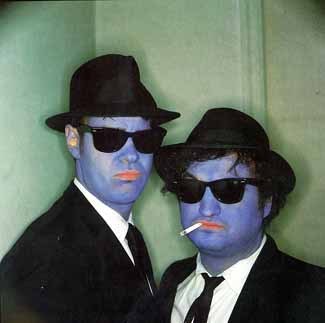
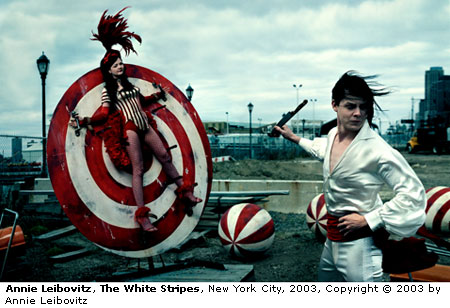
Blues Brothers by Annie Leibovitz

As January is usually the most bloated month of the year, thirty one days spent regretting the excesses of Christmas and the New Year, breaking newly minted resolutions and looking with jaded eyes at the second rate crap one has managed to accumulate, I decided to reverse the trend and declare January ‘Fun Month’. (This, incidentally, is only peripherally connected with my life as a painter). Fun month has proved to be, well, fun. I’ve probably gone out more in this last month than I have in the previous three years or so. But it’s not without its controversies: Aaron sniffily observed, when asked to babysit yet again, that I was forty not twenty, and I responded in a mature fashion by dancing around the kitchen chanting ‘party! party!’

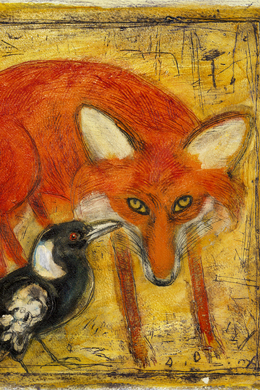
Fox by Ron Brooks

Part of Fun Month has involved going to see art exhibitions, which obviously does relate to life as a painter. In Melbourne I saw ‘Picture This!’, an exhibition of children’s book illustration at the State Library. Great stuff, though I have to say, on the evidence of the short film of interviews with some of the illustrators playing in an alcove, some of these people are quite odd. I imagine them as being the sort of children that didn’t like to share their toys, or go outside, that recoiled in horror if asked to (gasp) play sport.

One of my favourite pictures was of a glowing red fox by Ron Brooks, who taught me Graphic Design at the Hobart Centre for the Arts, back in the day; I learned a lot from him. I spent quite a bit of time in front of this picture trying to work out how it was made: I’m thinking rag paper, coat of gesso, acrylic bumped up with gel medium, fork and pointed thing used to score lines in the paint while it’s still wet, let dry, colour with ink and acrylic paint, final glaze with oil paint for depth of colour. Cool. Only thing I wasn’t sure about was the very precise black lines, typically around the fox’s nose and tail: the black looked like it had been applied by a pen, not added afterwards, and because the lines were scored into the paint it must have happened while the paint was still wet. Interesting. I didn’t know you could get ink to flow off a pen into sticky wet acrylic- must try it sometime. Perhaps repeated dipping and rinsing the pointed thing is the key?

Brooks recently published a memoir ‘Drawn from the Heart’, RF read the review to me while I lay on her blue velvet sofa; a summarised version is that he’s struggled with lots of people, most often himself, and that being an artist was his redemption but occasionally also his torment. I haven’t read the book, I’m just going on the review and what I remember of the man, but I guess the obvious question is- if you know you’re a difficult bastard, why didn’t you do something about it?

Terracotta warriors

Back in Sydney, I had a look at the Annie Leibovitz exhibition at the MCA. Liked this enormously, admired her passion for Susan Sontag, liked the blurring between personal and professional images (until there was no real line), clucked over the photographs of her three children, considered the way some people are so good at giving the camera an image while other people seem almost naked. Defenceless. People looking at the show seemed almost hyper alert to each other’s presence, more interested and alive than is usual in a city, a bit twitchy and self conscious: almost as if the process of studying large portrait photographs reminded them that they and everyone else in the room was also human.

In the background, the thud-thud-thud of construction work at the MCA meant that exhibition tickets were cheaper than usual, a true bargain at $5. The noisiest end of the gallery was where Leibovitz’s big sublime desert landscapes were hanging. It was kind of funny: sublime landscape photographed in the religious light of pre-dawn or post-dusk, the thud-thud-thud of a compressed air hammer in the background; trying to groove on the air, space and heat in the vast photographs, then the racous knnnnniggggggnnnn of a circular saw.

Annie Leibovitz, the White Stripes

The Terracotta Warriors exhibition at the Art Gallery of NSW was however a disappointment. The main problem was that I’d seen the original exhibition that toured Australia, not long after the discovery of the Chinese archaelogical site in 1974. I was only a child at the time, but the scale and number of figures had a profound effect. (A woman who saw the same exhibition as a child told me it was the reason she decided to study Chinese History at University).  I’ve still got the exhibition catalogue and for years tried to draw horses with the magnificent profile and dog like rumps of the charioteers’ steeds. I remember the original exhibition as having lots and lots of figures, many horses, something overwhelming that hinted at the vast scale of the find, and the diversity of the figures. But this time around there seemed to be quite a lot of slick digital story board presentation, small artefacts, historical summaries (sometimes repeated for people that hadn’t read an earlier board), and only a handful of warriors and their horses, lined up like nervous extras waiting for the star to come on stage.

Eventually you were spat out of the darkened gallery rooms, suddenly finding yourself in the mother of all giftshops, the ceiling dazzling with brightly coloured Chinese lanterns, specially built cabinets full of merchandise, overflowing baskets of stuff. Merchandise ranged from baby romper suits embroidered with dragon pattern (yeah, it didn’t quite work) to fairly large replicas of the sculptures (yick). Consoled myself with the AGNSW’s collection of Indian sculpture.


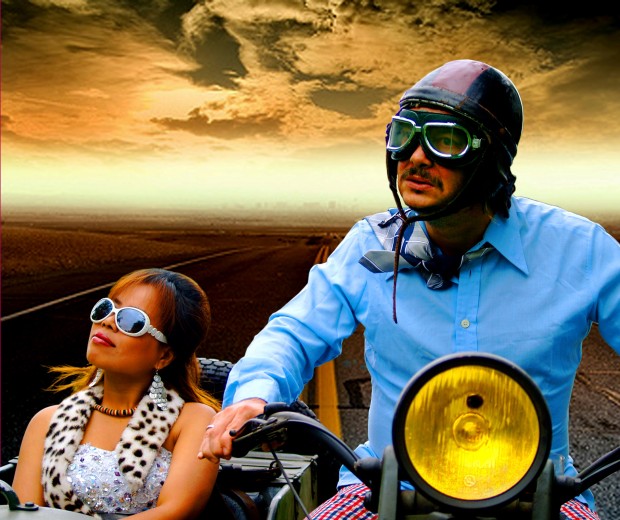
The Cambodian Space Project

Got home from the Remission Tour and promptly headed off again (took one look at a partially renovated house, overgrown garden, pile of paperwork, various unfinished projects and decided it was all took much). My cousin Julien had just arrived back in Australia from Cambodia, with other members of his band The Cambodian Space Project; they were about to kick off an Australian tour with a couple of gigs in Thirroul, on the NSW South Coast, so I gave Jules and Chanthy a lift down. The first gig was at a private party, great stuff, lots of French accents and fine food and a view over the beach that stretched way down the South Coast, a collage of hills and trees framed by a dramatic granite escarpment. As the band played on an open air deck, the sun set behind them, and I was reminded of a time I climbed a large hill in Turkey so I could watch the sun go down, the sound of chanting filling the air like a strange movie soundtrack.

Here’s a clip of the band in their nominal hometown of Phnom Penh:

The second gig was at one of those strangely attractive, unrenovated seaside pubs that have windows rotted open or rusted shut by the salt. The pub was the sort of place where not so long ago there would have been a seperate lounge for the ladies, you could still feel the ghost of gender seperation in the air: it’s the kind of venue where guys sit on one side of the room, girls on the other, and no-one dances. Hammerhead shark skulls nailed up behind the bar and a fishing trophy board that finished ten years ago. Anyway, I expect largely due to the music and the presence of most of the people from the party the night before, everyone got up and danced. This doesn’t usually happen in Australian pubs, but it happened in Thirroul the night after New Year’s Day, with rain and a cold ocean wind hammering against the windows.

CSP single: I'm Unsatisfied

Dropped Jules and co back in Sydney the next day, headed home, found the same stack of crap waiting for me, and decided to head off again asap. A few days later I booked an air ticket and flew down to Melbourne for the band’s Friday night gig at Yah Yah’s in Fitzroy. Haven’t been on Smith Street for years and astonished by the changes that have taken place. I remember it was a place to be avoided, a solitary kebab shop and an old pub full of derelicts that did suprisingly good counter meals; the old men ate them with the neat knife and fork strokes and lowered heads of people that don’t often get a good feed.

At the time I was living in a hotel in nearby Clifton Hill. One night I went to have a shower and accidentally locked myself out of the room wearing nothing but a yellow towel, I borrowed some clothes off the barmaid’s fifteen year old sister and went looking for my room mate, and more usefully, her spare set of keys. The room mate (my cousin Rachel) was working in a dodgy pub called The Champion near Smith Street; it used to be infamous, but it’s a Post Office now. The memory of walking down Smith Street in pink trainers, fluffy white tracksuit and glitter puppy dog t-shirt with battered cars stopping to beep and the occupants howl stays with me to this day.

Anyway, Jules and co got them dancing at Yah Yah’s too.


e

A strange thing has happened. For the most part I loathed growing up in Tasmania, (Peter Conrad’s book Down Home: revisiting Tasmania said it all for me: ‘this was not the life I wanted; somehow I’d been given the wrong one’) but lately, the last ten years or so, I’ve felt this irresistable pull towards the island. There’s a nice quote in the film Cinema Paradiso, words to the effect that you spend half your life trying to get off an island, and the other half trying to get back on. I even found myself googling Tasmania real estate agents the other day.

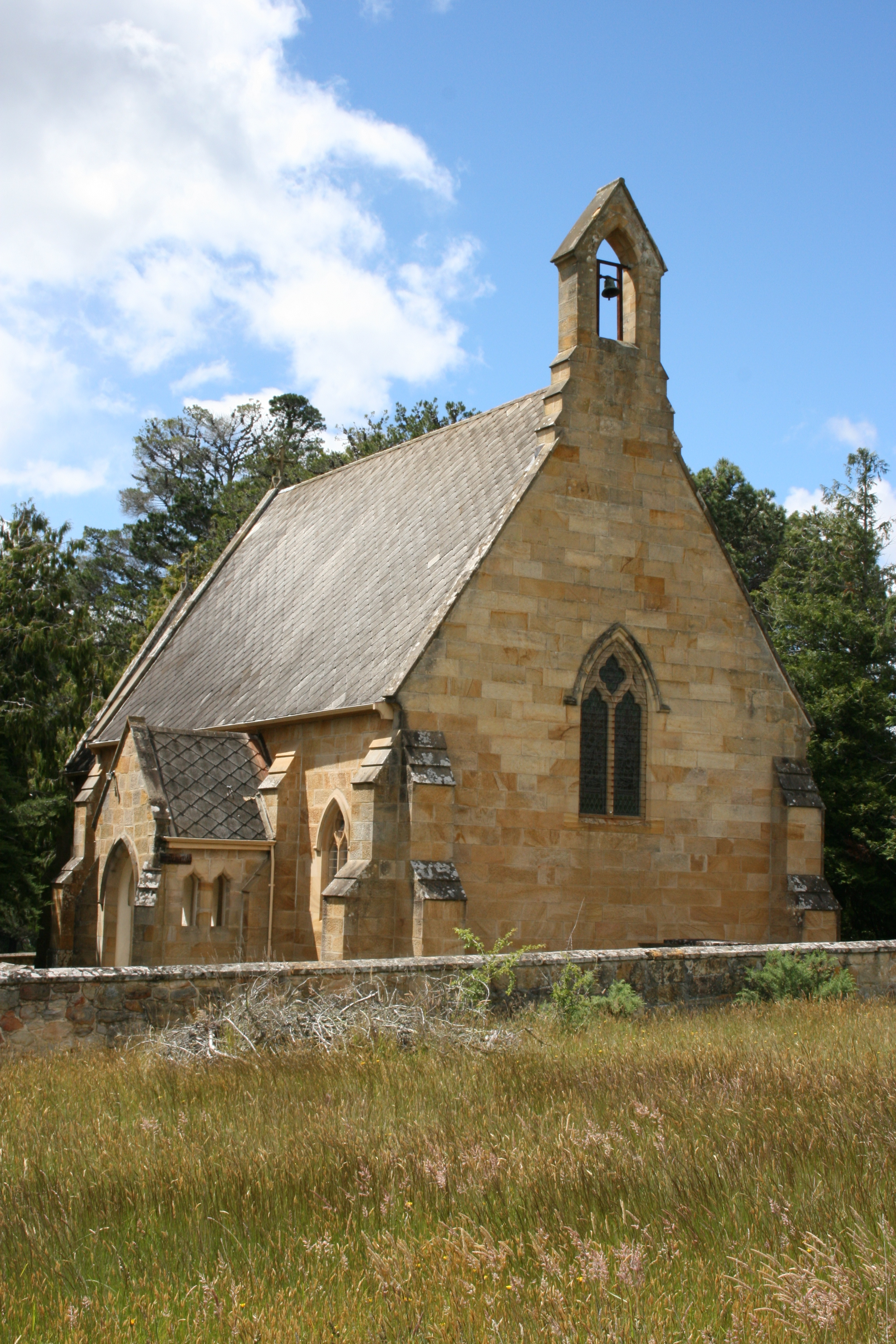
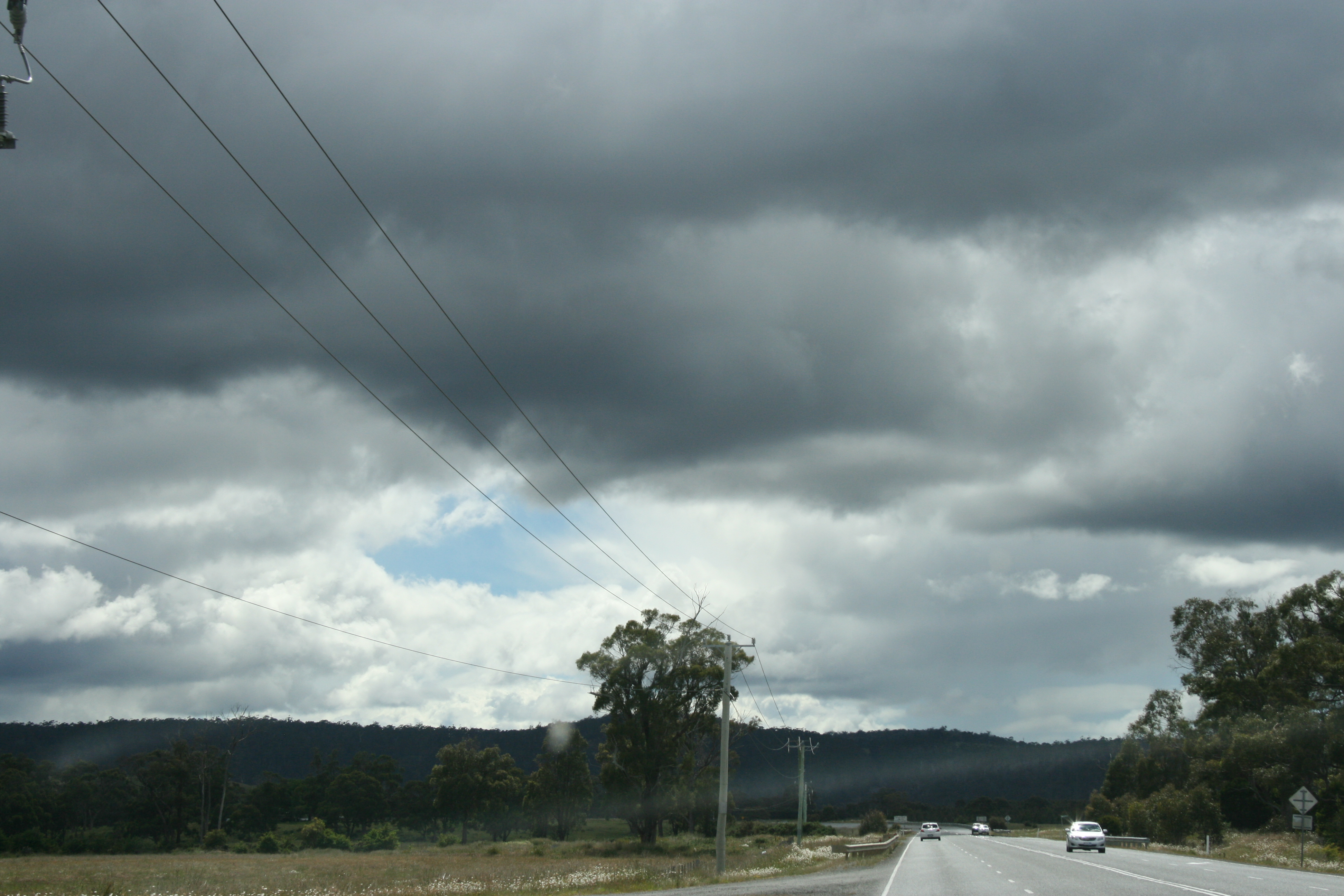
I mention this because I recently took my Mum, toddler and ex-husband on a campervan holiday around the State. Prior to departure, the holiday’s tag line was ‘my mother, a toddler, and my ex-husband in a confined space: what could possibly go wrong?’ It ended up being one of the nicest holidays I can remember. Personally it reinforced to me just how important both these people are to my daughter’s life, and professionally (or personally too) I felt myself drinking up the landscape, staring at lichen and rain filled clouds and stubbly fields of grass, wrought iron around old gravestones, convict built cottages, rotting bridges, pristine beaches, massive granite boulders. I couldn’t get enough of it. I remember this same sensation of ‘feeding’ about twenty years ago when I moved to London from Tasmania and spent days looking at the paintings in the art collections. I remember I developed a squint from staring at so many paintings. It was the same sense of continual epiphany.

The holiday was planned to celebrate both Mum and Aaron’s recovery from cancer, hence the name ‘The Remission Tour’. Like many artists, over the years I’ve bludged off my family quite substantially, and so it was nice to be able to do something in return; the trip was financed by the book I’d just finished co-writing for the University of Newcastle. My ongoing joke, which I’m sure I’ve cracked previously in this blog, is that I’m an artist who supports herself by writing: boom, boom. If I didn’t think it was well nigh impossible, I’d really like to have a stab at supporting the art via poetry. Now that would be an accomplishment…

Returning briefly to the subject of the Tasmanian landscape (even the words fill me with a strong sense of visual craving) I took heaps of photographs, intending to use them as backgrounds for the next series of paintings. I think that my painting is at its strongest when I have something tangible to fight against, interpret or re-invent. So instead of just relying on imagination to invent forms and imagery, starting with observation and adapting whatever you see. A painter friend, TB, once told me that if you ever get stuck with your painting, just re-engage with your reference material: there is nothing more beautiful than what is in front of your eyes.I notice this with my writing too: it’s stronger (less egocentric and self indulgent) when its guided by some kind of external structure. For example the University book, which was based on interviews with 50 women, taught me the value of using a real subject as the starting point for creativity.

Bicheno at night

I’m currently without a studio, the University closes over the New Year and as I had to pack everything up it doesn’t seem worthwhile returning to the space. I like working without interruption. Also, my studio was in an open plan area, and as much as I support the idea of students and other people being able to wander in and see what you’re working on, in practice it’s a pain in the ass. I’ve applied for another studio space, hopefully that will come through early in the New Year. I think about the next batch of paintings nearly every day. Somedays they hover in my mind fully formed, absolutely clear, precisely detailed, a perfect road map to where I want to go; on other days the clarity is gone and I have flashes of vague imagery and nothing more. These are some of the ideas: a girl holding a bird (the Picasso of the girl with a Dove) standing on a rocky coastline, with a stormy sky, and perhaps a ship on the rocks or an oil slick in the background, titled The Last Bird; children in the costumes of early European explorers, braid waistcoasts, scarlet coats and muslin dresses; a model ship on wheels; a Tasmania Tiger; two children standing in front of a squat, colonial style church; a rain of blossom and wattle; pink ribbons and grey grey skys; (For the Term of his Natural Life) two children standing on a cliff holding hands; a child on a small theatre stage.

Bicheno at night

Perhaps because I haven’t had a lot of time in the studio lately, it was a mad rush to finish the book on time, I’m really looking forward to these paintings. If I can get them looking just the way I want them to, I think they’ll be ok. I want to retain the naivety, it’s how I see things anyway, but make the paint applications slicker and more naturalistic- the phrase Magic Realism springs to mind. I want the sincerity of the naive painters’ paint applications, every brush stroke an earnest attempt to tell the truth and honour the subject, however I want to avoid the clumpiness, guacheness or technical inaccuracy. They’re going to be heavily reliant on reference material, I’m still busily photographing anything I think may be useful, but the exciting point is always when you depart from this material: it’s a very definite, clear phase in the painting where it suddenly becomes yours.