Archives for posts with tag: sustainability

Image

In about a week’s time, my only daughter will start school, so I’m in a reflective mood. Like many parents with young children, the last five years have been a bit blurry. I can’t say that I remember all of it, but it’s only now, as the pre-school period draws to a close, that I’m coming anywhere close to realizing what a valuable era it has been.

But, being a cheapskate, instead of waxing lyrical about the highs and the lows, I thought that instead I’d list some of the low-budget ways I kept my kid entertained. I’m not saying these are great parenting techniques, in fact I’m tempted to give a ‘don’t try this at home’ disclaimer, but we found them fun, and most of them are free, or as close to it as you can get.

1. Creatures of the Deep

While this tickling game is probably responsible for giving Sophie a life-long fear of the ocean, or a future freak-out whenever she encounters a fisherman’s basket when eating out, it’s a hell of a lot of fun. First things first: you have to say the name right. ‘Creatures of the Deep’ must sound like a B grade horror movie narrator, I’m thinking Boris Karloff or Tom Waits, half strangled and loaded with menace.

The responsible adult puts their hand behind their back, and asks the squealing child ‘what’s coming out from behind the rock?’ (Same voice, people, stay in character). Then the hand emerges, disguised as any number of sea creatures, who proceed to tickle the kid.

My personal faves were ‘giant squid’, a hand with fingers spread out that suckers onto the kid’s head; ‘giant crab’, a particularly nippy creature, that can chase the child sideways through the house, claws raised; and ‘baby crab’, a delightful little creature that Sophie delighted in ‘killing’ so I’d say, ‘oh no! Here comes it’s Mommy’ (try to sound a bit American here).

Image


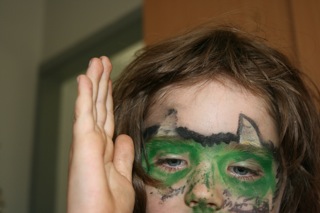
(Modelling the giant squid)


We also had ‘electric eel’, which stung and swum away; ‘sea anenome’, an inverted hand with waving tentacle fingers that gripped anything that came near, and occasionally transcended species boundaries by jumping, triggering lisped dialogue such as ‘oh no! How am I supposed to send you to school with a sea anemone stuck to your head’.

2. Name the sea creature

Continuing the marine theme, a popular travelling game (on public transport) was name the sea creature. Taking turns, adult and child use their hand(s) to mime the actions of well-known sea creatures. By the end, Sophie and I knew each other’s repertoire a bit too well, meaning that the surprise factor was virtually non-existent. But hey! Beats looking out the train window.

If you’re looking for inspiration, we had a hermit crab: it discarded its hand shell then scuttled around looking for another. A dolphin leaped and bounded through the air, a bit like a dodgy 80s dance move. Obviously we had to have a shark, but this is fun to mime, involving a vertical hand fin and some menacing swishes. There were also jellyfish, squid, crabs, fish, eels, sea anenome and starfish.

Image


(Sophie doing her shark fin). 

3. Agility Rainbow Snake

This one’s actually a recent invention, inspired by fitness writer Jen Sinkler’s ladder mobility drills, and my friend CS’s descriptions of doing chalk drawings with her children on their driveway in Tasmania. CS had two kids, a boy and a girl; apparently the little girl would draw princesses and her brother would draw dragons stomping them.

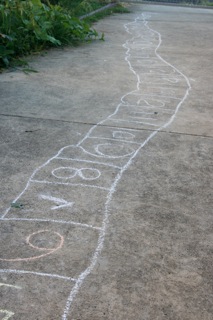
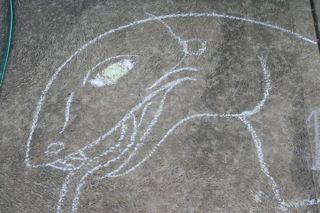
Instructions: get a $2 bucket of chalk from the Reject Shop, or similar discount store. and draw a large snake on a relatively flat piece of concrete. It’s a long stripy snake with a viscous looking head and a curly tail. Give each stripe a number: ours went from one to twenty-seven.

Then think of ways to race your child up and down the snake. We hopped, jumped, crawled, skipped, galloped and did this funky kind of salsa thing we got from the fitness website. There aren’t really any rules, except you’re supposed to land in the square every time you move forward, and my kid cheated a lot.

Image

4. Mystery shopping

No, not that kind of mystery shopping. In our household, mystery shopping means leaving the house for a nice walk and seeing what free stuff you can scrounge on your journey. We’ve had some crackers. One particularly memorable morning involved gathering fresh lemons from under a council building’s tree, and later using them to make lemonade; and ransacking the junk pile of the local theatre company’s recent wardrobe clear out. At particular times of year, we also hang around under a large avocado tree, checking out the recent falls.

There are a number of op shops near my house, so mystery shopping sometimes involves a detour into one of these. Mummy picks up a dress (and as this is a small town, hopes that she doesn’t run into its former owner) while Sophie gets craft stuff, books and the occasional toy.

Image


Image

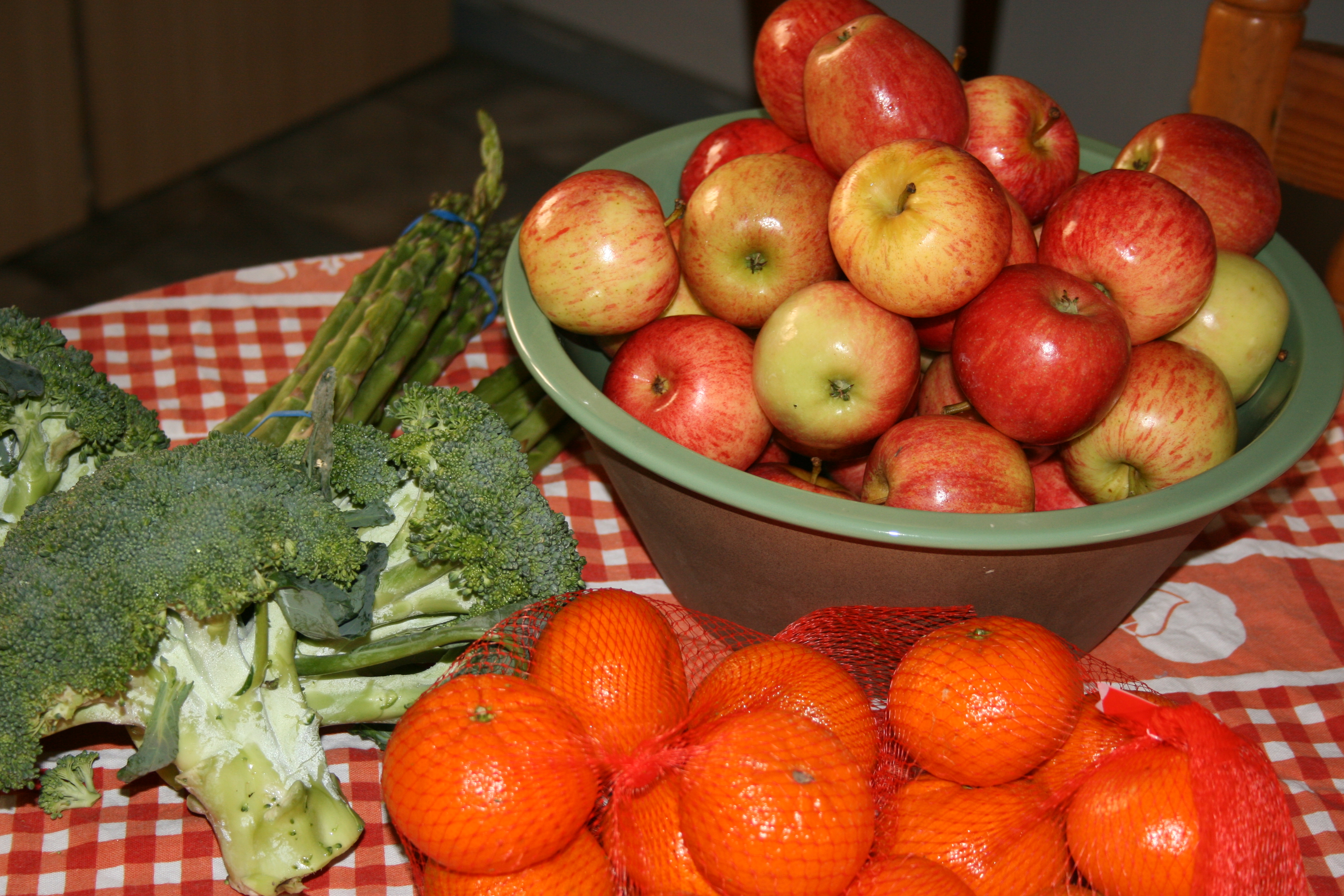
Read any fitness and nutrition blog, and they’ll tell you that kale is the new superfood. What they don’t tell you is that kale, despite being loaded in nutrients, and reportedly possessing anti-cancer fighting qualities, just doesn’t taste very nice. Which is unfortunate, as I have a bumper crop of kale in my vegetable garden, and I’m running out of things to do with it.

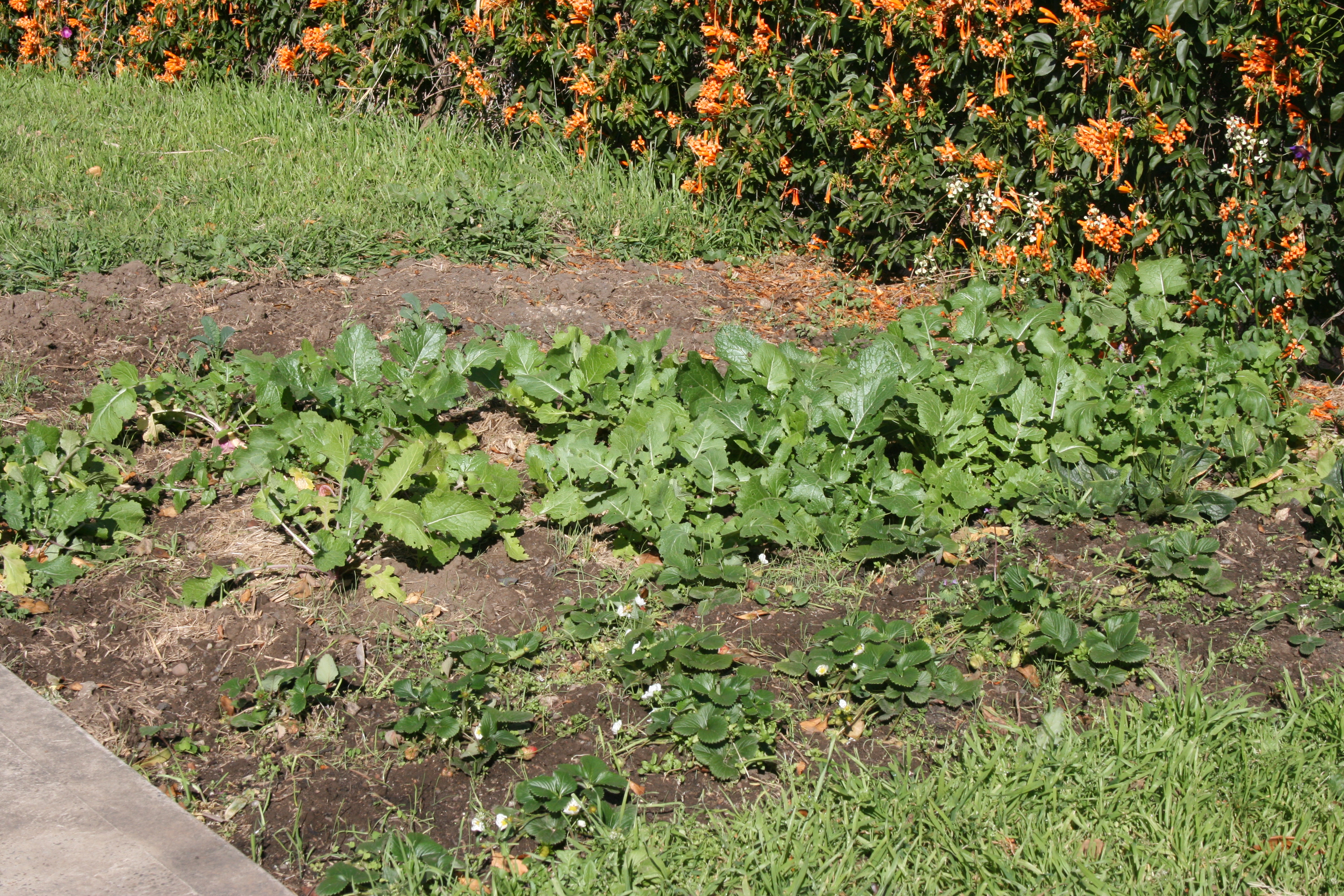
I planted kale seeds pretty much by accident. About a year ago, Sophie had a ‘no present’ birthday party, and I asked people to bring flower or vegetable seeds instead. I was on an anti-consumption kick, sick of stressed out families constantly having to fork out for crap: it seems that as soon as you have kids, your hand becomes permanently welded onto your wallet. Now the party was a hit, we held it in a sports hall, with lots of excited children running around, a jumping castle, plenty of starchy food and a mammoth cake. Afterwards there were loads of seed packets, including the kale. I didn’t know what it was so I chucked it in the garden and unfortunately it’s grown like a weed.

There are some good things about the kale. I walk past the neat little bunches in the supermarket aisle, at $5 a pop, and think ‘suckers’. As the vegetable du jour, there are plenty of recipes on the net. So far I’ve discovered a pleasing Tuscan kale and white bean soup recipe, a blog entirely devoted to kale smoothies, and many websites proudly featuring crispy kale. I now know that boiling the crap out of it doesn’t work, and that steaming or thinly sliced raw is much preferable. You can stick it in a smoothie, but you need to disguise the taste with berries, because it’s got this slightly bottom of pond feel.

Image

But when you have as much kale as I have, it’s still difficult to dispose of, as there’s only so much you can eat. It reminds me of being an Art student in London, when my friends and I would go to the Soho weekend markets, and come home with cartons of whatever vegetable was in season. It was the cheapest place to shop in bulk, fresh and filling, but variety could be a problem, particularly towards the end of the week. My mate April was once reduced to eating zucchinis stuffed with other zucchinis.

I’ve tried giving it away, but like all fast growing plants, it’s the gift that keeps on giving. The typical conversation goes something like this: ‘Here’, I say to someone, ‘have some kale. Have some more kale.’ Everyone that visits gets kale, whether they like it or not. ‘Oh thank you’, they say, ‘I don’t want to leave you short’ (they know how bad it tastes). ‘That’s ok’, I quickly counter, ‘I’ve got heaps: let me get you a bag’. And away they go, clutching a plastic bag stuffed with kale, cursing under their breath.

I’ve given kale to Sophie’s teachers, babysitters, friends, my neighbours. It’s reminiscent of a 90s UK Tango advertising campaign, where the company tried to sell more of their orange fizzy drink with a slogan proclaiming ‘you’ve been tangoed!’ Similarly, I watch people staggering down my driveway, carrying their plastic bag, and gloat to myself ‘you’ve been kaled’.

Image

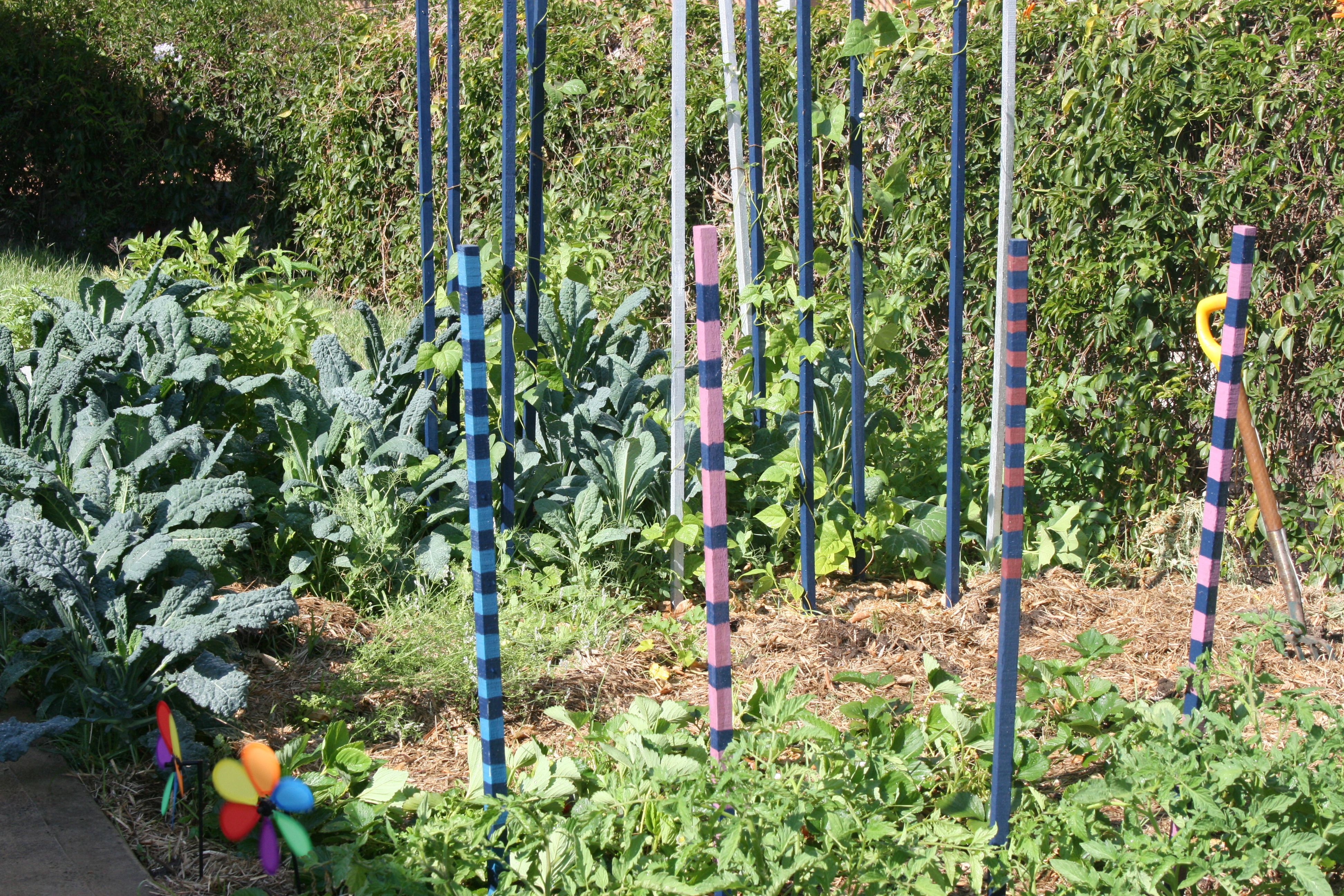
(The vegetable garden in its infancy).

I gave it to my neighbour, a lovely man who rides a bike, with a lot of ink. He picked up the leaf, sniffed it suspiciously, and tried to palm it off on his wife. ‘She loves this sort of food… what did you say it was called again?’ ‘Kale’ I reply, trying to stop my face twitching, ‘it’s very healthy’. ‘Kaaalllleee’ drawled my neighbour, ‘I think that’s the stuff she’s been trying to force through the blender’. We look at each other for a second, a moment of mutual comprehension; he raises his hand in farewell, like a fallen soldier, and wanders back into his house.

As the summer heat intensifies, the kale harvest goes on and on and on and on. Even the birds won’t eat it, I’ve tried to encourage them, and the caterpillars appear reluctant. I’m just hoping it’s not self seeding. Every morning, no matter how many leaves I’ve pulled off the day before, the plants appear undamaged. It turns out that kale has Terminator like botanic qualities.

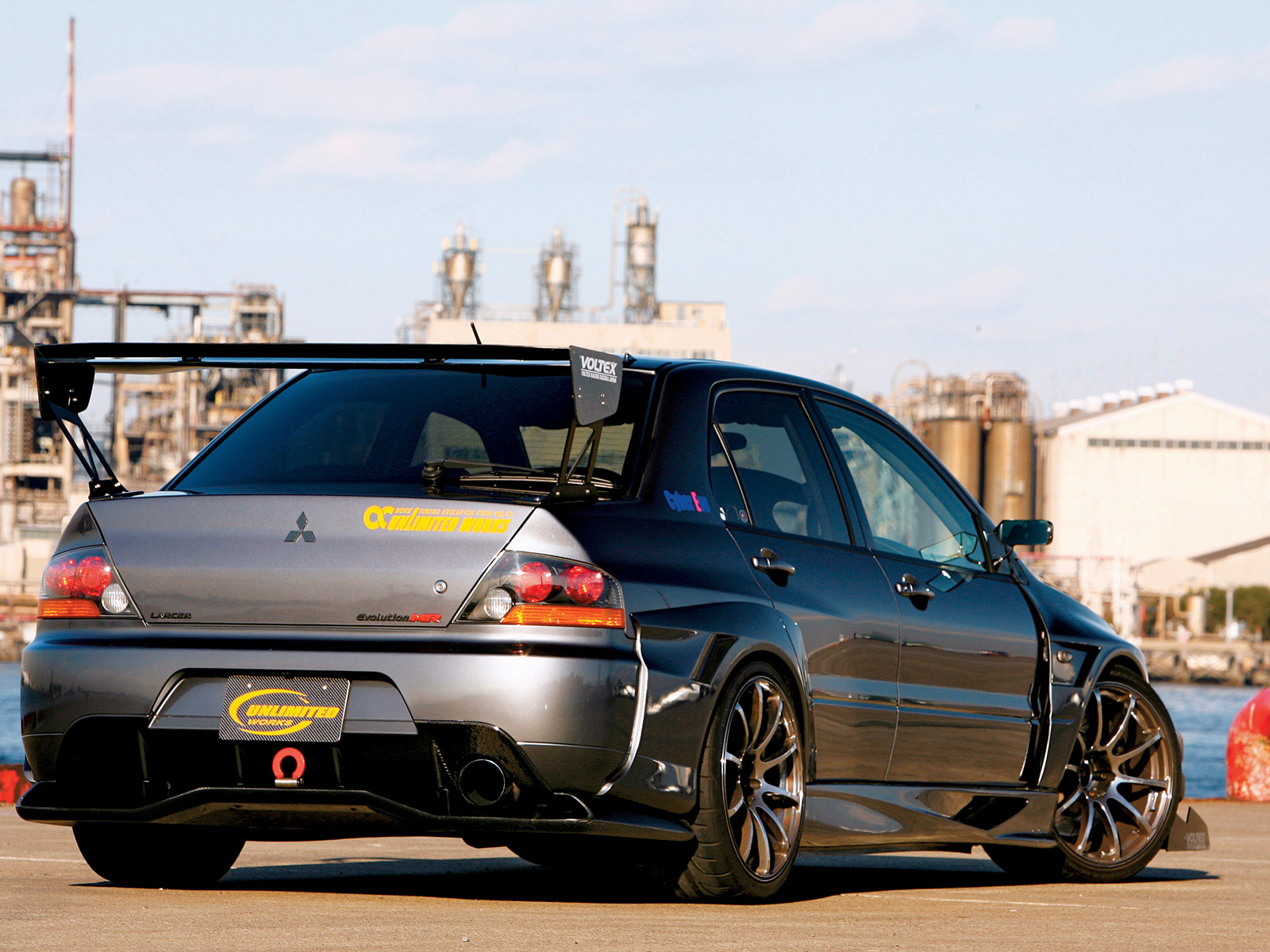
Of course, whining about my kale plants is just symptomatic of a deeper malaise. Frankly, I’m getting a bit sick of my whole earth mother act. I have a vegetable garden; I eat a largely organic, plant-based diet; I dedicatedly recycle, aspire to chickens, try to practice compassion, discretion and behave responsibly. Obviously I’m somewhat bored. Since moving to a country town, I’ve been craving tall buildings, tactless communication and extremely fast motor vehicles. (The Mitsubishi Evo, in case you’re wondering; I’ve nicknamed it the Mitsubishi Evil).

Image

(Photograph courtesy of mysuperbcar.com)


Image

Rather disgustingly, this blog has recently lapsed into ghost ship status. This is not, however, because I’ve done nothing creative, and thus had nothing to write about; it was unfortunately quite the opposite situation. 

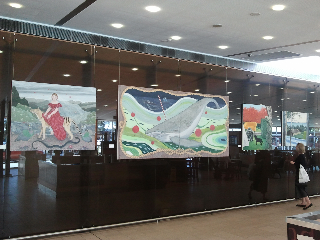
Incidentally, the above pic is some work that was recently installed for about a month at Hobart airport. The paintings are Tiger Bride, an image that I’ve previously blogged about in detail, perhaps too much detail; and Whalesong, an image inspired by the collision between the NZ flagged Ady Gil and the Japanese whaler Shonan Maru 2 in Antarctic waters in early 2010. 

Image


A more current project that I’ve been working on is Year of the Bird, a group exhibition at Maitland Regional Art Gallery, that explores the prevalence of bird imagery in contemporary art. Year of the Bird includes the work of Marian Drew, Emma van Leest, Pamela See, Vanessa Barbay, David Hampton, Trevor Weekes, Helen Wright and Kate Foster (UK). Very kindly, Drs Yvette Watt and Nigel Rothfels have agreed to write an essay and forward for our catalogue. For more info about the show, and some nifty images, here’s a link to the exhibition blog

The show is due to open at 3pm on Saturday 23rd February, all welcome! 

Image


This is a mock up of what the exhibition will look like in the space.

Year of the Bird is curated by myself and Caelli Jo Brooker, we previously worked together on Happily Ever After, an exhibition of artists’ books with a fairy tale theme. I remember years ago seeing a really funny t-shirt with a picture of a gun and the slogan ‘whenever I see the words artist/curator, I feel like reaching for my Smith/Wesson’. And yes, once again Caelli and myself are doing the unthinkable by including our own stuff in a show we’ve organised. Caelli’s doing these beaut large scale expressive/scrawly/graffiti inspired museology mash drawings and I’m currently painting birds all over an old wardrobe, and trying to finish off two small canvases. 

I recently moved house, and somewhere in the process of realising that I’ve acquired far too much crap, I cleaned out my back shed and discovered a couple of old paintings of girls interacting with birds. One image, provisionally titled moonlight on your beak, shows an ingenue in a moonlit clearing gazing up at a spectacularly large parrot, with light glistening on his beak. The other was inspired by a hilarious short story about a young girl who was trying to work out which was the ideal pet for her: a parrot or a macaw. She eventually concluded that the macaw would definitely be the more dangerous of the two. Anyway, the image shows a girl in a pet shop gazing longingly at a huge parrot stuffed into a tiny cage. I’ll post photographs when I have them.

The other major time sucker in my life just now, apart from the perennial PhD, which is actually not going too badly, is a rather embarrassing ideological transition that is currently taking place (cynics would label it ‘growing up’). I should just shut up about it, and not risk public humiliation, but as my friends have been teasing me about it, I think it’s probably time to ‘fess up.

I recently brought a second house (the unlikeliness of the purchase continues to surprise me) after a dedicated three month stint of pretending to be a financially responsible adult in order to impress the bank. As they were unlikely to lend money to an artist/writer/single parent/self employed/casual employee, I got a real job with payslips and everything. The shock/the horror. The dedication it takes to turn up to the same place and do the same thing, or variants of it, nearly every day. But the good news is that the bank brought my carefully constructed facade, and decided to lend. 

So my new house is very run down place, with some truly amazing carpentry, hideous grey walls and a layout that reminds me of Prisoner Cell Block H (a long central corridor with small holding cell rooms off either side). It has a motorcycle tyre prints on the kitchen floor, where someone has been doing burn outs, and a crack the size of the Grand Canyon in the bathroom floor.

But it’s mine, and it represents a substantial plunge into the whole capitalist ethos for someone who spent a good portion of her life living out of one backpack, in boats, squats and slum accommodation, who lost everything she owned a couple of times, and never thought she’d own anything. 

More confronting is the inner ideological shift this acquisition represents. I never considered money as something that was particularly interesting, but now I’ve started to see how its deployment may be something that is akin to creativity (in that it involves decision making, planning, strategy and sometimes even instinct). Mind you, in a couple of years time, or if the real estate market tanks, I’m sure that I’ll be crying into my beer, but in the meantime I’m thinking that this is a kind of fun thing to do. 

Here’s a funny blog about personal finance that I discovered recently while searching for free accounting software for artists. I was struck by how sustainability, in all its guises, is implicit in many of her ideas. 


http://www.uq.edu.au/news/ index.html?article=18844

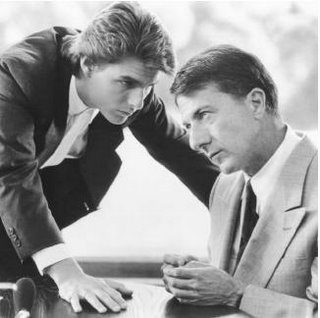
I’ve been thinking a lot about sustainability lately. The other day I left the car at home and caught the train into town with Sophie to do some shopping. For a toddler, a train is both exciting and frightening; her intense emotional reaction to an everyday experience changed it for me too. A bit like the scene in Rain Man, when the autistic Hoffman notes to the blinkered, urbane Cruise that the train is ‘shiny’. Cruise had not noticed, and he stops for a moment to consider, viewing the train with interest for the first time; it’s a small vignette of character transformation that tells you much about his changed inner life.

I suspect this is going to be a boring story, when people talk about their kids it often is, but bear with me. We arrive in town, walk to a second hand store where Sophie gets ‘new’ jeans and a nice pink top. Then head to the library to find that Sophie’s favourite Mr Chicken Goes to Paris book has been borrowed by another reader. We console ourselves with a Little Princess dvd. Then it’s off to the bank for cash, supermarket and back to Vinnies where I collect a massive iron candelabra that I’d left behind the counter earlier. By this time I’m carrying a heavy bag of shopping, a bag of second hand clothes, a candelabra, and dragging an increasingly fractious toddler by the hand.
'Mr Chicken Goes to Paris' by Leigh Hobbs

We head towards the train station, miss our train by ten minutes, the conductor tells us the next one won’t go for another hour, and bitches at Sophie for walking in front of the yellow line. So we wander off to the nearest park, swing for a while, decamp to a café for milkshakes, and then stagger back to the station with all our stuff. Arriving home, Sophie goes to sleep without a peep and I luxuriate with a peaceful, sleeping child cup of tea. In all, a fairly simple shopping trip has taken about three hours.

When people talk about sustainability, and how it intersects with community, they often don’t articulate the human dimension. One of the reasons that church and community groups in my area have been so keen to embrace sustainability principles is they sense how closely related the two sets of ideas are.

Here’s a diagram of the saving money/reducing resource use/building community relationships trifecta.

It works best with a concrete example: I take a train, saving me money, keeping one more car off the road. We’re walking, so I notice stuff about my town that I don’t normally see because I’m travelling too fast or looking for a place to park. We buy second hand stuff, which also saves me money, while supporting a local charity and reducing the resources used to make new stuff. While we’re in the store, we talk to the lady behind the counter (her daughter in law is about to have a baby, and the lady’s worried because both mother and baby will be Aries. ‘Constantly butting heads?’ I ask. ‘Exactly’ she responds).

Missing the train means that I go and explore the park next to the station, a place I’ve never been before. While Sophie’s happily balancing on the park’s sole concrete lion, I start mentally kicking around ideas about community art projects that would work well in the space. Finally, to fill in time before the train, it’s off to a locally owned café, thus keeping money in my community. Sophie gets a chocolate milkshake, I get to sit on my butt and watch her drink it, it’s a win-win for us both.

What really struck me about the day was that, mundane as it was, how much I enjoyed it. In many ways everything was a hassle, a lot less easy than just jumping in the car and popping into the shops; it’s really not fun to carry heavy bags while trying to keep your grip on a squirmy toddler. It also struck me that because it’s not normally something I would have done (I’d only left the car at home because Sophie’s car seat was unavailable) sustainable living is something that most people need to be pushed into. It makes things slower and more difficult. But I expect it also has the potential to make people happier.

Other than a lingering chest infection, it’s been a good week. The university accepted my proposal for some RTS funding which means that I can go to the Australian Animal Studies Group conference in in July. One of the keynote speakers is Nigel Rothfels, a key thinker in the area of my PhD topic (The human animal: the evolving role(s) of the animal in contemporary art) so I’m looking forward to that.

I flipped into media tart overdrive earlier in the week during a spruiking drive for Caelli Jo Booker and my upcoming exhibition of artists’ books at the John Paynter Gallery, Newcastle, in June. Titled Happily Ever After: alternative destinies in contemporary feminine narrative (see, there, I’m doing it again) the exhibition brings together teams of artists and writers and invites them to re-tell fairy tales in a contemporary manner. We’re really excited because we’ve just confirmed that Tasmanian novelist Danielle Wood, winner of the Australian/Vogel Literary Prize, will be working with illustrator Tony Flowers to create a book. I can’t wait to see it!
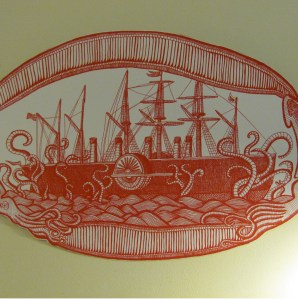
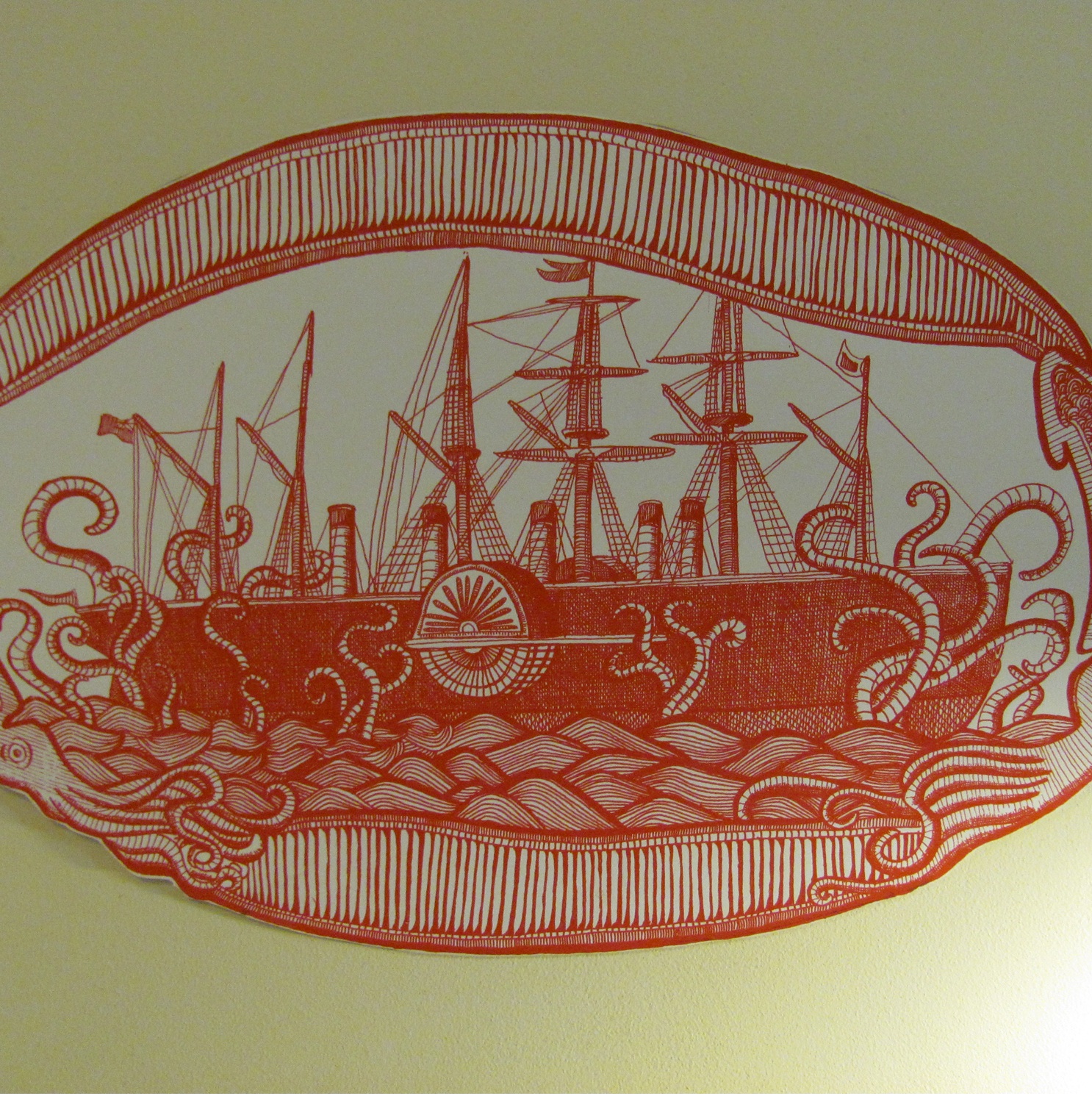
David Hampton's 'SS Great Eastern'

For the exhibition, I’ve written a short story that will be illustrated by Newcastle’s David Hampton and made into a book by my Aunty Pam. The story, Whalesong, is based on last year’s Ady Gil incident, where a New Zealand protest vessel and a Japanese whaler collided in Antarctic waters. It’s a kind of homage to Moby Dick, one of my formative texts, a book that still fills me with desire. My story is written in the first person from the whale’s perspective. I’m currently playing with this idea of writing the animal voice, trying to avoid the common slide into sentimentality or romanticism by making my main character a bit obnoxious and a little histrionic.
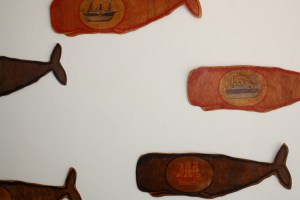
Another image by David Hampton

An odd coincidence: after I’d emailed the story draft through to David, he responded to say that he’d just finished watching a documentary account of the sinking of the whaling vessel Essex, the true story that inspired Moby Dick. A couple of days later I was in the country village of Wollombi, browsing in a small, second hand store, and picked up a novel with a picture of whale flukes on the cover. It was In the Heart of the Sea, an account of the Essex tragedy by Nathaniel Philbrick. I brought it because it had a pretty cover and a positive blurb by Annie Proulx, author of The Shipping News, on the back.

(A brief digression:  if you’re up that way, Café Wollombi does really nice food. Imagine the worst roast vegetable focaccia you’ve ever had: a few miserable pieces of eggplant, a scrape of rancid pesto, bread as stiff as stale cardboard, an anemically thin slice of grilled fetta, the alleged vegetables as brown and slimy as compost. You probably paid $7.50 for the thing, $10 at the airport, and when it was plonked down in front of you, the person rushed off in case you yelled at them. Later, you hear them yelling at the chef. Add bad air conditioning, a greasy napkin, plastic wrap and the sound of traffic and you’ve got your average vegie focaccia. As a vegetarian, I’ve chomped my way through many such travesties.

In Wollombi, you sit out on wooden verandah, the sun on your back, watching birds scoot past and a line of ants tackling the Everest of your chair leg. A trendy, funny girl with knee socks takes your order and returns with food in an admirably short time. Big fat foccacia, stuffed with roast vegetables and annoited with pesto so fresh that it hasn’t had time to oxidise. Why would you go anywhere else?)

Although I’m only a bit of the way through, In the Heart of the Sea is proving to be a fascinating read. Philbrick talks about the island of Nantucket: the way the society came to embrace Quakerism, what this meant to the island’s culture, economy and financial management. There’s a few scurrilous historical anecdotes about the Nantucket women, rumoured to be addicted to a morning dose of opium and marital aids, ‘he’s at home’ being the polite euphamism for the plaster cast dildos of the era. As the whaling industry expanded across the globe, Nantucket husbands were often away at sea for years, home for a few months, then gone again.
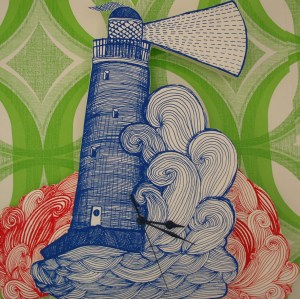
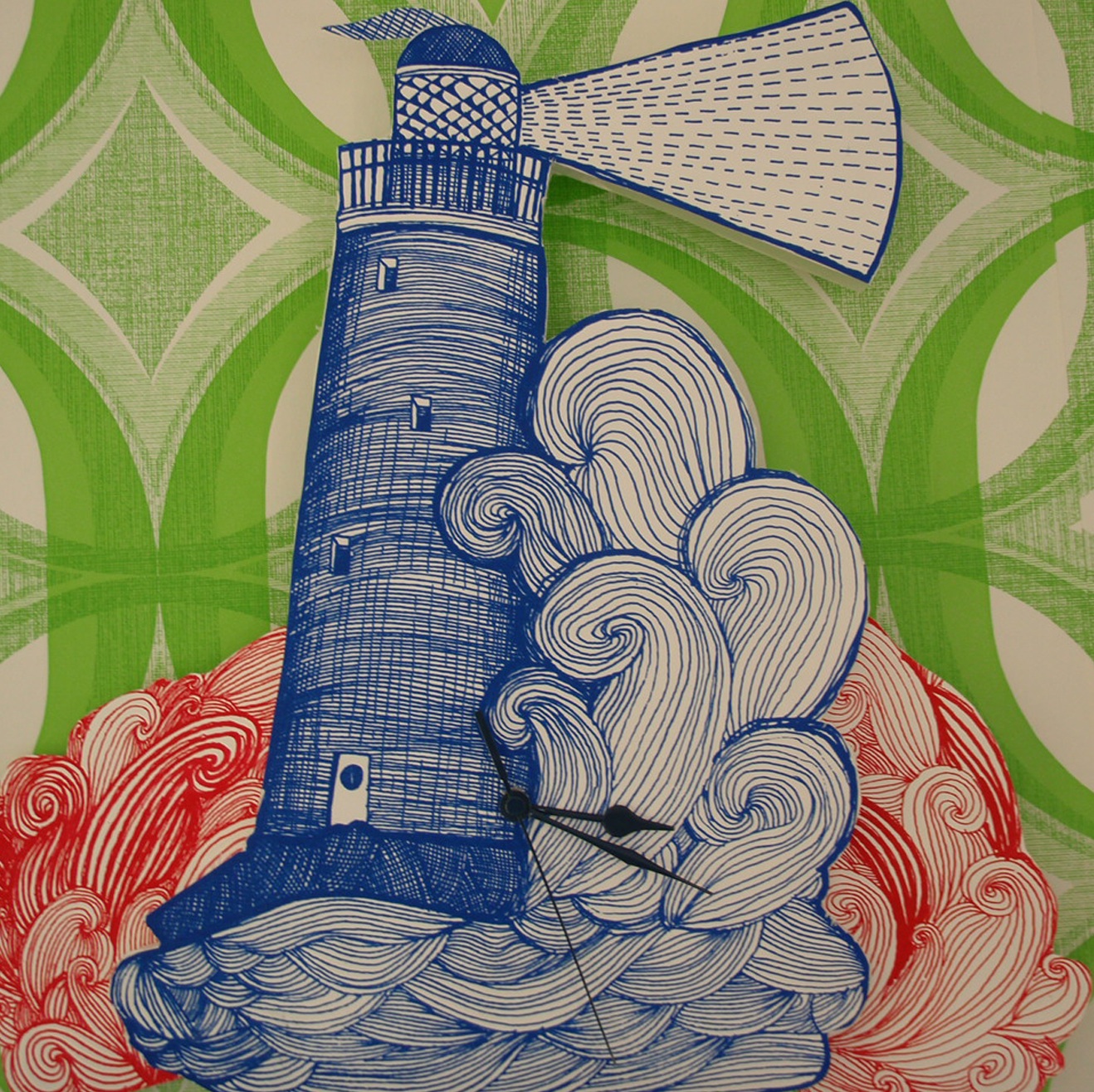
'Lighthouse' by David Hampton

It’s interesting to speculate about the social pressure, the sheer claustrophobia, of being left alone on an island in a close-knit society of Quaker women. The knowledge that, if rendered desperate by your cold lump of plaster, you f***ed another person, the news of it would be all over the village by morning, even before your sheets had time to dry. An ensuing trial of ostracism, bitter judgement and fraught female relationships. It’s the dark side of community, the thing that we were all running from when we left our villages and moved to the anonymous cities. And it’s probably one of the reasons why people like the connectedness that sustainability implies, but also shy away from it.

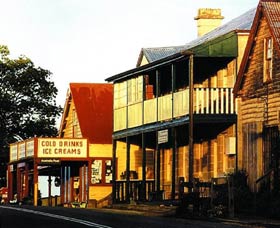
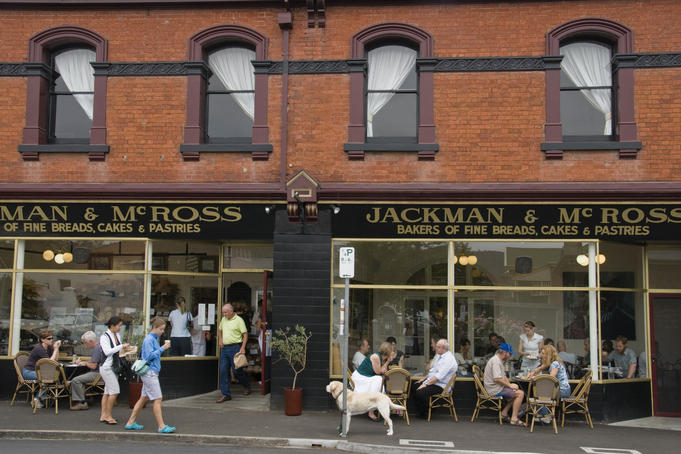
Jackman and McRoss: home of a damned fine cake (image source http://media.lonelyplanet.com)

A few months ago, my Aunty Pam, cousin Jules and I were sitting around talking. It was a cold Tasmanian night, we’d just eaten some very fine cake (Jules had brought it for his Mum) and were curled up in leather chairs, drinking hot cups of tea. Jules and I grew up in Hobart, Aunty Pam was born in New Zealand but the family moved to Tasmania when she was a little girl. They settled first in the northern industrial town of Burnie and then moved south to Hobart. I was blithering on about how I hadn’t decided where I wanted to bring Sophie up, the pros and cons of an urban existence versus a rural one, educational opportunities in different areas, my experience of growing up on an isolated island like Tasmania, and on and on. ‘Well, what do you want?’ asked Pam patiently. I thought about it for a minute and then replied: ‘what I want, doesn’t exist. I want to live in a village full of cultured, sophisticated and intelligent people… who mind their own business!’ We all howled with laughter.
Kangaroo Valley


Sadly January, designated as my Fun Month, will shortly come to a close. Latest activity in pursuit of hedonism was TM’s 40th birthday party in Kangaroo Valley last weekend. The valley is a beautiful place, high sides and its own weather, lush greenery, mists. Population the usual mix of disaffected Sydneysiders and hardened country folk. Party included lots of kids and some great toys: walled trampoline, shark head water slides, swimming pool, mobile sandpit, glow sticks and ground-hugging scooters. If you’re planning a holiday in the Valley, here’s a link with some tourist and accommodation info:

http://www.kangaroovalleytourist.asn.au/home/

As part of the whole sustainability lifestyle thing, I’m aiming to use my car less, with the eventual goal of learning to live without it. To get to the party I caught a train to Central, carrying Sophie’s car seat, and then got a lift to Kangaroo Valley with two of TM’s friends. Coming back, there was trackwork, which meant a lift to Bowral with the same two friends, now very hungover; a bus to Liverpool; an un-airconditioned train from Liverpool to Central; another train from Central to Morisset; and then a lift from Morisset to Dora Creek. It ended up being an all day event.

Two remarkable people and one notable meal encountered en route. The first person I got talking to at the Bowral bus station. It’s a wealthy area, and I couldn’t be bother carrying the car-seat and suitcase any longer, so I’d left them on the station seat and was walking with Sophie up towards the town to get a cup of tea. Coming down the road towards me was a likeable looking woman (bad teeth, sweet smile, scruffy hair) who looked like she was heading towards the station: she was. I asked if she’d keep an eye on my bag, she agreed (later noting that she herself wouldn’t have left it there) and then, because Sophie was having the toddler equivalent of a bad hair day, walked across the road with us towards the town, holding Sophie’s other hand, chatting all the way.

Gumnut Patisserie, Bowral

Which leads me to the notable meal, purchased at Bowral’s Gumnut Patisserie, a country bakery with a reassuring array of trophies for things like scones and bread lined up on the top shelf. Great food. Sophie and I ate a couple of small quiches, and a custard pie, so rich it left a layer of creamy fat on the top of your mouth. We shared a miniature fruit tart with an enormous blueberry teetering on its edge, only just held in place with sugar glaze, like the boulder at the top of Ambush Valley in an old fashioned Western movie. Sophie got the blueberry.

Returning to the station, the suitcase and the strange lady. Odd snippets of our conversation spring to mind: her son is studying veterinary science and lives in Toowoomba. Despite having lost all his belongings in the flood, the thing that really bothered him was that all his friends in a nearby town were air-lifted out by Black Hawk choppers. We discussed the layout of the Mittagong primary school playground as opposed to the one in Bowral: Mittagong infinitely superior, Bowral involves a road crossing and a parcel of land behind a church; the age children stop whining: six to sixteen, after and before that, forget it; shoeing horses: how people think it’s easy; falling off horses: how not to do it. And the poisonous nature of agapantha sap: toddler diverted as she headed towards the station’s attractive, flowery bushes.

I’m pretty sure this woman thought I was a frigging idiot, wandering around on a super-hot day, with a car-seat and toddler, both wearing freebie Corona hats that Jules had given us, and a certain post party vibe that is as easy to spot as it is hard to hide. But I really liked her. When she got on her bus, ducking to avoid an elderly man who was getting off, apparently the lawyer who had settled her grandmother’s estate (“country towns…” I cracked, and she grinned). I said to Sophie “that was your fairy godmother” as we waved to her. No idea what her name was.

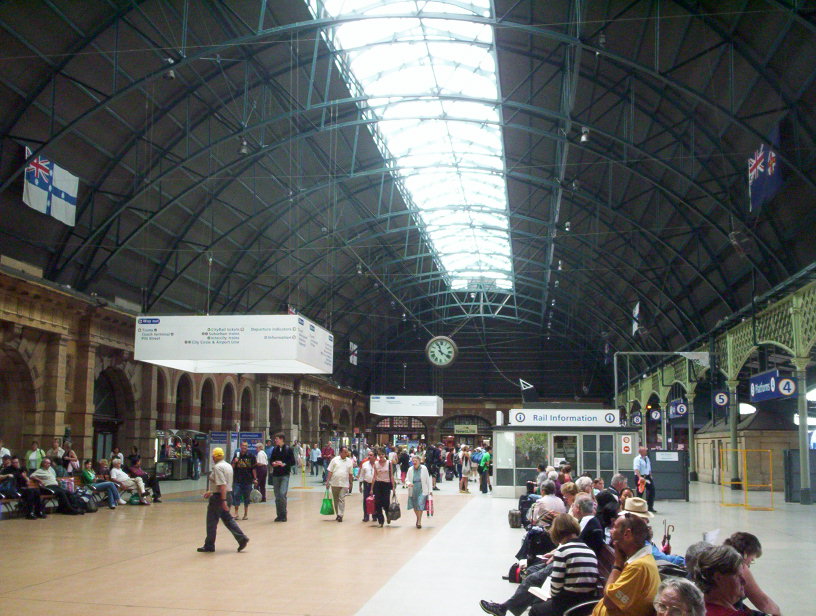
Central Station, Sydney

Second remarkable individual encountered somewhere on the line from Liverpool to Central. Young guy jumps on train with two toddlers and sits down near us. Thongs, tattoes, shaved head with rat-tail, shorts. He’s shirtless but stands up to pull a t-shirt on, realises it’s back to front, pulls it off again and eventually gets it on. I notice him mainly because he has a beautiful body, because the t-shirt is already stained with sweat, and because he seems so typically Australian, whatever that is. Sophie has, by this point, had enough of public transport and is behaving pretty badly. At certain points, there’s lots of screaming. I’m hot, crabby and not helping matters by trying to control her too much, instead of just accepting that a toddler is a toddler, not an adult, and you can’t expect them to sit there and look out the window. Sometimes you do have to let them crawl around on the crappy train floor looking for treasure.

The guy, on the other hand, is handling his two toddlers wonderfully. Segued smoothly from ‘can we see a butterfly out the window?’ to witty bouts of ‘look, Daddy’s wearing toddler hat’ and back to ‘Look! There is a butterfly out the window, you just missed it’. Brilliant stuff: masterful. Got talking to the guy, admired his skills, he looked pleased when I said that I he was obviously closely bonded to his kids. Here are some fragments of the conversation: kids names are Mark and Matthew; Matthew is two years older, but has been diagnosed with autism, ‘he’s my angel’; Dad has been through hell with his kids, he has them on the weekends, their Mum went away for a year; Mark is wearing a cool t-shirt with a carp on it; Dad used to work at a Japanese coy farm, t-shirt a hand me down but lasting well. Got off train, guy offered to help, he ended up holding Sophie’s hand and Sophie ended up holding Matthew’s hand; three transit cops looked amused as trio of wobbly toddlers exited train.

Guy tried to hit on me, politely deflected it, didn’t want to waste his time, and I know a bad boy when I see one (something about the tattoes, the body, the emphasis on being just a little bit too honest, a bit twitchy around authority figures). But I mention him, because whatever his relationship with the criminal justice system, and I’m sure there’s been one, he was managing two toddlers on a hot day like a pro.